
Laurence and I have visited Turkey a handful of times, most recently in 2019, and we’ve put together this 14 day Turkey itinerary based on everything we learned across those trips. We’ve stayed in the cave suites at Kayakapi Premium Caves in Ürgüp, taken the sunrise hot air balloon over the Cappadocia valleys, walked the Library of Celsus at Ephesus, soaked in the travertines at Pamukkale, and based ourselves at the Régie Ottoman in Istanbul and the Gloria Serenity Resort outside Antalya. The itinerary that follows is the spine we’d recommend to anyone planning their first two weeks in the country.
Our suggested 2 week Turkey itinerary includes Istanbul, Cappadocia, Antalya, Fethiye, Pamukkale, Kuşadası, Ephesus, Troy, Çanakkale, Gallipoli, and Ankara. You’ll have time to explore Turkey’s most cosmopolitan cities, see its ancient archaeological sites, spend a few days on the Mediterranean coast, shop the traditional bazaars, visit several UNESCO World Heritage Sites, and take in landscapes that don’t look like anywhere else in the world.
It works for travelers using public transport, renting a car, or joining a guided tour, and we’ve included transport, sightseeing, lodging, and practical-planning details for each day. We’ve also added a “Choose Your Spine” section below for readers with 7, 10, or 12 days instead of the full 14, plus a Pinch Points section covering the day-of-week closures, balloon-weather cancellation rates, and Ramadan timing that can quietly derail a Turkey trip if you don’t know about them.
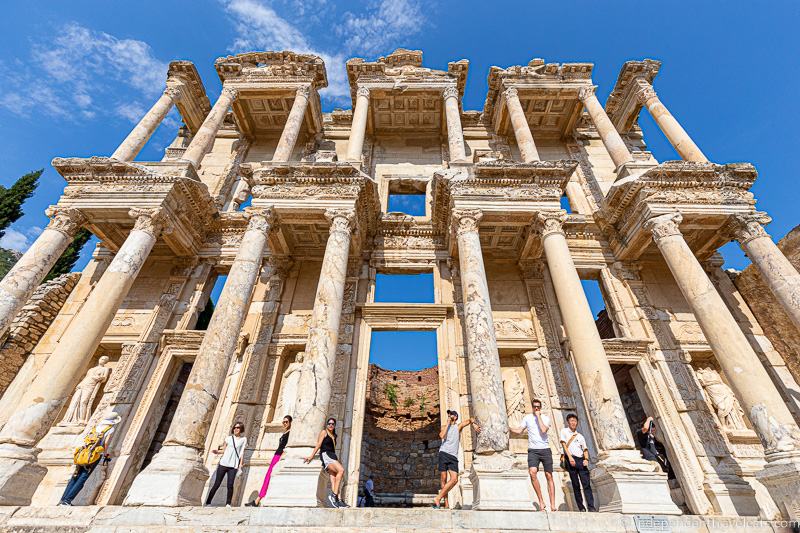
Table of Contents:
Quick Take: Who This Itinerary Is For
The short version: two weeks is enough time to see the major highlights of western Turkey at a steady, not punishing, pace. Istanbul plus Cappadocia are the two non-negotiable anchors. The rest of the spine (Gallipoli, Troy, Ephesus, Pamukkale, the Mediterranean coast, Ankara) is where most of the trade-offs live.
Pick this 14-day spine if:
- This is your first trip to Turkey and you want to see most of the western-Turkey highlights in one go.
- You’re happy with a mix of history, archaeology, coast, and a couple of long travel days between regions.
- You’re traveling April through October, when the weather is reliable and the balloon flights have a sensible cancellation rate.
- You can travel by bus, car, train, plane, or a mix. The spine works with any of them.
Pick a shorter variant if:
- You only have 10 to 12 days. See the “Choose Your Spine” section below for our 7, 10, and 12 day suggestions. The simplest cut is to drop Ankara, which saves two days without losing the most photogenic destinations.
- You want a beach-heavy holiday. More time around Antalya, Fethiye, or Bodrum makes more sense.
- You want to focus on the Lycian Way. That deserves its own dedicated 1 to 3 week trip rather than slotting it into a country tour.
- You aren’t interested in archaeology. Several days lean heavily on ancient Greek, Roman, and Hittite sites.
The bottom line: for the first-time Turkey traveler with two weeks and a mix-of-everything interest, this spine is what we’d plan ourselves. Skim the Pinch Points below before you start booking, then read on.
Pinch Points: Read Before You Book
A handful of practical details cause more headaches on Turkey trips than the rest of the planning put together. Read these first, because most are easier to plan around than to fix.
Topkapi Palace is closed Tuesdays. Day 1 or 2 in Istanbul has to land Topkapi on a day it’s open. If Day 1 falls on a Tuesday, swap Topkapi to Day 2. If Day 2 falls on a Tuesday, do Topkapi on Day 1.
Dolmabahçe Palace is closed Mondays. Day 2’s New City stops include Dolmabahçe. If Day 2 lands on a Monday, do Dolmabahçe on Day 1 instead, or drop it.
Hagia Sophia and Blue Mosque close to tourists during prayer times. Both are working mosques, so tourist access pauses for the five daily prayers (typically 15 to 30 minutes each). The Blue Mosque also closes for around 90 minutes around midday Friday prayer. Aim for between-prayer windows on Day 1.
The Cappadocia balloon has a real cancellation risk, and it’s seasonal. Annual average cancellation rate is roughly 30 to 35%. August is the most reliable month at around 7%. May through July average 15 to 25%. December runs about 55%, January up to 70%. The standard 14-day spine puts you in Cappadocia for two nights, giving one sunrise attempt. If you’re traveling November through March, add a night in Cappadocia to give yourself two or three balloon attempts. Otherwise weather may cancel the highlight of your trip with no rebooking window.
Cleopatra’s Pool at Pamukkale reopened in May 2026 after a 16-month renovation. You can swim among the submerged Roman columns again on Day 6 for an extra fee on top of the Hierapolis/Pamukkale entrance ticket.
The Museum of Anatolian Civilizations is open every day. Most Turkish museums close Mondays, but this one (the top attraction in Ankara) is open daily 8:30am to 5:30pm with last entry at 4:45pm. Useful if your Day 12 arrival in Ankara lands on a Monday.
Ramadan 2027 falls February 8 to March 10. Sightseeing is unaffected in tourist areas, but restaurant hours shift in conservative neighborhoods (and inland cities like Konya), and iftar at sunset gets busy in Old City Istanbul. Worth planning around if you’re traveling those weeks.
ANZAC Day is April 25. The Gallipoli sites are extremely busy with commemorative services and large crowds, with access restrictions in places. If you’re traveling in late April, schedule the Gallipoli day for a different date if you can.
Foreign credit cards on the TCDD train booking site are unreliable. The high-speed train Ankara to Istanbul is the best option for Day 14, but the tcddtasimacilik.gov.tr site frequently rejects foreign-issued cards. Workarounds: buy at the station, use a PTT post office, or book through a reseller like railmonsters.com. Seat 61 has a current step-by-step.
Preparing for Your Trip to Turkey
Before we share our suggested 2 week Turkey itinerary, here are some tips, advice, and answers to frequently asked questions about planning a trip to Turkey.
The most important things to decide before planning your itinerary are when you plan to visit, how long you have, and how you plan to get around the country.
Best Time of Year to Visit Turkey
Turkey is a year-round destination, but the best months to visit are generally April, May, September, and October. These months offer warm temperatures without the summer heat.
The summer months of June through August are often very hot in most parts of Turkey and can make it uncomfortable to spend long periods outdoors. If you visit in summer, be prepared for sun and heat.
The busiest period for tourism is April to September. If visiting then, expect crowds at the most popular sites.
The least busy times are the winter months. If you don’t mind cooler weather, November through March can be a good time to visit. Just note that these are also the windiest and wettest months, and some attractions may close or have reduced hours.
Turkey is a large country, so the weather in Istanbul may be very different from Antalya, Bodrum, Ankara, or Kars at the same time of year. Check average temperatures and weather forecasts for the specific places you plan to visit.
We’ve been to Turkey at different times of year. For those who don’t love hot weather, we’d definitely recommend against visiting in summer if you can avoid it. Spring and autumn are ideal. We’ve also visited in late November and early December and found it cool but pleasant, with much more manageable crowds. You do need to be more prepared for rain and bad weather then.
A Note on Visiting During Ramadan
If your trip falls during Ramadan, your trip is not ruined. It just means a few practical things shift, and it helps to know about them in advance.
In 2026, Ramadan ran from approximately February 17 to March 18. In 2027, it falls roughly from February 8 to March 10 (subject to moon sighting in Turkey). Ramadan moves about 11 days earlier each year on the Western calendar.
During Ramadan, observant Muslims fast from dawn to sunset. In tourist-heavy areas of Istanbul, Antalya, Cappadocia, and the resort towns, most cafes and restaurants stay open as normal, and international chains and hotels operate as usual. In more conservative areas, particularly inland cities like Konya, you may find some restaurants closed during the day or operating on reduced hours.
The most pleasant time to be out in cities during Ramadan is the iftar meal at sunset, when streets fill with families breaking the fast together. It’s a memorable experience if you’re open to it. Some restaurants offer special iftar menus.
You can travel in Turkey during Ramadan with no real disruption to your sightseeing. Just plan to do most of your eating in tourist areas, and consider stocking up on snacks if you’re heading off the beaten path.
Türkiye or Turkey?
You may have noticed both spellings used in the press. The country officially changed its English-language name from Turkey to Türkiye in late 2021, with the United Nations adopting the change in June 2022 and the US State Department in January 2023.
Both names are correct. Turkish people and the official tourism board (now GoTürkiye) use Türkiye. Most English-language travel resources, search engines, and booking sites still use Turkey, and that’s what most travelers search for. We use Turkey throughout this article for clarity, since that’s what most readers will recognize, but Türkiye is the country’s preferred name internationally.
How Much Does it Cost to Visit Turkey?
Turkey is a relatively affordable destination compared to most of Western Europe, the United States, Canada, and Australia. You can find good value at every budget level.
Our 2026 daily-spend estimates per person, based on our trips and current research:
Budget travelers: Around $50-80 per day per person. This covers hostel dorm beds or basic guesthouse rooms, eating mostly at local lokantas and street food, public buses for transport, and skip-the-line attraction tickets where they save you time. A 2-week trip on this budget runs around $700-1,100 per person, plus international flights.
Mid-range travelers: Around $120-200 per day per person. This covers comfortable 3-4 star hotels with breakfast included, mix of restaurants and local food, occasional taxis or domestic flights between cities, paid attractions and a few guided tours. A 2-week trip runs around $1,700-2,800 per person, plus flights.
Luxury travelers: $300+ per day per person. This covers 5-star hotels and resort stays, fine dining, private transfers and domestic flights, private guided tours, and experiences like the Cappadocia hot air balloon. A 2-week trip easily runs $4,200+ per person, plus flights.
The biggest single expense is usually international flights. Within Turkey, accommodation is your largest day-to-day cost, followed by transport between regions. Food is generally inexpensive even in mid-range restaurants, and most major attractions cost between 200-700 TRY (roughly €5-15) for entry.
Imported goods are often the same price or more expensive than at home, including imported groceries, electronics, alcohol, and cars. Fuel is also relatively expensive.
Turkey Travel Practicalities
Turkey is a country of around 86 million people, with Ankara as its capital and Istanbul as its largest city. Turkey straddles Europe and Asia, where eastern and western cultural practices mix.
Here are some things you should know about Turkey before your trip.
Language
The official language is Turkish, and that is the first language of most Turks. Many people in Turkey also speak Kurdish.
You’ll find English speakers in larger cities and in all the main tourist hot spots. However, most Turkish people speak little or no English. If you’re planning to travel independently, it’s a good idea to have a Turkish-English phrasebook or translation app with you.
Religion
There is no official religion in Turkey, but the vast majority of the population is Muslim, with Sunni Islam being the largest sect. You’ll also see Christian and Jewish places of worship.
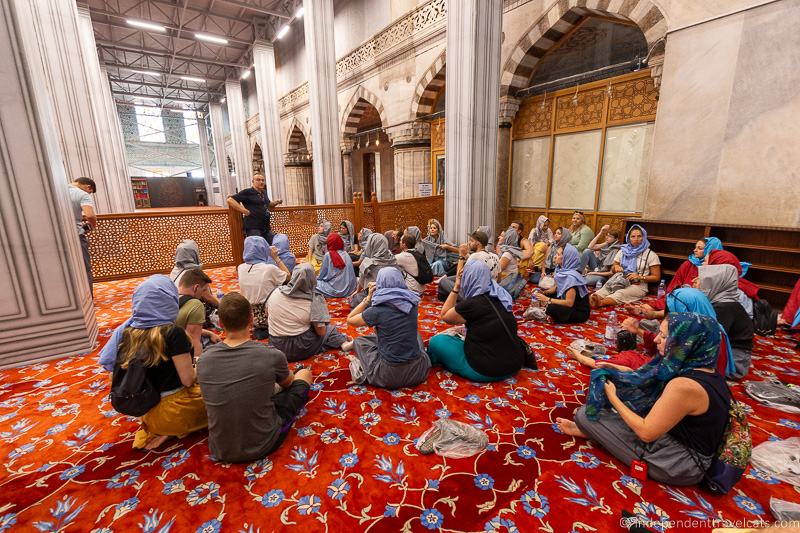
It’s important to follow local customs regarding modesty and dress when visiting religious places. Both men and women are asked to dress modestly, and you may also be asked to remove your shoes. Women will be asked to cover their heads in mosques.
We recommend that women always carry a scarf or travel wrap to cover their head and shoulders as needed.
Electricity
Turkey operates on 220 volts / 50 Hz and uses round-prong Type C or Type E plugs that fit into recessed wall sockets. If your devices don’t have Type C or Type E plugs, you will need to take some plug adapters such as these ones.
If you’re traveling from a country with 120V voltage (such as the United States or Canada), make sure to only bring electronics that support 220V voltage, or you’ll need a separate voltage converter. You can read our guide on choosing a travel adapter for travel for more.
Currency
The currency in Turkey is the Turkish Lira (TRY). Credit and debit cards are widely accepted, with Mastercard and Visa being the most commonly taken.
However, many small businesses, street vendors, taxi drivers, and market sellers do not take credit cards. You’ll also need cash for tipping. So it’s wise to have some lira on you when traveling.
The best way to get lira is from a local ATM once you arrive in Turkey. You can also get them from a currency exchange bureau or bank before or during your trip. Check the current exchange rate here.
Just note that the Turkish lira has been historically volatile, and many tourist activities and tour operators price in euros, US dollars, or British pounds. It’s worth having a small backup of any of these on you if your hotel or tour quotes prices in foreign currency.
Drinking Water
Reports vary on whether tap water is safe to drink in Turkey. The tap water in some areas is considered safe, but not in others. Most travelers stick to filtered or bottled water, and a portable water filter is a reliable way to be sure. The water is considered safe for bathing.
Bottled water is available everywhere and is inexpensive, but the environmental impact of plastic bottles is significant. We recommend taking a reusable water bottle along with a water filtration system or purification tablets. Then you can fill it up from tap water just about anywhere.
Our preferred travel water bottles are from Klean Kanteen. They’re insulated stainless steel, durable, and easy to clean. Combined with a filtration cap or separate filter, they handle just about any travel scenario.
Getting Online
Wireless internet is freely available at most hotels and other types of accommodation in Turkey, so that’s the easiest way to stay in touch and get online.
If you want phone service while exploring, the easiest option is an eSIM. Apps like Airalo let you buy and activate a Turkey-specific data plan in minutes, with no need to swap physical SIM cards. Most modern smartphones support eSIM. We use Airalo regularly when we travel, and you can read Laurence’s full Airalo review for our take.
You can also read our guide on staying connected while traveling for more options. For those concerned about online security, we also recommend using a VPN while traveling.
Safety
Turkey has generally been considered a safe country for travelers. As always, check the latest travel advisories from your home country and any issued in Turkey.
There has been ongoing instability in countries neighboring Turkey, particularly Syria, with reports of violence and protests along its borders. You’ll likely see travel advisories advising against travel to some border areas.
As with any country, we always recommend protecting your valuables, watching for pickpockets in crowded areas, and being aware of your surroundings.
The main thing we’ve experienced is needing to be careful when handing over cash or exchanging money. Be sure to count what you hand over, say the amount aloud, and confirm the change you get back. We had a taxi driver in Istanbul scam us once by claiming we’d given them a smaller note than we actually had, and refusing to give back the correct change. We ended up paying about four times the regular taxi fare. We’ve heard similar stories from many other travelers.
Do I Need a Visa for Turkey?
Visa requirements depend on your nationality. Turkey has expanded its visa-free entry list over the past few years, and most European nationals can now enter Turkey for tourism without a visa. As of 2026, citizens of the United States, United Kingdom, Canada, Australia, and several other countries still need an e-visa.
The e-visa is applied for online before you travel at the official portal, evisa.gov.tr. The fee varies by nationality, and the application typically takes only a few minutes. We strongly recommend using only the official portal — many third-party sites charge significant markups for the same service.
Visa on arrival has been phased out for nationalities that require an e-visa, so you must have your e-visa before boarding your flight to Turkey. Airlines routinely deny boarding to passengers without one.
For the current visa requirements specific to your nationality and the current fee, check evisa.gov.tr directly. Policies and fees can change, and the official site is always the most up-to-date source.
How to Get to Turkey
Most visitors will arrive into Turkey via the international airport in Istanbul, but there are several ways to get to Turkey.
By Air
The main international airport in Turkey is Istanbul Airport (IST), located on the European side of Istanbul. There is also a second international airport in Istanbul, Sabiha Gökçen Airport (SAW), on the Asian side. SAW is generally smaller and used more by budget airlines and some domestic routes. When booking flights, double-check which Istanbul airport you’ll be using, as they’re on opposite sides of the city.
Other major international airports in Turkey include those in Ankara, Antalya, Izmir, and Bodrum.
There are direct or indirect flights to Istanbul from most parts of the world. The main airline operator in Turkey is Turkish Airlines.
By Car
It’s possible to drive to Turkey via Bulgaria or Greece, or by taking a car ferry.
At the border you’ll need to provide a valid passport, visa (if needed), international driving license, vehicle license, international green card, vehicle registration details, and proof of insurance. Make sure your car insurance is valid for travel in Turkey. If the vehicle isn’t registered in your name, you may need a power of attorney document.
It may be possible to enter by car from countries to the east such as Iran or Georgia. However, the eastern borders are sometimes closed to private drivers, and an authorized tour guide may be required. Many rental car agencies will not allow some of these border crossings. Do your research before your trip — it’s often easier to take a bus or train across the border.
By Bus
If you want to travel to Turkey by bus, there are regular services between Turkey and several European and Middle Eastern countries. You can check bus routes and book tickets on BusBud.
By Ferry
There are ferry connections to Turkey for both cars and passengers, mainly from Greece and Cyprus.
By Train
Turkey has train links with Eastern Europe and the Middle East, though these are limited. Most international trains are not daily, so plan ahead.
As of 2026, the two main places you can regularly reach Turkey by direct train are from Bulgaria and Iran.
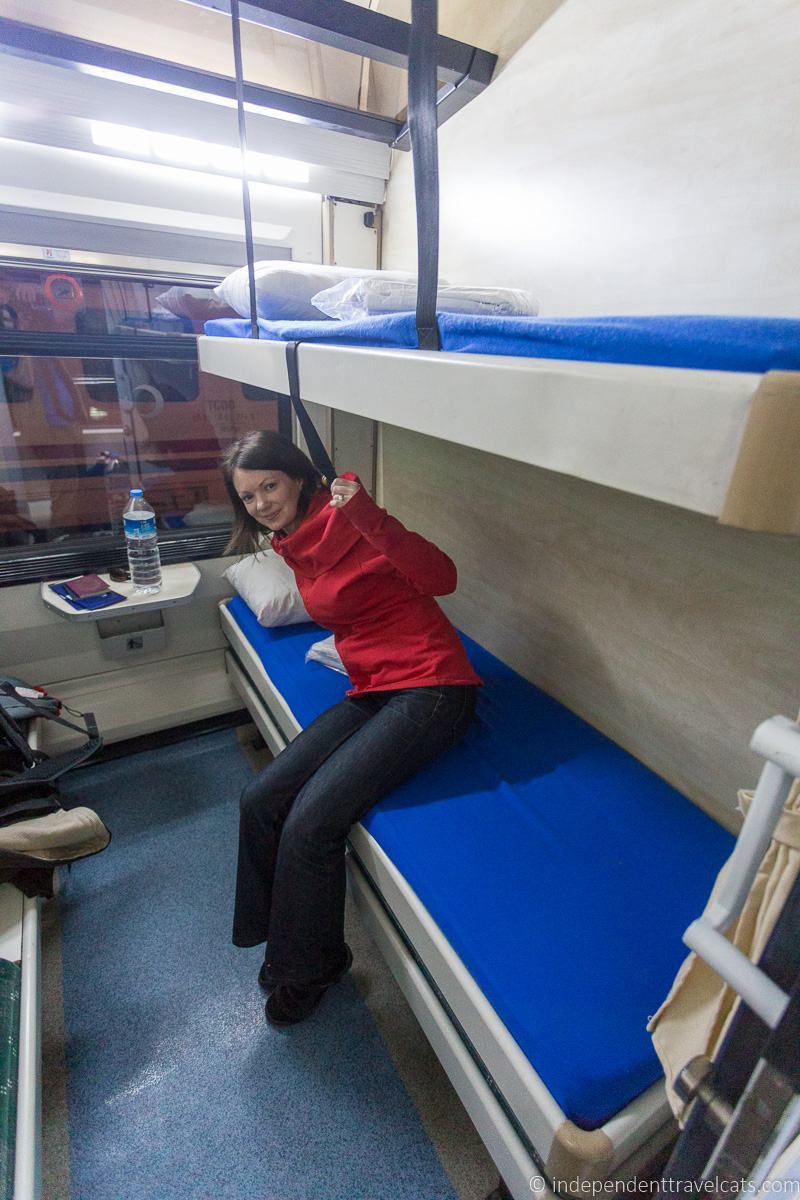
If you’re traveling in Europe by train and including Turkey in your trip, you’ll most likely head to Sofia, Bulgaria and then connect to Istanbul via the Istanbul-Sofia Express train service. We took this train a few years ago. As of February 2026, you can finally book the sleeper online via Turkish State Railways, which used to require a ticket counter visit.
If you’re planning to take train journeys around Europe and want a flexible pass that includes Turkey, you can buy an Interrail pass through Trainline. It’s the same pass wherever you live, since Interrail replaced the Eurail pass for travelers from outside Europe in 2026.
The most famous train service in the world, the Orient Express, once linked Western Europe with Istanbul. It was a favorite of many famous writers, and we recommend taking along a book or two to enjoy if you’re traveling by train.
A couple of novel suggestions include Murder on the Orient Express by Agatha Christie and Stamboul Train by Graham Greene. For a travel memoir, Paul Theroux writes about his experiences traveling by train in 1973 from Paris to Istanbul and from Istanbul to Tehran in The Great Railway Bazaar. He retraces those journeys over 30 years later in Ghost Train to the Eastern Star.
The terminus train station for the old Orient Express service is still in Istanbul, and once a year the Venice Simplon Orient Express luxury train still makes the trip from Paris (or London) to Istanbul.
How to Get Around Turkey
You have a variety of options for getting around Turkey: bus, train, plane, rental car, or guided tour.
The easiest way is to take a tour, where someone else handles all your transport, accommodation, and sightseeing. The cheapest is to travel by bus and train.
By Bus
Turkey has a good bus system that connects much of the country. There are both daytime and overnight buses, and there are usually a few services to choose from on the popular tourist routes, including those on our suggested itinerary.
Several bus companies operate in Turkey. Many of the buses have amenities such as power outlets, WiFi, and onboard entertainment. Bus prices are very reasonable.
In places where regular buses don’t have a route (such as suburbs or tourist attractions outside a city), there are often dolmuş. These are shared taxis or minivans that run a set route for a set price. Passengers get out at any point along the route by notifying the driver. See advice on using a dolmuş here.
For most of the regular intercity buses, you can check routes and book tickets online in advance. The best tool we’ve found for comparing timetables and booking bus tickets in Turkey is BusBud.
By Train
Turkey has a train network, but it’s not as comprehensive as the bus network. However, on the routes where it does run, the train is sometimes faster than the bus or driving. So while you can use it to get to some major destinations, you’ll likely also need to use the bus.
The railway network is run by the government-operated Turkish State Railways (Türkiye Cumhuriyeti Devlet Demiryolları or TCDD), which operates long-distance, regional, commuter, and high-speed trains. You can check routes and buy tickets on the official TCDD site.
If you’re planning to take several train journeys in Turkey or combine Turkey with European train travel, you might want to consider an Interrail pass, which you can buy through Trainline. The Global Pass works in 33 European countries, including Turkey, and is valid on trains operated by TCDD.
You’ll probably find a combination of train and bus is optimal for getting around if you’re using public transport. Bus and train prices are often similar, so take whichever is more time-efficient.
By Car
If you’d prefer to drive yourself, you can rent a car in Turkey. This works well if you want a flexible itinerary and don’t want to take public transportation.
To rent a car in Turkey as a foreign visitor, you’ll typically need a valid passport and visa, a valid credit card, a valid driver’s license in a Latin alphabet, and to be age 21 or older (some agencies require 25 or 27). If you don’t have a driver’s license in a Latin alphabet, you’ll need an International Driving Permit before your trip.
The main roads in Turkey are in good condition, with roadside services along the way. However, Turkey has a high number of accidents and bad traffic, especially in the cities. Driving can be a stressful experience for tourists not familiar with local conditions. This isn’t to say you shouldn’t consider renting a car in Turkey, just be aware, get insurance, and be prepared to drive defensively.
Many of Turkey’s fastest highways and bridges have tolls. To use these, you need an electronic toll payment device on your car. You can’t pay the toll with cash or credit card at the toll booths. Rental cars typically come with the device fitted — ask about it and any associated fees when you collect the car.
Driving is generally the most expensive way to get around Turkey. You can often buy 2 or 3 bus or train tickets for the cost of just the fuel between two cities. Once you factor in rental fees, insurance, parking, and highway tolls, driving a car is often more expensive than flying.
Drivers should always keep local cash on hand, as most tourist sites have paid parking fees, and some only accept cash.
You can rent a car in any of Turkey’s main cities, and many people rent in Istanbul or Ankara. To compare prices, you can check rates online with Discover Cars here.
By Plane
As Turkey is a big country, there are a number of domestic flight routes that can help you cover large distances quickly. There are over 50 airports in Turkey.
Domestic flights are relatively inexpensive if booked in advance, although they’re usually more expensive than taking a train or bus. The main airline in Turkey is Turkish Airlines, with budget carriers like Pegasus also operating widely.
Flights help you cover large distances in a short time. Just remember to factor in the time required to get to and from the airport and to check in. It’s also worth considering the environmental footprint of taking numerous flights versus other modes of transportation.
Airports are often a fair distance from the tourism destinations, so you’ll still need to combine flying with other modes of transportation such as bus, train, car, taxi, or tour.
By Carpooling or Ridesharing
You can use carpooling or ridesharing services like BlaBlaCar in Turkey. However, given that the established bus network gets you almost anywhere you need to go, that bus tickets are inexpensive, and that carpooling isn’t very popular here, you’re probably better off using the bus or train.
By Tour
One of the most popular ways to explore Turkey is to join a guided tour. We can recommend it if you’re considering a trip similar to the one we suggest in this itinerary.
A tour makes travel in Turkey much easier. You don’t have to figure out public transportation schedules or how to buy tickets, you don’t have to spend time driving or finding parking, and everything is planned ahead.
The best thing about joining a tour is that you have a tour guide to explain what you’re seeing and give you advice on places to go, dishes to eat, and things to see. Many attractions in Turkey have very little posted explanation, so having a guide (whether a person, audio guide, or book) helps you get more from your visit.
Private tours with a guide are also possible and can be a good value for families or small groups.
We have a selection of recommended tours similar to this itinerary further down. We also suggest taking a look at Turkey tours on TourRadar, where you’ll find a range of tours from various operators at different price points and durations.
How Long Should I Spend in Turkey?
That comes down to what you want to do and see. Turkey is a huge country, and it would take months to see all of its highlights.
For a first trip, an ideal length is 10 to 14 days. This gives you time to get a taste of Turkey and see some of its most famous cities, historical attractions, and beaches.
Most first time visitors focus on the western part of Turkey, and that’s what we’d recommend. With 2 weeks, you can cover many of the highlights. With more time, or on a return visit, you can explore the lesser-known destinations of the west or the much-less-touristed eastern part of Turkey.
For what to see with 2 weeks, see our suggested itinerary below.
If you want to spend less time moving from place to place, you can split your time between just two places. For example, several days in Istanbul and then several days in another town or city like Antalya, Fethiye, Ankara, or Izmir. You can spend time exploring those cities and take day trips to nearby attractions.
We’ve visited Istanbul several times now and still haven’t seen everything the city has to offer.
Choose Your Spine: 7, 10, 12 or 14 Days
The reader question we get most often is some version of “I only have X days, what should I cut?” This section answers that directly. Below is the full 14-day spine plus three shorter variants. Pick the one that matches your trip length, then read the day-by-day itinerary further down for the variant you choose.
How to read the table: the 14-day spine is the comprehensive first-visit itinerary. Each shorter variant cuts specific days, with the trade-off noted. If your priorities differ (you want more beach, more archaeology, fewer transit days), the variants are starting points, not prescriptions.
14 days (the standard): Istanbul (2 nights), Gallipoli (1 night near Çanakkale or Eceabat), Troy + Kuşadası (1 night), Ephesus + Kuşadası (1 night), Pamukkale + Fethiye (1 night), Fethiye (1 night), Antalya (2 nights), Cappadocia (2 nights), Ankara (2 nights), Istanbul (1 night before departure). Full coverage of western Turkey at a steady pace.
If You Have 12 Days
Cut Ankara entirely. From Cappadocia, fly directly back to Istanbul. This saves you 2 days. Your itinerary becomes:
- Days 1-2: Istanbul
- Day 3: Gallipoli
- Days 4-5: Troy + Kuşadası + Ephesus
- Day 6: Pamukkale + Fethiye
- Day 7: Fethiye
- Days 8-9: Antalya
- Days 10-11: Cappadocia
- Day 12: Istanbul
If history is more important to you than the coast, you could alternatively keep Ankara and trim a coastal day instead.
What you lose: Anıtkabir, the Museum of Anatolian Civilizations, and the Hamamönü neighborhood. All worthwhile, but Ankara is the lowest-density tourism stop for first-timers, so it’s the obvious cut.
If You Have 10 Days
Cut Ankara, drop one of the coastal days, and consider skipping Gallipoli + Troy if World War I and ancient archaeology aren’t priorities for you. Many of our readers in this position fly directly from Istanbul to Izmir or Kayseri to skip the long western land transit.
A reasonable 10-day plan:
- Days 1-3: Istanbul
- Day 4: Fly to Izmir, base in Kuşadası or Selçuk
- Day 5: Ephesus
- Day 6: Day trip to Pamukkale (or fly to Antalya)
- Days 7-8: Antalya or Fethiye
- Days 9-10: Cappadocia, then fly back to Istanbul for departure
What you lose: Ankara, Gallipoli + Troy, one coastal day, and the Day 6 Pamukkale travertines. Pamukkale is the longest detour low-density site, so cutting it removes the worst transit day in the standard spine.
If You Have 7 Days
Pick three places, no more. The classic week-long combination is Istanbul + Cappadocia + one coastal or historical stop. For example:
- Days 1-3: Istanbul
- Days 4-5: Cappadocia (fly there)
- Days 6-7: Antalya or Fethiye (fly there), or a second coastal/Ephesus day, then fly back to Istanbul for departure
With one week, the math doesn’t really work for trying to also fit Ephesus, Pamukkale, Gallipoli, and Ankara. Pick the things you most want to see and go deep rather than spreading thin.
What you lose: Everything except your top three picks. Istanbul plus Cappadocia is the strongest two-stop combination, with one coastal or archaeological add-on for the third.
Book in Advance vs Book on the Ground
Turkey is a country where most things can be booked spontaneously. But a few items really do benefit from advance booking, and missing them can either cost you the experience or cost you a lot more money.
Book well in advance:
- Cappadocia hot air balloon flight. Book at least a few weeks ahead in peak season (April through October). Sells out completely on busy weekends. We recommend Royal Balloons based on our own experience.
- Cappadocia cave hotels. The most distinctive ones (the unique architectural cave rooms, rather than a hotel that just happens to call itself “cave”) sell out months ahead in peak season. Browse Cappadocia cave hotels on Booking.com.
- Domestic Turkish Airlines or Pegasus flights. Booking 2 to 3 weeks ahead saves significant money over walk-up fares; booking the day before can be expensive.
- Overnight buses on weekends and holidays (such as the popular Antalya to Cappadocia overnight). Sells out, especially during Turkish school holidays. Check availability on BusBud.
- Multi-day organized tours of Turkey. If you want a specific dates and itinerary tour, book months ahead, especially for spring and fall departures. We took a Travel Talk tour of Turkey, and our full review walks through how a multi-day tour actually runs.
Fine to book day-of or a few days ahead:
- City attraction tickets (Hagia Sophia, Topkapi, Blue Mosque, Ephesus, Pamukkale, etc.)
- Most local day tours and city-walking tours
- Most hotels in the off-season or in larger cities
- Intercity buses on weekdays
- Restaurant reservations
Always book ahead for a specific situation:
- Anything during Ramadan iftar — restaurants get busy at sunset
- Antalya and coastal resorts during August (Turkish school holiday peak)
- Anything in Cappadocia during the May 1 holiday or local festival weekends
- Train sleepers on the Istanbul-Sofia Express in summer
Tours of Turkey
Turkey is a big place, and it’s often a long distance between popular tourist attractions, which means a lot of transit time. While the public transport network is fairly good and you can hire a car, for many people a tour is the best way to get around.
This way you can let someone else handle the logistics — transport, accommodation, day trips — and just focus on sightseeing. It also means you don’t have to worry about booking individual day trips for out-of-town sights, as most tours include stops at the main attractions. You’ll also have a tour guide for the duration who can explain everything along the way.
You can spend the time on the coach reading, chatting with travel companions, catching up on sleep, or browsing the internet rather than driving or negotiating public transit.
Turkey is a popular destination, and there are a huge number of tours to choose from, varying from a few days to a few weeks. Most are reasonably priced, with lots of budget and mid-range options.
When choosing a tour, pick the style that’s right for you. Some tours have small groups, others are large. Some are geared to younger travelers, others to a more mature audience. Some include more time at historical and cultural sites, others lean toward beaches and seaside destinations. Check the comfort level of the accommodation and transport included.
It’s also important to read what’s included when comparing tours. For example, some tours include all your entry fees and meals while others let you choose what you want to pay for. So don’t just look at the price — check what is and isn’t included.
A good tour company should also be able to give you an estimate of the costs for all the optional activities and attractions that aren’t included, so you can budget accordingly.
For instance, we’ve taken a tour with Travel Talk Tours in Turkey, and most of their budget-oriented tours work out to around $50 to $80 per day per person for all inclusions, including transport, guide, attractions, meals, and lodging. You can read about our 12 day Turkey tour experience here.
Here are tours of Turkey similar to our itinerary, so you can pick one that’s right for you. Most start in Istanbul, and a couple start in Ankara.
- This 8 day small group tour covers Istanbul, Ephesus, Konya, Pamukkale, and Cappadocia, with hotels, breakfasts, entry fees and domestic flights included.
- This 12 day Best of Turkey by Land tour includes Istanbul, Gallipoli, Troy, Ephesus, Pamukkale, Fethiye, and Cappadocia.
- This 12 day Turkey by Gulet tour includes Istanbul, Gallipoli, Troy, Ephesus, Pamukkale, Fethiye, and Cappadocia, plus 3 nights on a gulet boat. You can read about Laurence’s experience taking this tour of Turkey here.
- This 12 day private tour from Ankara includes Ankara, Istanbul, Cappadocia, Konya, Antalya, Kaş, Fethiye, Pamukkale, Ephesus, Kuşadası, Troy, and Gallipoli.
- This 14 day private tour of Turkey includes Istanbul, Ephesus, Pamukkale, Antalya, and Cappadocia.
- This 19 day All About Turkey tour could be great for those with more time. It includes Istanbul, Gallipoli, Troy, Ephesus, Pamukkale, Fethiye, and Cappadocia, plus 7 nights on a gulet to visit nearby seaside towns and islands.
You can see lots more tours from various operators on TourRadar.
You can also mix independent travel with a tour, which we find a good way to enjoy time sightseeing on our own (such as in Istanbul) and then taking a tour to explore further afield.
14 Days in Turkey Itinerary Summary
Here’s a summary of our suggested 2 week Turkey itinerary at a glance:
- Day 1: Istanbul
- Day 2: Istanbul
- Day 3: Gallipoli
- Day 4: Troy & Kuşadası
- Day 5: Kuşadası & Ephesus
- Day 6: Pamukkale & Fethiye
- Day 7: Fethiye
- Day 8: Antalya
- Day 9: Antalya
- Day 10: Cappadocia
- Day 11: Cappadocia
- Day 12: Ankara
- Day 13: Ankara
- Day 14: Istanbul
Our 2 Week Turkey Itinerary, Day-by-Day
The goal of this itinerary is to visit some of the many highlights Turkey has to offer in 2 weeks.
Obviously, in a country with such a long history, there’s no way to see everything in two weeks. Turkey is a big country, so factor in distance and travel times when planning.
This itinerary makes a strong starting point for anyone planning to spend between 10 days and two weeks in Turkey. It can be tweaked and adjusted based on how much time you have and your own personal interests, but we hope it gives you inspiration for your own trip.
If you’re booking a tour, this 14 day itinerary helps you decide which destinations to make sure are included in your tour. For those traveling independently, we give travel suggestions for those going by bus, train, plane, and car throughout.
Turkey Itinerary Day 1: Istanbul
Day 1 in brief: Old City Sultanahmet day. Hagia Sophia, the Blue Mosque, Topkapi or the Basilica Cistern (Topkapi closes Tuesdays), the Grand Bazaar, evening Bosphorus cruise. Pure on-foot sightseeing, no transit.
Trip-planning companion for Istanbul: if Istanbul is the only city you’re researching in depth (or if you want a tighter two-day plan you can lift wholesale), our FTU 2-day Istanbul itinerary is the deeper Istanbul-only guide and covers the same Day 1 + Day 2 ground with more practical detail on tickets, timing, and walking routes.
The best place to start (and end) your trip to Turkey is Istanbul. The city has the best international connections, especially by air, meaning it’s easy to get here from elsewhere in Europe and further afield.
As an introduction to Turkey, Istanbul is a great starting point. Known as the bridge between Europe and Asia, the city is literally split between continents. The Bosphorus Strait separates Europe and Asia, and Istanbul spreads across both sides of this divide.
Istanbul is one of the largest cities in Europe by population, though it’s not the capital of Turkey — that would be Ankara. Founded over 600 years before the birth of Christ, Istanbul has seen the rise and fall of empires. It is a city that has been known by many names over the centuries, including Byzantium and Constantinople.
Two full days in Istanbul let you see many of the highlights, but it will definitely leave you wanting more. Prioritize what you want to do and see most.
We’d suggest spending your first full day exploring the most famous historical sites and attractions, most of which are part of the UNESCO World Heritage Site in Istanbul. Most of these are in the Sultanahmet area within the Fatih district, which is where we recommend you start.
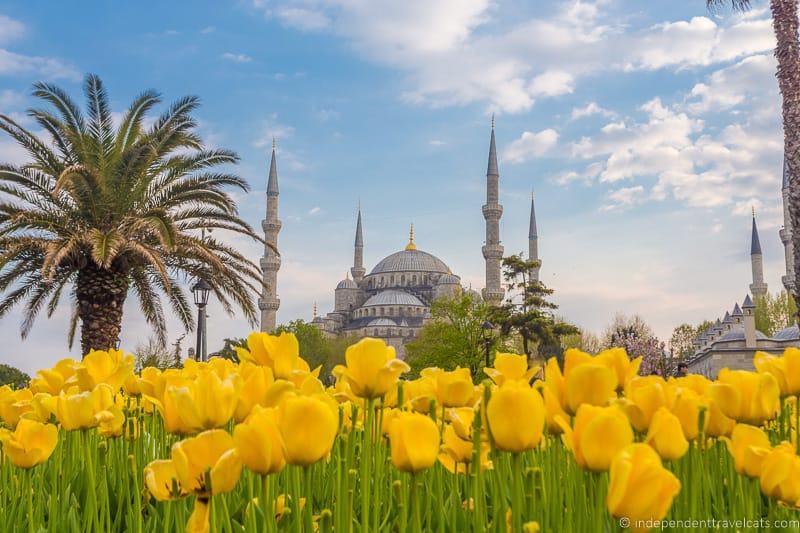
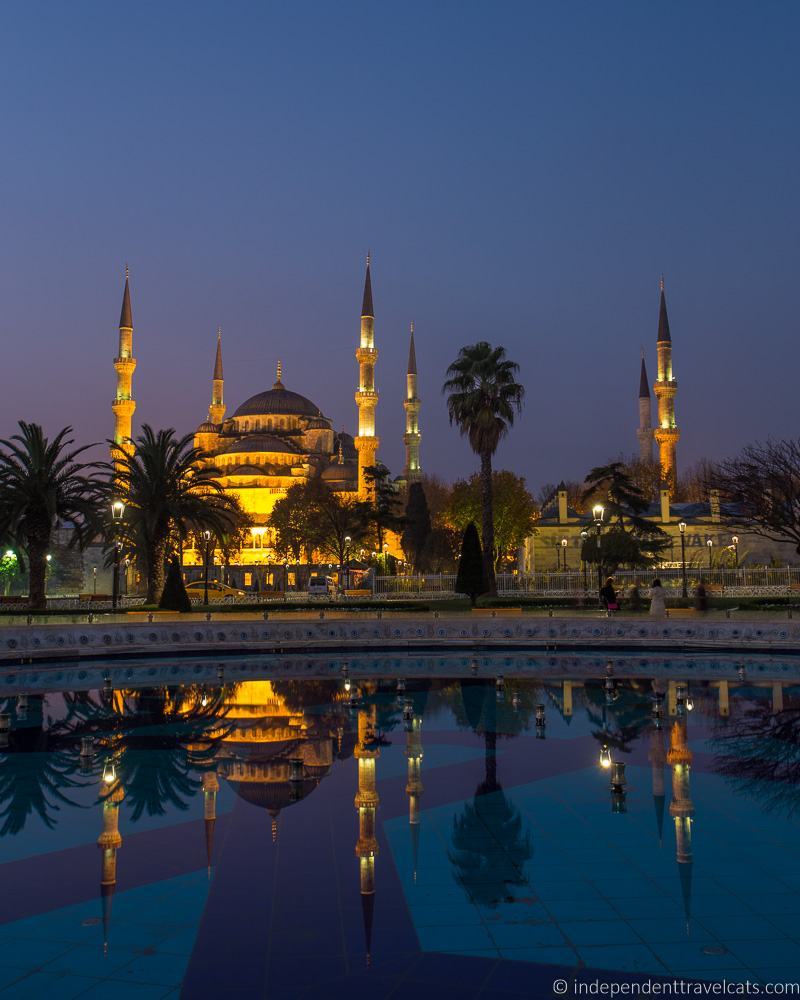
Some highlights to visit in this area include the 6th century Hagia Sophia (Ayasofya), the 17th century Blue Mosque (officially the Sultan Ahmed Mosque), Topkapi Palace, the ancient Hippodrome of Constantinople, the Basilica Cistern (Yerebatan Sarnıcı), and the Istanbul Archaeological Museums. A bit further away is the impressive 16th-century Süleymaniye Mosque, well worth a visit if you have the time.
Just note that Topkapi Palace is closed Tuesdays, so plan around that if your day-1 timing allows. Hagia Sophia upper-gallery access (for non-Muslim visitors) requires a ticket.
These sites are relatively close together and easy to visit on foot, although taxis, public buses, and sightseeing buses are also options. As you visit these sites and wander the streets of the Old City, you’ll be journeying across thousands of years of history, including the Roman, Egyptian, Byzantine, and Ottoman periods.
You’ll also want to make time for a visit to the Grand Bazaar, which began in the 15th century and is one of the largest and oldest covered markets in the world. Here you can buy many things, including ceramics, lanterns, rugs, clothing, tea, jewelry, and books. Be careful of what you’re buying — you’ll find everything from locally handcrafted rugs and jewelry to cheap souvenirs of variable quality.
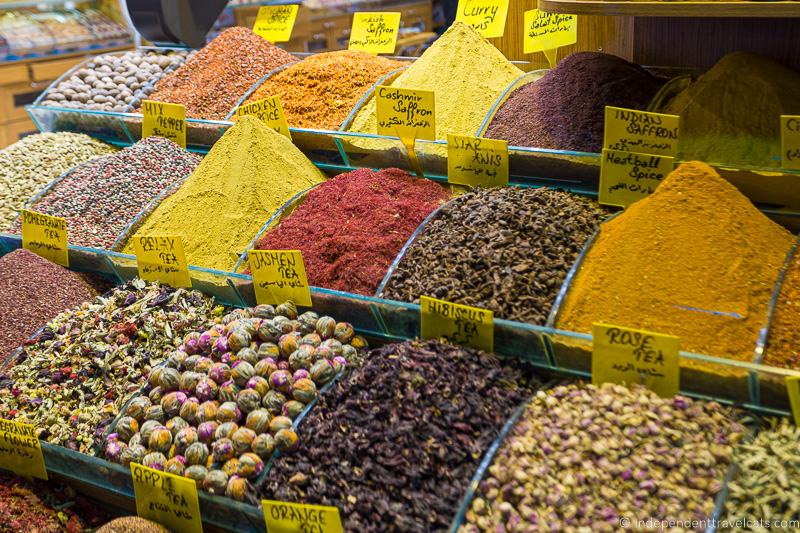
Another market worth a visit is the Egyptian Spice Bazaar, or Mısır Çarşısı. Vendors here are known primarily for selling spices, but you can also find sweets, tea, dried fruit, Turkish delight, and souvenirs.
If you’d like a guided walking tour, several cover all the historical highlights. A few options include this small group highlights tour and this customizable private tour.
After a day full of sightseeing, end your day with a relaxing Turkish dinner at a local restaurant, or consider a sunset cruise on the Bosphorus.
A cruise on the Bosphorus lets you appreciate the incredible size of the city. The Bosphorus separates the European and Asian parts of Istanbul, so you’ll be floating along the continental divide. Many cruises include dinner and entertainment, such as this cruise and this one.
Where to Stay in Istanbul
We suggest staying in or near the old part of the city (the Sultanahmet neighborhood in the Fatih district) for easy access to the city’s most popular sights.
Here are accommodation options across a range of budgets. Istanbul has a huge number of properties to choose from, and prices are very reasonable.
- Cheers Hostel – A long-running, well-reviewed budget hostel right in Sultanahmet, just a one-minute walk from Hagia Sophia and the Blue Mosque. Offers a mix of dorm beds and private rooms, en-suite or shared bathrooms, and an included breakfast served on the rooftop terrace with views of Hagia Sophia. A great pick for solo travelers and budget-conscious couples.
- Agora Guesthouse — A well-reviewed guesthouse offering both dormitory and private rooms. Breakfast included on the rooftop terrace. A few hundred yards from the Blue Mosque and Hagia Sophia.
- Tulip Guesthouse — Good value private rooms with shared or en-suite bathrooms, breakfast served on the top floor terrace with nice views. About a 5-minute walk from Hagia Sophia.
- Berk Guesthouse – Grandma’s House — Well-rated guesthouse with en-suite rooms, included breakfast, and a rooftop terrace with city views. A 2-minute walk from the Blue Mosque.
- Meserret Palace Hotel — Well-reviewed 4-star with en-suite rooms, 24-hour desk, room service, and included breakfast. Near the Spice Bazaar and about a 10-minute walk from the Old City.
- Obelisk Hotel & Suites — Well-rated 4-star with en-suite rooms, 24-hour front desk, and on-site restaurant. Breakfast included. A few hundred yards from Hagia Sophia.
- Boutique Saint Sophia — A 4-star boutique hotel offering private en-suite rooms with breakfast included and an on-site cafe and bar. Near Hagia Sophia, with some rooms offering views of the attraction.
- Régie Ottoman — A stylish boutique hotel set in a 150-year-old renovated Ottoman building. Modern amenities, breakfast included, on-site restaurant, and located about a 10-minute walk from Sultanahmet. We’ve stayed here and really enjoyed our stay.
- Vogue Hotel Supreme Istanbul — 5-star luxury hotel near the Basilica Cistern and Hagia Sophia. Modern amenities, 24-hour desk, room service, and on-site restaurant.
For self-catering, options include these apartments in the Fatih district on Booking.com and Istanbul apartments on Vrbo.
Turkey Itinerary Day 2: Istanbul
Day 2 in brief: Beyoğlu and the European side. Galata Tower, Istiklal Avenue, Dolmabahçe Palace (closed Mondays), an art-museum stop, hamam or evening food tour. No transit.
For your second day in Istanbul, cross the Galata Bridge and explore that side of the city. The Galata Bridge, which crosses the Golden Horn, is often seen as the link between the traditional and the more modern areas of Istanbul.
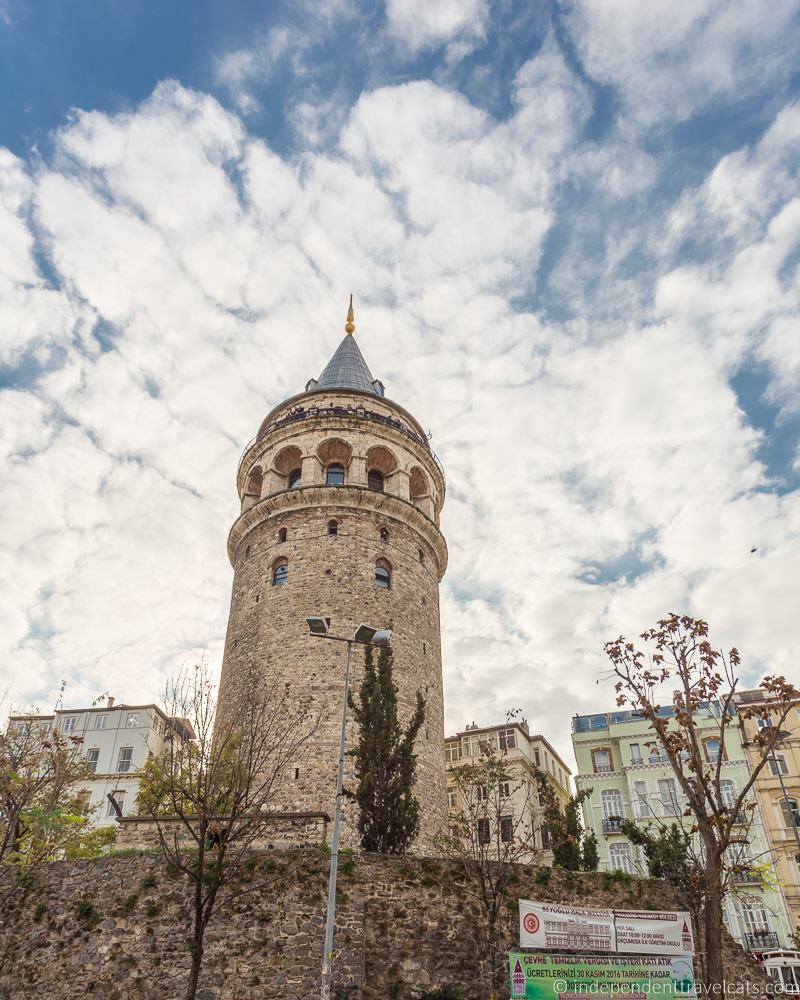
Highlights include the Galata Tower, a restored 15th-century tower with an observation deck, the European-style buildings and shopping along the picturesque Istiklal Avenue (Istiklal Caddesi), and the Taksim Square area featuring the Republic Monument — a lively area for shopping and nightlife. There are a lot of art galleries and museums in this area, including SALT Galata, the Pera Museum, and the Istanbul Museum of Modern Art.
We can also recommend visiting Dolmabahçe Palace. This beautiful 19th-century palace was once home to the sultans as well as the first president of Turkey, Mustafa Kemal Atatürk. It is the largest palace in Turkey and today is a museum. Note that Dolmabahçe is closed Mondays.
If you’re looking for a place to relax and have a coffee, make a stop at the cafe or tea lounge at the luxurious Pera Palace Hotel. The hotel is one of the most famous historical hotels in the city, with past guests including Agatha Christie. Or find a street cafe along Istiklal Avenue to people watch, or a seaside cafe to enjoy the view over the water.
You might also want to try a traditional Turkish hamam experience such as this one at Aga Hamami, the oldest hamam in Istanbul. This is a traditional Turkish bathing practice rather than a spa, but it’s a relaxing and cleansing experience.
Depending on what you want to do and how far you’re willing to walk, you can explore entirely on foot or use public transit. Transport options include public buses, trams, taxis, and sightseeing buses. Or you can join a tour that includes transport.
For those on foot, note that there’s a steep hill to get from the Galata Bridge up to Istiklal Avenue. You can take the Tünel funicular to skip the climb. This is one of the oldest subway stations in the world.
For a guide on your second day in Istanbul, this small group art expert-led tour covers the main modern art museums and art spaces in this part of Istanbul, and here is a guided tour of Dolmabahçe Palace.
For your second evening in Istanbul, finish your day with an evening food tour, sample some local nightlife, or take in a cultural event.
Those interested in the local food scene may want to consider this evening food tour or this small group food tour.
For an evening cultural performance, check what’s playing at the local theaters or see a Turkish dance performance or whirling dervishes show at the Hodjapasha Cultural Centre. Those looking for a more lively night out might check the nightlife around Taksim Square or join a local-led pub crawl.
We then recommend spending a second night in Istanbul. This works well for those taking a tour, flying, or driving themselves. However, those traveling by bus may want to head to Çanakkale today instead, so they have more time to explore Gallipoli the next day.
How to Get from Istanbul to Gallipoli
If you’re not joining a tour, you have three main options for getting from Istanbul to Gallipoli. If you take a flight or bus, head to Çanakkale (or Eceabat) first and then take a tour or arrange transport to the Gallipoli sites.
By Car: About a 186 mile (300 km) drive from Istanbul to the Gallipoli peninsula, taking around 3 to 4 hours. Since the 1915 Çanakkale Bridge opened in March 2022, the drive is faster and simpler than it used to be: the bridge crosses the Dardanelles between Lapseki and Gelibolu in about six minutes, eliminating the old ferry crossing entirely. Leaving on the morning of your third day gives you time to stop and see the main sights in Gallipoli before overnighting in Çanakkale.
By Plane: The fastest option. Flights take around an hour from Istanbul to Çanakkale and are usually reasonably priced if booked well in advance.
By Bus: Around 4.5 to 5.5 hours from Istanbul to Eceabat or Çanakkale, depending on the route. Most buses now use the 1915 Çanakkale Bridge rather than the older ferry route, which has cut journey times. Check bus times and prices, and book online here. Depending on schedules, those wanting to explore Gallipoli may want to catch a late afternoon or evening bus on Day 2 to have more time on Day 3.
Turkey Itinerary Day 3: Gallipoli
Day 3 in brief: Long transit morning from Istanbul to the Gallipoli peninsula (3 to 5 hours by car, 4.5 to 5.5 by bus, much faster since the 1915 Çanakkale Bridge opened in 2022). Battlefields and memorials in the afternoon. Overnight Çanakkale or Eceabat.
Today, leave Istanbul after breakfast and head southwest to the Gallipoli peninsula. The peninsula lies between the Dardanelles and the Gulf of Saros and is best known as the location of the Gallipoli Campaign during World War I.
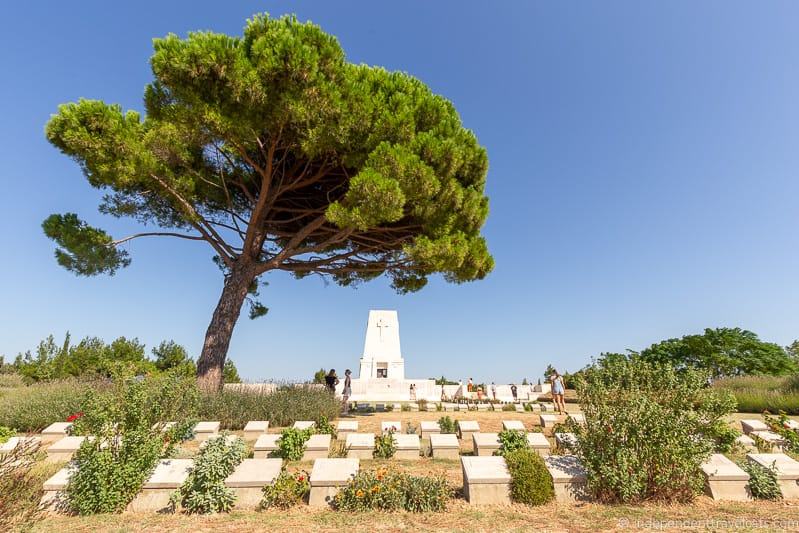
Most of the area is part of the Gallipoli Peninsula Historical National Park, which was named a UNESCO World Heritage site in 1998. Whereas most historical attractions in Turkey date back thousands of years, this is a place to learn about more recent history.
On the Gallipoli peninsula in 1915, Allied Forces (which included British, Australian, New Zealand, Indian, French, and Newfoundland troops) mounted an ultimately doomed attack on the Ottoman Empire to try to capture Constantinople (now Istanbul) and take control of a key supply route. After about 9 months of fighting, minimal gains, and around 250,000 casualties on each side, the Allies withdrew.
The event was a huge disaster for the Allied war effort, with lasting repercussions. For Winston Churchill, then First Lord of the Admiralty, his promotion of the failed campaign would lead to a demoted role in politics, and the failure haunted him for years. It would have been difficult for anyone at the time to imagine him as a later wartime Prime Minister.
Turkey was at the time part of the Ottoman Empire and was fighting on the side of Germany. For the Turks, one of the army officers for the Ottoman defense at Gallipoli, Mustafa Kemal Atatürk, would later become the first president and founder of modern Turkey.
The Gallipoli Campaign was one of the most important events in the war from an Australian and New Zealand perspective. The Australian and New Zealand Army Corps (ANZAC) were deployed and, like many of the countries involved, suffered heavy losses. The campaign is largely regarded as the trigger for the national consciousness of both countries, and to this day both countries formally remember their fallen on ANZAC Day (April 25th) each year.
For Australians and New Zealanders visiting Turkey, a trip to the Gallipoli peninsula is usually high on the priority list. We think this is a trip that should be of interest to anyone, regardless of nationality, in order to learn more about this event and reflect on the effects of war.
Just note that if you happen to be visiting around April 25 (ANZAC Day), the Gallipoli sites can be very busy with commemorative services and large crowds, and some areas may have access restrictions. If you’re traveling in late April, plan your Gallipoli day for a date other than the 25th if possible, or be prepared for a different kind of visit.
There are a number of places to visit across the Gallipoli Peninsula, including landing sites, memorials, and graveyards. A few of the more popular include ANZAC Cove, Lone Pine Cemetery and Memorial, and the Çanakkale Martyrs’ Memorial. What you visit will probably depend on your specific interests and your nationality. You can see a full list of sites here.
There are also a few museums in the area focused on the Gallipoli campaign, including the Kabatepe Promotion Center and Museum in Kabatepe, the Salim Mutlu War Museum in Alçıtepe, and the Gelibolu War Museum in Gelibolu.
If you want to know more about the battles, we recommend a book such as Gallipoli: The Battlefield Guide. We’d recommend some sort of guidebook if you’re planning to explore on your own without a tour guide.
Expect to spend a few hours here. It’s a challenging place to get around without your own vehicle, so we’d suggest taking a tour if you don’t have transport. There are a lot of tour options, so it’s usually easy to find a good value tour.
Here are some day tour options to consider. Some also include Troy, which is on our itinerary for the next day:
- An 8 hour tour of the Gallipoli sites with lunch from Çanakkale
- A 6 hour tour of Gallipoli with lunch from Çanakkale
- A Full day tour of Gallipoli and Troy with lunch from Çanakkale
- Another Full day tour of Gallipoli and Troy with lunch from Çanakkale
- A Private tour of the Gallipoli sites from Çanakkale
- A 6 hour Gallipoli tour with lunch from Eceabat
If you have extra time in Çanakkale, there is a fortress (Çimenlik Castle), an enclosed market called the Mirror Bazaar, a few museums (Military Marine Museum, city history museum, and Ceramics Museum), and a harbor area where you can find the wooden Trojan horse from the 2004 film Troy starring Brad Pitt. There’s also Kilitbahir Fortress just across the strait.
If you’re staying in Eceabat, you can also spend time relaxing on the beach.
Where to Stay Near Gallipoli
We recommend spending the night in either Çanakkale (a short ferry ride from the Gallipoli Peninsula) or Eceabat. Eceabat is closer to the Gallipoli sites, but Çanakkale has more services and attractions, and a wider hotel selection.
If you’re traveling by bus, choose a place near the bus station.
Here are some options at both locations. Note that Eceabat is a small town with limited Booking.com inventory, so we list more Çanakkale options:
- Set Özer Hotel in Çanakkale — A centrally located good value hotel offering private en-suite rooms with breakfast. Very close to the ferry, waterfront, and main town attractions.
- Kinzi House in Çanakkale — A well-reviewed and centrally located self-catering option with full kitchen, laundry facilities, and flat-screen TV. Great value for a few people who want to cook for themselves.
- Artur Hotel in Çanakkale — A popular and well-reviewed hotel in the center of Çanakkale with private en-suite rooms and an on-site restaurant.
- Kolin Hotel in Çanakkale — A 5-star hotel with all the modern guestroom amenities, outdoor and indoor swimming pools, spa, fitness center, multiple restaurants and bars, and a free airport shuttle.
- Hotel Crowded House in Eceabat – A family-run hotel right opposite the ferry terminal, just steps from the seafront and a 7-minute walk to Eceabat Public Beach. Offers private en-suite rooms, an included breakfast buffet, and the staff can help arrange tours of Gallipoli battlefields. Excellent value for those visiting the war memorials.
- Eceabat Doğa Pansiyon-Hotel in Eceabat – A beachfront pension just 100 metres from Eceabat Public Beach, with a private beach area, garden, and free private parking. All rooms are sea-view with a balcony or patio, and a continental breakfast is included. A relaxed waterfront option for those wanting a quieter base.
- Hotel Casa Villa in Eceabat — Well-reviewed hotel in Eceabat a few hundred yards from the beach. Features private rooms with en-suite facilities and breakfast included.
How to Get from Çanakkale to Troy and Kuşadası
Your next stop is Troy, after which you’ll head south via Izmir to Kuşadası. If you visited Troy today, skip that stop and head straight to Kuşadası.
If you’re not taking a guided tour, you have a few choices today. Heads up: this is one of the longer travel days on the itinerary. The combination of a Troy visit followed by a 5-6 hour drive or bus to Kuşadası makes for a full day even if everything goes smoothly. Plan to start early.
By Car: About a 30 minute drive to Troy from Çanakkale, then a little over 5 hours down to Kuşadası. Spend a couple of hours at Troy and aim to arrive in Kuşadası mid-to-late afternoon.
By Plane: You can fly from Çanakkale to Izmir for part of the day. However, you’ll still need to arrange a bus, taxi, or tour to get to and from Troy and onwards from Izmir to Kuşadası. Those planning to fly may want to base in Izmir instead of Kuşadası.
By Train: Part of today’s journey can be done by train, as there is a train between Izmir and Selçuk (the town next to Ephesus).
By Bus: Regular buses run from Çanakkale to Troy (about every hour, around 45 minutes). To head onto Izmir, you’ll need to backtrack to Çanakkale or head to Ezine, then catch a bus to Izmir (about 5.5 hours). From Izmir, it’s about a 90-minute bus journey to Kuşadası.
You might also consider a local taxi or shared dolmuş to and from Troy, then connect to intercity buses in Ezine or Çanakkale onwards to Izmir and Kuşadası.
Check bus times and prices, and book online here.
Turkey Itinerary Day 4: Troy & Kuşadası
Day 4 in brief: Long travel day. Troy in the morning (30 minutes from Çanakkale, 2 to 3 hours on site), then a 5 to 6 hour transit south to Kuşadası, passing through Izmir. Aim to start straight after breakfast.
For your fourth day, you’re going to visit the ancient city of Troy and then head down the western coast of Turkey to Kuşadası. You may also stop in Izmir along the way.
This is a long travel day no matter how you do it. If you can, head out straight after breakfast so you have time to explore Troy in the morning. Don’t plan anything ambitious for late afternoon — getting to Kuşadası in good time is the goal.
The first stop of the day is Troy, only about a 30-minute drive south of Çanakkale. A city has been at this location known as Troy from around 3,000 BC right up until around 450 AD.
Of course, as it existed for almost four millennia, Troy saw a lot of changes in its time. There were no fewer than nine cities on this location, which was favored due to its waterfront position. Reasons for its demise are unclear, but the fall of the Roman Empire was likely a factor in its final abandonment.
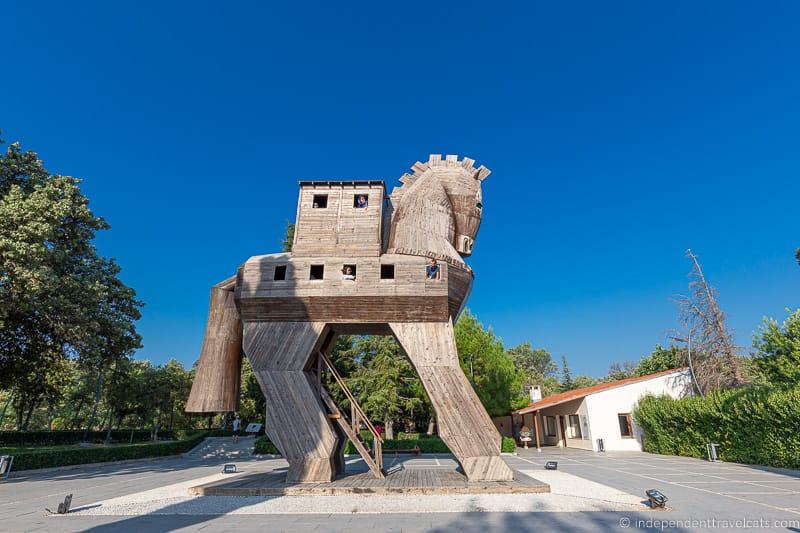
The main reason that Troy is famous today is that it was the main setting of Homer’s Iliad about the Trojan War. This ancient Greek epic poem gave us the famous story of the Trojan Horse and the disastrous love triangle between Helen of Troy, King Menelaus, and Paris. The historical accuracy of the tale is debated, but many historians do believe there was some sort of war and siege of Troy by Spartan and Achaean warriors in the 12th or 13th century BC.
The actual location of the ancient city of Troy was lost to history in the subsequent centuries. Later travelers and archaeologists searched for the location, and many believed it was somewhere in the Anatolia region of Turkey, particularly the Troad peninsula. It was Englishman Frank Calvert who would first excavate the hill at Hisarlık and find what is now believed to be the remains of the ancient city of Troy.
Whether the events of the Iliad took place here or not, UNESCO notes that the archaeological findings at Troy are the “most significant demonstration of the first contact between the civilizations of Anatolia and the Mediterranean world.” Structures have been found at Hisarlık from a number of periods, including the Bronze Age and the Roman and Greek periods.
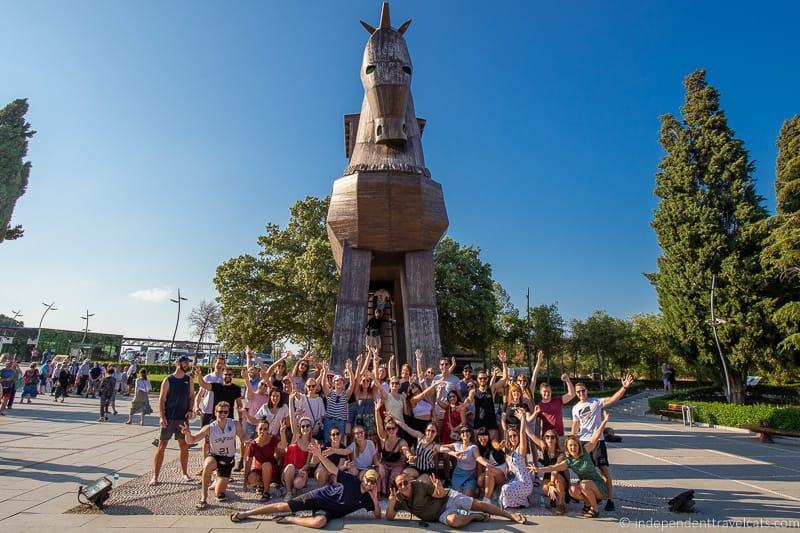
Today, Troy is a protected archaeological site, a national historical park, and a UNESCO World Heritage Site. As a visitor, you can wander around and learn about the history of the place while seeing the various layers of the different cities. Naturally, there’s a giant wooden horse you can take a photo of as well. The Troy Museum (Troya Müzesi), which opened in 2018, holds a number of artifacts from the archaeological site. We’d recommend allowing 2 to 3 hours to visit Troy.
From Troy, continue south along the coast to Kuşadası. Along the way you’ll pass through Izmir. Izmir is one of the oldest settlements in the Mediterranean, originally believed to have been settled in 6500 BC. It’s now the third-largest city in Turkey by population.
Izmir offers lots of attractions and services. The main tourist sites include the Roman Agora of Smyrna, the hilltop castle of Kadifekale (the “Velvet Castle”), the seafront and Kordon esplanade, Konak Square and its clock tower, several museums, and the Kemeraltı shopping district. There is also a rich Jewish heritage here, with several synagogues and other Jewish landmarks, especially in the Kemeraltı district.
Izmir may be a good place to stretch your feet and maybe visit an attraction or two. You could also overnight in Izmir, but our advice is to press on to Kuşadası — it’s closer to upcoming highlights and has its own attractions.
Kuşadası is a popular coastal town in Turkey, with a wide range of accommodation, beaches, and attractions. It’s also very close to Ephesus, one of Turkey’s most famous ancient ruined cities.
Today is a long journey regardless of your transport, so we recommend a relaxing evening once you arrive. Maybe a stroll around town or a dip in the hotel pool, then a nice dinner.
We recommend spending two nights in Kuşadası. Travelers using public transport may want to consider Selçuk (the town next to Ephesus) instead, as the transit connections are a bit easier there.
Where to Stay in Kuşadası
Kuşadası is a popular resort town and there are many hotels to choose from, the majority offering excellent value. Most have pools, and some are next to a beach.
Kuşadası is pretty spread out, and we generally recommend staying within walking distance of the city center and seaside. Bus travelers will want to stay within walking distance of the bus station and stops:
- Hotel Stella — A well-reviewed good value 2-star hotel offering en-suite rooms with balconies, a pool, on-site restaurant, and inclusive breakfast. About 100 yards from the harbor.
- Grand Sahin’s Hotel — Well-reviewed 4-star hotel with en-suite rooms with balconies, inclusive breakfast, on-site restaurant and bar, outdoor swimming pool, private beach area, and free parking. Next to the seaside.
- DoubleTree by Hilton Kuşadası — A popular city-center hotel with 5-star facilities, en-suite rooms with balconies, rooftop restaurant and bar, 2 swimming pools, fitness center, and a spa.
- Akman City Hotel – A central 2-star value hotel just a 3-minute walk from Kuşadası Sahil Beach. Offers private en-suite rooms with balconies, a seasonal outdoor pool, an on-site restaurant, and an included breakfast. A good budget pick close to the town center.
- Hotel By Karaaslan Inn – A 4-star beachfront hotel directly opposite Kuşadası Marina, with every room offering a sea-view balcony. Features a seasonal outdoor pool, sun terrace, multiple restaurants, and a poolside bar. Walking distance to the marina, beach, and city center.
- Derici Hotel – A well-established 4-star hotel in central Kuşadası, just across the seafront promenade with rooms offering port and sea views. Features a rooftop terrace with a swimming pool, a spa with a Turkish bath, sauna, fitness center, and an included breakfast. A 5-minute walk to the marina.
Where to Stay in Selçuk
Travelers using buses or trains may prefer to spend the two nights in Selçuk. Stay in central Selçuk within walking distance of the bus station and train station:
- ANZ Guest House — A budget-friendly hostel with dorm beds, private rooms, and family rooms. Breakfast included, with a rooftop terrace. Centrally located, about a 12-minute walk to the bus and train stations.
- Queen Bee Hotel — A good value bed-and-breakfast with private bathrooms and included breakfast. There’s a cafe on the ground floor. Centrally located, about a 12-minute walk to bus and train stations.
- Celsus Boutique Hotel — Boutique hotel with outdoor swimming pool, garden, shared lounge, and inclusive breakfast. Centrally located, about a 10-minute walk to the bus and train stations.
- Vinifera Vineyards Hotel — If you’re looking for something different and don’t mind being outside Selçuk, this hotel sits next to a vineyard and offers large en-suite rooms with patios, on-site restaurant and winery, swimming pool, and inclusive breakfast. Best suited for those traveling by car or taxi, though you can reach Selçuk by train (the Çamlık station is about a 7-minute walk from the hotel).
Turkey Itinerary Day 5: Kuşadası & Ephesus
Day 5 in brief: Ephesus archaeological site in the morning (2 to 4 hours, go early to beat the crowds and the heat), then back to Kuşadası for the afternoon. Pigeon Island walk, a beach hour, or a relaxed dinner.
Today, head to Ephesus after breakfast to explore the archaeological sites. Then return and spend the latter part of the day exploring Kuşadası itself. Ephesus is very popular and can get very crowded, so going early is a good idea to avoid some of the crowds and the afternoon heat.
Many people visit Ephesus as part of a tour, but it’s also easy to get to on your own. It’s about a 25-minute drive, bus, or taxi ride away. If you’re using public transport, you can take a dolmuş from Kuşadası that drops you at the lower gate of Ephesus.
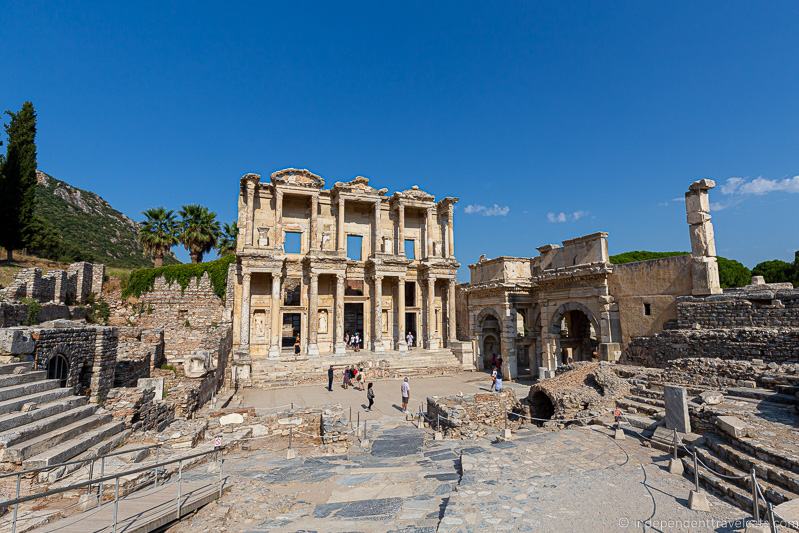
Ephesus is one of the most significant archaeological sites in Turkey. This UNESCO World Heritage Site was an ancient Greek city, founded in the 10th century BC, and only abandoned around the 15th century AD after centuries of decline (mainly due to the harbor silting up). At its height, it was second only to Rome in size and importance in the ancient world.
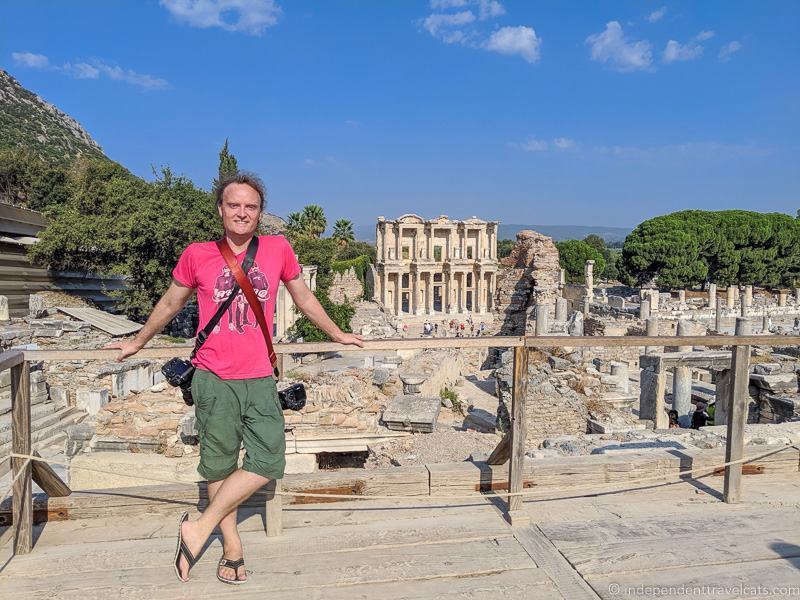
Today, Ephesus is a large and important archaeological site where you can see the remains of temples, theaters, wide marble streets, agoras, bathing complexes, tombs, aqueducts, fountains, terrace houses, and more. Some of the main sights include the spectacular Library of Celsus, the Temple of Hadrian, and the Great Theatre.
Ephesus is an important religious destination too, especially for Christians. It was the location of one of the Seven Churches of Asia, the seven major early Christian communities, as noted in the New Testament Book of Revelation.
It’s believed that the Gospel of John may have been written here, and that Mary, mother of Jesus, lived out her final years nearby in the care of John. Important early Christian sites in Ephesus include St. John’s Basilica, the Church of the Virgin Mary, and The House of the Virgin Mary.
Also located nearby are the ruins of the Temple of Artemis, one of the Seven Wonders of the Ancient World. Unfortunately today, very little remains.
For those interested in seeing some of the artifacts found here, take time to visit the nearby Ephesus Archaeological Museum in Selçuk after visiting the archaeological sites. It contains a number of statues, columns, coins, sarcophagi, tools, and other artifacts.
Most visitors just visit the main archaeological complex, which contains over 25 main points of interest. There is an entry fee that covers all the sites (an additional ticket is required if you want to go inside the terrace houses), and you can enter at the upper or lower gates and exit from either side. There are taxis, shuttles, and carriages between the two if you wish.
It’s a large site, running from the top of a hill to the bottom, but once you arrive you can visit everything on foot. Just be prepared for walking by wearing comfortable shoes and bringing your water bottle.
There is a lot to see and take in here, and there isn’t a lot of information on display. We’d recommend renting an on-site audio guide, joining a guided tour such as this one, or bringing a guidebook (like this one) so you have an idea of what you’re looking at. Most people spend 2 to 4 hours exploring the complex.
There’s more to explore outside the main complex if you have time. Sites located outside include the Temple of Artemis, House of the Virgin Mary, St. John’s Basilica, and the Ephesus Archaeological Museum. Other attractions include Selçuk Castle, Ayasuluk Citadel, and Isa Bey Mosque.
If you’re considering a tour from Kuşadası (or Izmir), there are a variety of options. Around 4 to 5 hours would work and give you time to sightsee in Kuşadası in the afternoon, but you could also do a full-day tour if you want more time. Some tours from Kuşadası to consider:
- This 4-hour small-group morning tour of Ephesus and the Temple of Artemis
- This 3.5 to 4.5 hour private tour of Ephesus (small-group format)
- This 6-to-8-hour small-group tour of Ephesus, which includes the House of the Virgin Mary, the Temple of Artemis, and Isa Bey Mosque.
Once you’ve finished touring Ephesus, return to Kuşadası. The town has cafes, restaurants, and beaches. Depending on your time and energy, visit one of the beaches (Ladies Beach is the most popular public beach), spend time exploring the town’s attractions, or relax by the hotel pool.
Our favorite thing to do is take a walk over to Güvercinada, or Pigeon Island, a small island linked to the mainland by a causeway. There is a castle there you can visit if you wish.
How to Get from Kuşadası to Pamukkale & Fethiye
This is another long travel day. The attractions are spaced far apart, and Pamukkale itself is only a half-day site sandwiched between two transit legs. If you’re not taking a tour, your best options are public transit or driving.
If you’d rather break this day in two, consider overnighting in Pamukkale or nearby Denizli, then continuing to Fethiye on Day 7. Several of our readers have done this and found Day 6 much more relaxed. The trade-off is one less night in Fethiye.
By Car: If driving, Pamukkale is about a 120 mile (190 km) drive from Kuşadası, taking around 3 hours on the toll roads (4 hours without). From Pamukkale, it’s another 125 mile (200 km) drive to Fethiye, around 3 more hours.
If that sounds like too much, you could skip Pamukkale and head south along the coast from Kuşadası to Fethiye, giving you more time in either Kuşadası or Fethiye.
By Plane: You can fly from Izmir to Denizli (the town near Pamukkale) and then from Denizli to Dalaman (the airport for Fethiye). However, many of these flights connect via Istanbul, often making the flights take as long as taking public transit or driving.
By Bus: From Kuşadası, it’s relatively easy to get to Pamukkale by public transport. You can go by bus directly from Kuşadası or via Selçuk. The bus takes 3 to 4 hours depending on the routing. From Pamukkale (or Denizli, the larger town next door where most buses terminate), you’ll catch an onward bus to Fethiye. There’s no direct route — buses generally route via Muğla, taking about 4 to 5 hours total. The full Day 6 transit is 7 to 9 hours of travel time on top of your Pamukkale visit, which is why we suggest considering an overnight in Pamukkale or Denizli if you want a more relaxed pace.
Check bus times and prices, and book online here.
Turkey Itinerary Day 6: Pamukkale & Fethiye
Day 6 in brief: The heaviest transit day on the itinerary. Drive 3 hours inland to Pamukkale, walk the travertines and Hierapolis ruins for 2 to 3 hours midday, then drive 4 more hours south to Fethiye. Consider an overnight in Pamukkale or Denizli if the long day sounds too much.
Today, leave Kuşadası after breakfast and head inland to Pamukkale, then continue on to your overnight stop in Fethiye on the southern coast.
A note on pacing. Pamukkale itself is a 2 to 3 hour visit for most travelers. The site doesn’t take all day — but the day does. The transit legs on either side of Pamukkale are what makes Day 6 long. If you want a more relaxed visit, overnight in Pamukkale or nearby Denizli and continue to Fethiye on Day 7.
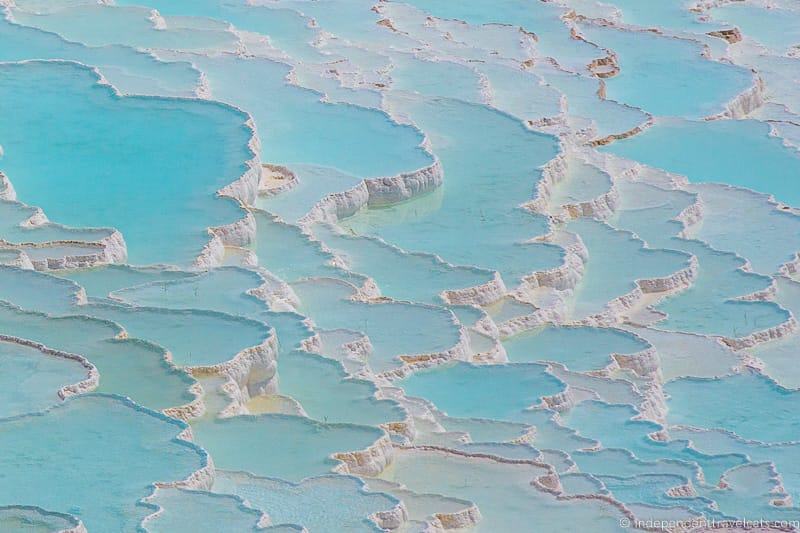
Pamukkale is famous for its travertine terraces of carbonate minerals left by flowing thermal spring water. The terraces look almost like snow, with pools of water cascading down the hillside. They’re a striking sight, and the area is a UNESCO World Heritage Site (jointly listed with the ancient Greek city of Hierapolis, which sits on top of the hill).
You can walk along the travertine terraces in your bare feet (shoes are not allowed on the terraces themselves to protect them). Most of the pools are now closed to bathers in order to protect the formations, but there are designated pools where you can wade.
The remains of the ancient city of Hierapolis sit at the top of the hill above the travertines. Hierapolis was a Greek and Roman spa town, and you can wander among the ruins of its theatre, necropolis, agora, baths, and city walls. The Hierapolis Archaeology Museum is on site and worth a visit if you have the time.
There’s also Cleopatra’s Pool, a thermal pool with submerged Roman columns. It reopened in May 2026 after a 16-month renovation (new changing rooms and rest areas included), and you can pay extra to swim among the ancient marble in 36°C water. Admission runs around €13 on top of the Hierapolis/Pamukkale entrance fee.
For most travelers, 2 to 3 hours is enough time to walk the terraces, see the main highlights of Hierapolis, and have a quick swim if you want one. Archaeological completionists could easily spend 4 to 5 hours here exploring the full Hierapolis ruins, including the Necropolis, Roman gates, and bath complex. Decide based on your interests.
Pamukkale gets very busy in the middle of the day, especially when tour buses arrive. If you want quieter photos, arrive early or stay until late afternoon.
Hours shift seasonally. Summer (April through October) runs longer (until around 9pm, with the South Gate opening earliest at 06:30), winter (November through March) closes earlier (around 6pm). Useful for beating the worst of the midday heat in summer if you can start at the gate.
From Pamukkale, continue on to Fethiye on the Mediterranean coast. Fethiye is a popular coastal town and a great base for exploring the Turquoise Coast.
If you’ve gone the long-day route, plan to arrive in Fethiye in the evening and have a relaxed dinner.
Where to Stay in Fethiye
Fethiye has a wide range of accommodation, from budget-friendly options to seaside resorts. Fethiye town has the marina and city center, while Çalış Beach (a few km west of the town center) has more beachfront options. Pick the area that matches your priorities:
- Pinara Pension & Guesthouse – A well-reviewed 2-star guesthouse in central Fethiye, a 3-minute walk to Fethiye Marina and 300 yards from Ece Saray Marina. Offers private en-suite rooms with included breakfast, an on-site restaurant and bar, and a terrace with views over the harbor. Note: this property does not accept children, so it suits couples and solo travelers best.
- Chillsteps Hostel – A laid-back beachfront hostel near Çalış Beach with a garden, sun terrace, shared lounge, and a children’s playground. Offers both dormitory beds and private rooms with sea views. Great for travelers wanting a beach base outside the city center.
- Infinity Exclusive City Hotel — A well-reviewed good-value city center hotel with en-suite rooms, breakfast included, on-site restaurant, and a pool. Within walking distance of Fethiye’s main attractions and the marina.
- Orka Boutique Hotel — A boutique mid-range hotel offering en-suite rooms with balconies, swimming pool, on-site restaurant, and breakfast included. A short walk to the seafront.
- Ece Marina Suit — A beachfront marina hotel with apartment-style rooms (kitchenette and lounge area), good for families. Includes breakfast, pool access, and is right by Fethiye Marina.
- Hotel Delta — A well-rated hotel on Çalış Beach with en-suite rooms, swimming pool, on-site restaurant, and inclusive breakfast. Steps from the beach.
For self-catering or longer stays, Fethiye also has plenty of vacation rental apartments available through major booking sites, including several covered in our comparison of vacation rental websites.
Turkey Itinerary Day 7: Fethiye
Day 7 in brief: Coastal day, no transit. Pick one: the 12 Islands boat trip, Ölüdeniz beach, paragliding from Mount Babadağ, or a land-based excursion to Saklıkent Gorge, Patara Beach, or Kayaköy.
Today is for enjoying the Turkish coast. Fethiye is a popular base on the Turquoise Coast, with beaches, mountains, and ancient ruins all nearby.
Fethiye itself is a charming town with a marina, a daily market, ancient Lycian rock tombs carved into the cliffs above the town, and a small archaeological museum. You can spend a relaxed morning exploring the town and the harbor area, then head out for the afternoon to one of the many activities in the area.
The most popular thing to do from Fethiye is to take a boat tour. The classic option is the 12 Islands Boat Trip, a full-day trip that visits a series of small islands and bays in the Gulf of Fethiye, with stops for swimming, snorkeling, and lunch. The boats are typically traditional wooden gulets, and the trip is a relaxing way to see the coast.
You can book this 12 Islands Boat Trip with hotel transfer and lunch in advance, or arrange one in town the day before.
Another option is to head to Ölüdeniz, a famous lagoon with turquoise water and a long beach, about a 20-minute drive from Fethiye. The beach is one of the most photographed in Turkey. You can swim, sunbathe, or take an Ölüdeniz boat trip to Butterfly Valley and St. Nicholas Island.
For the more adventurous, Ölüdeniz is also one of the world’s top spots for tandem paragliding. You take off from the top of Mount Babadağ and glide down over the lagoon. It’s an incredible experience if you’re up for it. You can book a tandem paragliding flight from Ölüdeniz in advance.
Other day trip options from Fethiye include Saklıkent Gorge (a dramatic 18 km canyon you can walk through), Patara Beach (one of the longest in Turkey and home to ancient ruins), Tlos (an ancient Lycian city in the mountains), and Kayaköy (an abandoned Greek village now a ghost town).
Visitors here in winter (November to March) should note that boat tours don’t run, paragliding is weather-dependent, and many seasonal restaurants close. The land-based options like Saklıkent, Tlos, and Kayaköy still work year-round, and the Lycian Way hiking trails are at their most pleasant in the cooler months.
End the day with a sunset stroll along the marina or at Çalış Beach, which is famous for its sunsets, then dinner at one of the many seafood restaurants in town.
How to Get from Fethiye to Antalya
Tomorrow you head east along the coast to Antalya. This is a more manageable transit day than Days 4 or 6.
By Car: About a 200 km drive, taking around 3 to 4 hours depending on whether you take the inland highway or the slower but more scenic D400 coastal route. The coastal route adds 1 to 2 hours but is one of the most beautiful drives in Turkey, passing through Kaş, Kalkan, Demre, and Olympos. If you have time and a car, it’s worth the extra time.
By Bus: Regular buses run from Fethiye to Antalya, taking around 4 hours. Multiple companies operate this route. Check times and book online here.
By Plane: There’s no direct flight option that’s worth taking — connecting via Istanbul takes longer than the bus. Stick with bus or car.
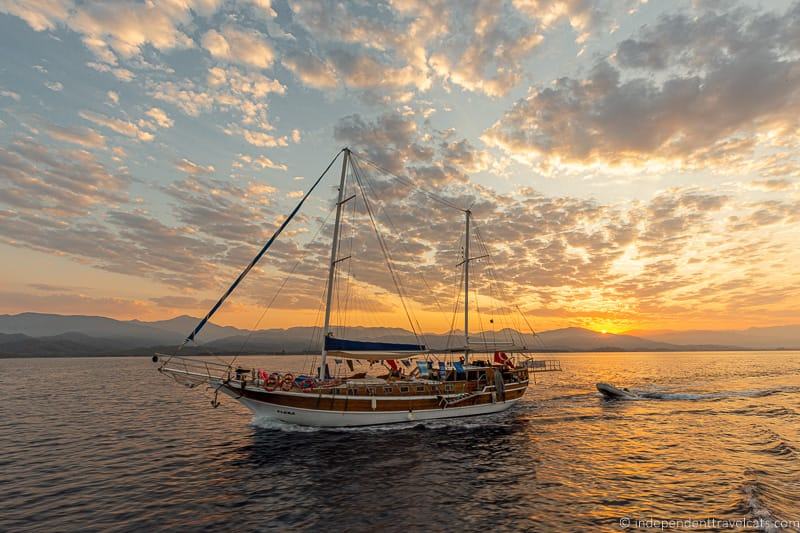
Turkey Itinerary Day 8: Antalya
Day 8 in brief: Medium transit (3 to 4 hours east along the coast or via the inland highway), arriving Antalya by early afternoon. Kaleiçi old town in the late afternoon and evening, dinner near the harbor.
Today, head east along the coast to Antalya, the largest city on Turkey’s Mediterranean coast and a popular resort destination. With over 2.5 million people, Antalya is also the fifth-largest city in Turkey.
Aim to arrive by early afternoon so you have time to settle in and start exploring. Antalya is sometimes called the Turkish Riviera, and the city has a beautiful old town, a long beachfront, and is surrounded by mountains.
The main attraction is Kaleiçi, the historic old town. It’s a maze of narrow cobblestone streets lined with restored Ottoman houses, boutique hotels, restaurants, and shops. Highlights include Hadrian’s Gate (a 2nd-century Roman triumphal arch), Yivli Minaret (a fluted minaret from the 13th century), the Clock Tower, and the old harbor.
The old town backs onto cliffs that drop down to the harbor, and there are several spots where you can look out over the water. From the harbor area, you can take boat trips along the coast.
The Antalya Museum is one of the largest archaeological museums in Turkey and houses an impressive collection of artifacts from the surrounding region, including pieces from Perge, Aspendos, and other ancient sites. It’s well worth a visit if you’re interested in archaeology. Note that the museum’s hours can be reduced in winter.
Other things to do in Antalya proper include visiting the Düden Waterfalls (both the Upper and Lower falls), Konyaaltı Beach, Lara Beach, and the Tünektepe Cable Car for panoramic views over the city.
If you’d like a guided overview, this full day city tour with boat trip and waterfalls covers the main Antalya highlights.
For dinner, the old town has dozens of restaurants serving everything from Turkish classics to international cuisine. The harbor restaurants come with a view but are pricier.
Where to Stay in Antalya
Antalya has accommodation options for every budget. We generally recommend staying in or very near Kaleiçi (the old town) for easy access to the main sights, restaurants, and harbor:
- Kuyu Beergarden Hostel – A budget beachfront hostel in the historic Kaleiçi old town, a 6-minute walk to Mermerli Beach and 600 metres from the Old City Marina. Offers dormitory and private rooms, a garden, on-site restaurant, and beer garden. Note: this property does not accept children and dormitory beds are restricted to guests aged 18 to 45, so it suits adult solo and couple travelers.
- Atlas Pansıyon – A central, good-value pension a 16-minute walk from the Antalya Clock Tower and just over a mile from Hadrian’s Gate. Offers private en-suite rooms, free WiFi, a garden, free shuttle service, and a 24-hour front desk with English-speaking staff. A quiet budget base for exploring Antalya’s old town.
- White Garden Hotel — A well-rated hotel near the old town with a swimming pool, on-site restaurant, beach access, and breakfast included.
- Tekeli Konakları — A restored Ottoman pasha’s residence in the old town, featuring traditional rooms with modern amenities, an on-site cafe, garden, and breakfast included. Atmospheric and centrally located.
- Cap d’Perge Hotel — An adults-only hotel near the historic center with en-suite rooms, swimming pool, on-site restaurant and bar, and breakfast included.
- ATICI Hotel — A central Antalya hotel with en-suite rooms, on-site restaurant, and breakfast included. Convenient location near the historic center.
For a resort experience, Antalya has many large all-inclusive resorts in the Belek and Lara Beach areas, just east of the city. These are good for a beach holiday but less convenient for sightseeing in the old town:
- Xanadu Resort Belek — A 5-star all-inclusive resort in Belek with multiple pools, private beach, spa, multiple restaurants, and golf course access. About 35 minutes east of Antalya.
- Gloria Serenity Resort — A luxurious 5-star resort in Belek with villas, private beach, multiple pools, golf course, spa, and several restaurants. We have stayed in one of the villas here and it is a great place.
- Land of Legends Hotel — A theme park hotel ideal for families, with on-site theme park, water park, dolphin shows, and shopping. About 30 minutes east of Antalya.
For self-catering apartments in Antalya, options include vacation rentals through Booking.com and similar sites.

Turkey Itinerary Day 9: Antalya
Day 9 in brief: Pick one: ancient sites (Perge and Aspendos), nature (Tahtalı cable car or Kurşunlu Waterfalls), beach (Konyaaltı or Lara), or a relaxed day in the Antalya old town. Full day either way.
Spend your second day in the Antalya area exploring further afield. There are several great day trips from Antalya, depending on your interests.
One of the most popular is to visit the ancient sites of Perge and Aspendos, both within an hour of Antalya. Perga was a major ancient Greek and Roman city, with extensive ruins including a Roman theater, stadium, agora, and necropolis. Aspendos is famous for its remarkably preserved Roman theater, considered one of the best-preserved in the world. It’s still used for performances today, including an annual opera and ballet festival in summer.
Many tours combine Perge, Aspendos, and Side (another ancient coastal town) into a single full-day trip, such as this Antalya cable car, boat, and waterfalls full day tour.
For families or those looking for a fun day, Land of Legends Theme Park has rides, a water park, dolphin shows, and shopping. You can book a Land of Legends entrance ticket in advance.
Nature lovers might want to head to Saklıkent Gorge (different from the one near Fethiye), or to one of the many waterfalls in the Antalya area, such as Kurşunlu Waterfalls. This Kurşunlu Waterfalls 5-hour tour covers a few of the local waterfalls.
You can also take the cable car up to Tahtalı Mountain (formerly known as Mount Olympos) for spectacular views over the coast. It’s an 11-minute ride to the 2,365m summit and runs daily. Check the official site for current schedule and ticket prices, as both vary seasonally. Or visit the eternal flames of Yanartaş, where natural gases burn from cracks in the rocks (best seen at night).
For an evening cultural experience, the Fire of Anatolia Dance Show in Antalya is a popular Turkish folk dance performance.
If you’d rather relax, head to one of the beaches. Konyaaltı Beach (west of the city, with mountain views) and Lara Beach (east of the city, with finer sand) are the two main options. Both have plenty of beach clubs, restaurants, and water sports.
Or you could simply take it slow and enjoy more time exploring Antalya’s old town, swimming at your hotel pool, or doing some shopping at one of the modern shopping malls.
How to Get from Antalya to Cappadocia
This is the longest single transit day on the itinerary. Antalya and Cappadocia are around 535 km apart, with mountains in between. There’s no quick option — every route involves a long day. Here’s how to make it work for each transport mode:
By Overnight Bus: This is what we’d recommend for most travelers, and it’s how many of our readers have done it. The overnight bus from Antalya to Cappadocia (Göreme or Nevşehir) takes 9 to 11 hours, leaves in the evening, and arrives early in the morning. You save a day of daylight transit and a night’s hotel cost. Several companies run this route, with reasonably comfortable reclining seats. Book ahead in summer and on weekends. Check times and book online here.
By Plane: There are no direct flights from Antalya to Cappadocia. You’ll connect via Istanbul, which makes the total flight time (with layover) around 4 to 6 hours, plus airport transfers on both ends. Add 2 to 3 hours of ground transit time and the time savings versus a daytime bus are minimal. Cappadocia has two airports — Kayseri (ASR), about 1 hour from Göreme, and Nevşehir (NAV), about 40 minutes. Kayseri has more flights; Nevşehir is closer to most cave hotels.
By Day Bus: The daytime bus takes about 9 hours and is best avoided unless you have a specific reason to travel during the day.
By Car: About 7 to 8 hours of driving via the inland route. You can break the journey with a stop in Konya (the city of the whirling dervishes), which adds time but breaks up the day. If driving, leave Antalya at first light to arrive in Cappadocia before dark.
Whichever option you choose, plan for Day 10 to be primarily a transit and arrival day, with light evening sightseeing only.
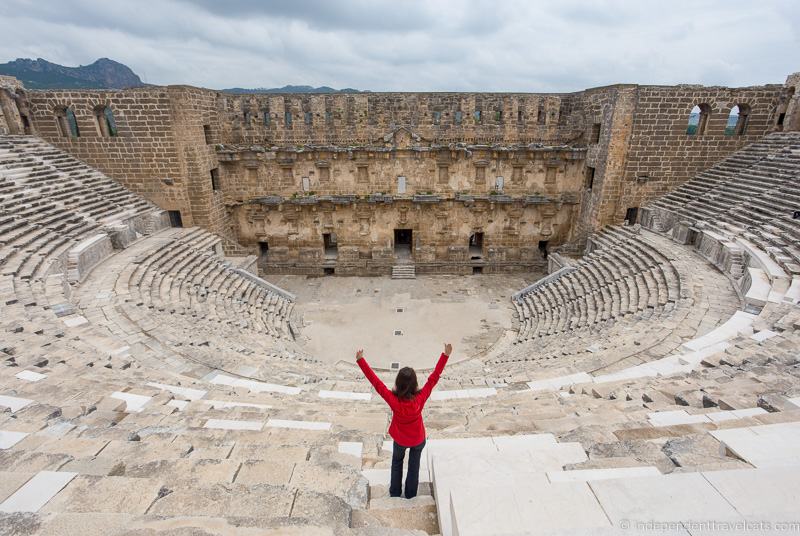
Turkey Itinerary Day 10: Cappadocia
Day 10 in brief: Heavy transit day. Overnight bus is the strongest option (9 to 11 hours, arrives early morning), with flying via Istanbul and the daytime bus as alternatives. Arrival, hotel check-in, sunset viewpoint, early dinner, early night because tomorrow starts before sunrise.
Welcome to Cappadocia, one of the most distinctive landscapes you’ll see anywhere in the world. The region in central Turkey is known for its surreal rock formations called “fairy chimneys,” ancient cave dwellings carved into the soft volcanic stone, underground cities, and the famous hot air balloons that fill the sky at sunrise.
Today is primarily an arrival day. Whether you’ve come by overnight bus, plane via Istanbul, or driven yourself, you’ll likely arrive tired and ready to settle in. Plan a relaxed first day — the real Cappadocia exploration starts tomorrow.
If you arrived early in the morning by overnight bus, you may have most of the day ahead of you. Check into your hotel (most cave hotels will let you store luggage even before formal check-in), grab breakfast, and consider a nap before heading out.
If you arrived by flight in the afternoon, you’ll have time for a sunset viewpoint visit and dinner only.
For your first afternoon or evening in Cappadocia, here are some lower-key options that don’t require a full day:
- Watch the sunset from one of the famous viewpoints. Sunset Point in Göreme and Red Valley are both excellent. The light on the rock formations during the golden hour is spectacular.
- Take a short walk through Göreme village and explore the cave shops, restaurants, and bakeries.
- Book a sunset ATV quad bike tour through the valleys. These typically run 1 to 2 hours and end at sunset, and they’re a fun way to see the landscape.
- Visit a Turkish night dinner show such as the Turkish Night at a Göreme Cave Restaurant.
Importantly, if you’re planning to take a hot air balloon flight tomorrow morning, confirm your booking and pickup time today. Balloon companies pick up guests very early — usually between 4:30am and 5:30am — so you’ll want a clear plan and an early night.
If you haven’t booked a balloon flight yet, see the standalone callout below for our full guidance on booking. Tomorrow morning is the prime balloon morning of your itinerary, so today is your last chance to book.
Get to bed early. Tomorrow starts before sunrise.
Turkey Itinerary Day 11: Cappadocia
Day 11 in brief: The big Cappadocia day. Hot air balloon at sunrise (weather dependent, 30 to 70% cancellation risk by season), then either a Red Tour, a Green Tour, an underground city visit, or self-drive valleys and viewpoints. No transit.
Winter variant note (November through March): the standard 14-day spine gives you two nights in Cappadocia and one balloon attempt. With December cancellation rates around 55% and January up to 70%, that’s a coin flip for the highlight of your trip. If you’re traveling those months, add a third night in Cappadocia to give yourself two or three sunrise attempts. The extra hotel night is much cheaper than losing the balloon experience entirely.
Today is the big Cappadocia day. If the weather cooperates, you’ll start with a hot air balloon flight at sunrise, then have a full day to explore the region’s caves, valleys, and underground cities.
Hot Air Balloon Flight at Sunrise
The Cappadocia hot air balloon flight is one of the most famous travel experiences in the world. Hundreds of balloons take off at first light, drifting silently over the fairy chimneys and valleys as the sun rises. It really is as good as the photos suggest, and for many visitors, it’s the highlight of their entire trip to Turkey.
★ Cappadocia Hot Air Balloon — Our Recommended Flight
We’ve been to Cappadocia twice and have done hot air balloon flights with two different companies. Based on our experience, we’d recommend booking with Royal Balloons. The flight included hotel pickup, a light breakfast before the flight, the balloon ride itself (about an hour in the air), and a champagne toast and certificate at the end.
What you need to know before booking:
- Book in advance. Balloon flights sell out quickly in peak season (April through October). Book at least a few weeks ahead, longer for May or October. Even in shoulder season, popular operators like Royal Balloons fill up.
- Weather cancellations are common, especially in winter. The annual average cancellation rate is around 30 to 35%. August is the most reliable month at roughly 7%, with May through July averaging 15 to 25%. Winter is much riskier: December cancellations run around 55% and January can reach 70%. This is why we suggest two nights in Cappadocia rather than one in peak season, and at least three nights if you’re visiting between November and March. Most operators will rebook you for the next available morning at no cost, or refund in full if no rebooking is possible.
- Expect an early start. Pickup is between 4:30am and 5:30am to make the sunrise launch. Coffee and a light snack are typically provided before the flight; you’ll have a proper breakfast later.
- It’s not cheap. Balloon flights are one of the bigger single expenses on a Turkey trip. Prices vary by operator and balloon size, but expect to pay a premium for this experience. It’s worth it.
- Confirm what’s included. Most flights include hotel pickup and drop-off, light pre-flight refreshments, the flight (typically 60 to 90 minutes), and a post-flight celebration. Check details when booking.
Recommended booking: Royal Balloons Cappadocia (the company we’ve used)
Alternative if Royal Balloons is sold out: Cappadocia Göreme Hot Air Balloon Flight at Sunrise is a consistently well-reviewed alternative.
After the flight (you’ll likely be back at your hotel by 8:30am), have a proper breakfast and rest for a bit before continuing the day.
Full Day in Cappadocia
There’s a huge amount to see and do in Cappadocia. The region is a UNESCO World Heritage Site within Göreme National Park, and the cave-carved monasteries, churches, and underground cities are among the most distinctive historical sites in Turkey.
The two most popular full-day tour options are the Red Tour and the Green Tour. They cover different parts of the region.
The Red Tour typically focuses on the area around Göreme, including Göreme Open-Air Museum (with its frescoed cave churches), Avanos (a town known for pottery, including the Güray Museum), Pasabag (also known as Monks Valley, with mushroom-shaped fairy chimneys), Devrent Valley (Imagination Valley), and various viewpoints. This is the more accessible of the two tours and works well for first-time visitors.
The Green Tour covers further afield, including the Derinkuyu Underground City (a multi-level underground refuge that once housed up to 20,000 people), Selime Monastery (a multi-story rock-carved monastery), Ihlara Valley (a 14 km hiking gorge), and Pigeon Valley. This is a more physical day with a hike included. We recommend this guided Green Tour with lunch and entry tickets, which has consistently strong reviews.
For private tours, this private full day tour can be customized to your interests, and this Cappadocia highlights tour with lunch covers the main sights at a steady pace.
Other Cappadocia activity options include:
- Walking through the Rose and Red valleys at sunset, which has some of the best views in the region.
- Visiting one of the underground cities. Derinkuyu and Kaymakli are the two most famous — both close around 5pm in winter, so plan your timing.
- Pottery making in Avanos, the regional pottery center for over 4,000 years.
- A sunset horseback ride through the valleys (“Cappadocia” actually means “land of beautiful horses” in old Persian).
- Quad biking through the Sword, Love, and Rose valleys.
- A Turkish hammam and spa experience. Laurence did the mud-bath version of this on one of our trips and reports it was a lot of fun. Different format from the rest of the Cappadocia activities and worth doing if you have a half-day to spare.
- Exploring on your own with a rental car if you have one, hitting valleys and viewpoints at your own pace.
Where to Stay in Cappadocia
Cappadocia is famous for its cave hotels — actual hotels carved into the rock formations or built around restored cave dwellings. Staying in a cave hotel is part of the experience. Most are in or near Göreme village, with others in Ürgüp, Üçhisar, and Uçhisar.
Note: The most distinctive cave hotels (the architecturally unique ones, as opposed to any hotel calling itself “cave”) sell out months in advance during peak season. Book early.
- Homestay Cave Hostel — A budget-friendly cave hostel with dorm beds and private cave rooms, breakfast included, and a shared lounge. Good value for travelers wanting the cave experience without the cave-hotel price tag.
- Guzide Cave Hotel — A well-rated good-value cave hotel in Göreme with private rooms, breakfast included, and a panoramic terrace.
- Grand Elite Cave Suites — A boutique cave hotel with a swimming pool, on-site restaurant, breakfast included, and lovely views.
- Aydinli Cave Hotel — A well-reviewed cave hotel with terrace views over Göreme, en-suite cave rooms, and breakfast included.
- Zara Cave Hotel — A popular cave hotel offering a range of room types from standard cave rooms to suites with terraces, breakfast included.
- Kayakapi Premium Caves Ürgüp — A 5-star luxury cave hotel set in restored historic cave dwellings in Ürgüp. Spacious cave suites, on-site fine dining, spa, swimming pool, and breakfast included. We’ve stayed in this cave hotel and really loved it.
How to Get from Cappadocia to Ankara
Tomorrow you head to Ankara, the capital of Turkey. This is a more reasonable transit day than the Antalya–Cappadocia leg.
By Car: About 3.5 hours via the inland highway. Easy enough drive.
By Bus: About 4.5 to 5 hours, with multiple departures throughout the day. Check times and book online here.
By Train: There’s no direct rail link from Cappadocia (the nearest station is in Kayseri). It’s possible to take a bus to Kayseri then the high-speed train (YHT) to Ankara, but the bus alone is more efficient.
By Plane: You can fly from Kayseri or Nevşehir to Ankara, but flights generally connect via Istanbul, making the total journey 4 to 5 hours including airport transfers. Not worth it for this leg.
For most travelers, the bus or driving is the simplest option. Aim to leave Cappadocia mid-morning so you have time to see Anıtkabir or the Museum of Anatolian Civilizations in Ankara that afternoon (both close around 5pm in winter, 6:30pm in summer).
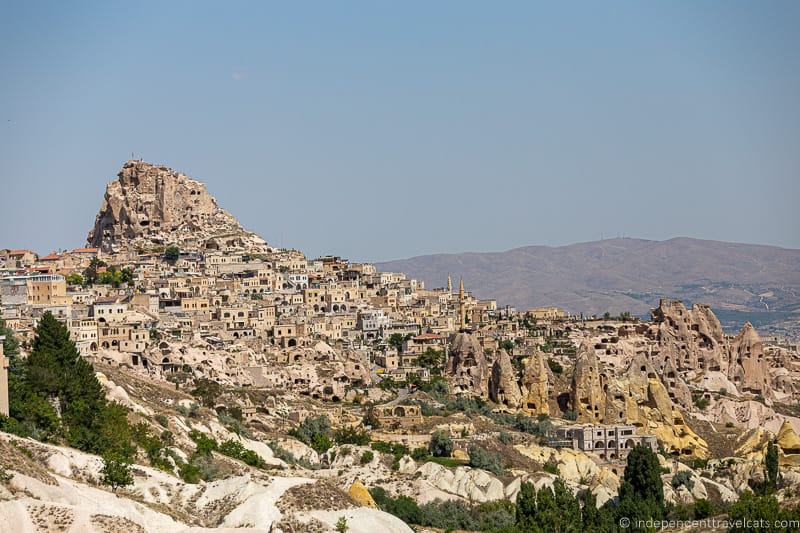
Turkey Itinerary Day 12: Ankara
Day 12 in brief: Medium transit (3.5 hours by car, 4.5 to 5 by bus) from Cappadocia to Ankara. Arrive by early afternoon. Anıtkabir and the Museum of Anatolian Civilizations are the two essential stops, both closing around 5pm in winter.
Today, head to Ankara, the capital of Turkey. While Istanbul is the country’s largest and most famous city, Ankara is the political and administrative capital and a city of around 5.7 million people.
Ankara doesn’t get the international tourism volumes that Istanbul does, but it’s an interesting and worthwhile stop, especially for travelers interested in Turkish history, archaeology, and the modern Turkish state. The city has been continuously inhabited for thousands of years, and it served as the capital of various empires and kingdoms before becoming the capital of the modern Turkish Republic in 1923.
Aim to arrive by early afternoon so you have time to visit a major site or two today.
The single most important site in Ankara is Anıtkabir, the mausoleum of Mustafa Kemal Atatürk, the founder and first president of the Turkish Republic. The complex includes the mausoleum itself (a vast columned hall), an excellent museum about Atatürk’s life and the founding of modern Turkey, and ceremonial guards. Even visitors with limited interest in modern political history find the scale and significance of the place striking. Anıtkabir is free to visit and closes around 5pm.
If you have time, also visit the Museum of Anatolian Civilizations. This is one of the best archaeological museums in Turkey, housed in a restored 15th-century covered bazaar. It tells the story of the region from the Paleolithic era through the Hittites, Phrygians, Lydians, and beyond, with major artifacts from Çatalhöyük (one of the oldest known human settlements) and the Hittite empire. It is open daily from 8:30am to 5:30pm, with last entry at 4:45pm.
Unlike many Turkish museums, the Museum of Anatolian Civilizations is open every day of the week, so it works as a Monday option when other Ankara sights may be closed. Anıtkabir is also open daily.
For an overview of Ankara, this private tour with a local covers the main highlights with a local guide.
For dinner, the Hamamönü neighborhood has a number of restaurants in restored Ottoman houses. Just note that Hamamönü is quieter on Mondays.
Where to Stay in Ankara
Ankara has accommodation across all budget levels. Most travelers stay in or near Kızılay (the central district) or Ulus (the historic old city). If you’re using public transport, staying near the train station or central bus station can save time. Both renamed properties below kept their Booking.com URLs through the rebrands:
- Köse Pension in Göreme – A long-running family-run pension just 200 metres from Göreme town center and a 10-minute walk to the bus station. Offers a mix of dormitory beds and private rooms with en-suite or shared bathrooms, a swimming pool open mid-April through November, and a peaceful garden. Affordable, well-reviewed, and centrally located, with the rooftop offering a great view of the morning balloon launches.
- Deeps Hostel — A central, well-rated hostel in Kızılay with dorm beds and private rooms, breakfast included, and a shared kitchen and lounge.
- Mercure Ankara Kızılay (formerly Sahinbey Hotel) — A central 2-star hotel that has been rebranded under the Accor Mercure umbrella. En-suite rooms with breakfast included, on-site restaurant, and walking distance to Kızılay’s main attractions and metro.
- SVEO Business Hotel (formerly Kahya Hotel Ankara) — A central 4-star business hotel with comfortable en-suite rooms, on-site restaurant and bar, fitness facilities, and breakfast included.
- Güvenay Business Hotel — A well-reviewed central business hotel with en-suite rooms, breakfast included, on-site restaurant and bar, and 24-hour service.
- Divan Cukurhan — A historic boutique hotel set in a restored Ottoman caravanserai right opposite Ankara Castle. En-suite rooms, on-site restaurant, breakfast included. One of the most atmospheric stays in the city.
- The Ankara Hotel — A 4-star hotel inside Ankara’s main train station building, ideal if you’re arriving or leaving by train. Modern en-suite rooms, on-site restaurant, breakfast included.
For self-catering apartments in Ankara, options include Booking.com apartment search for Ankara and Vrbo Ankara apartments.
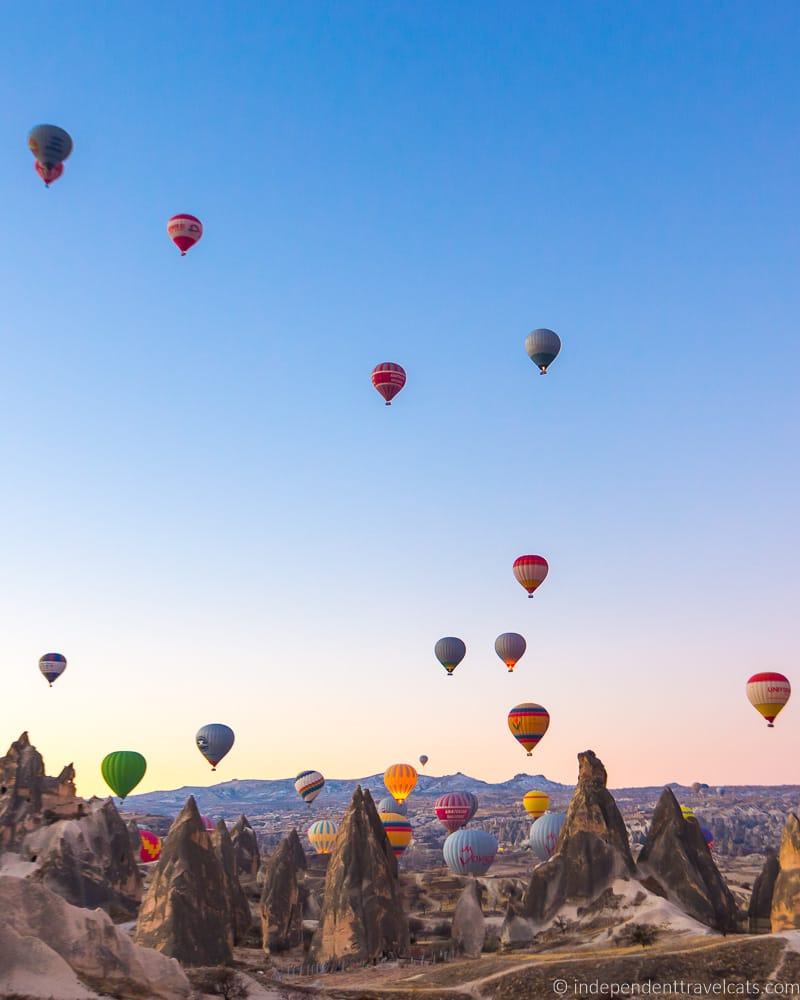

Turkey Itinerary Day 13: Ankara
Day 13 in brief: Whatever you didn’t reach on Day 12, plus Ankara Castle and the Hamamönü Ottoman quarter. Optional day trip to Hattuşa (Hittite capital, 200km east). Relaxed pre-departure pace.
Spend your second day in Ankara exploring more of the city. Whatever you didn’t get to on Day 12 should top your list — particularly the Museum of Anatolian Civilizations if you missed it.
One of the most atmospheric parts of the city is the area around Ankara Castle (Ankara Kalesi). The castle sits on a hill in the old city of Ulus, and its origins date back at least 2,000 years, with various civilizations building and rebuilding it over the centuries. You can walk along parts of the walls for excellent views over Ankara, and the surrounding old quarter is full of restored Ottoman houses, antique shops, and small cafes.
The Hamamönü district near the castle is another good area to wander. It’s been restored to feature traditional Ottoman architecture, and there are art galleries, handicraft shops, restaurants, and tea gardens. It’s a lovely place for an afternoon stroll.
Other notable Ankara attractions include:
- The Kocatepe Mosque, the largest mosque in Turkey, completed in 1987 in classical Ottoman style.
- The Roman Temple of Augustus and Rome, with the inscribed political testament of the Roman Emperor Augustus on its walls.
- The Ethnography Museum, which covers Turkish culture and folk traditions.
- For something different, you can visit a traditional Turkish hamam at Tarihi Şengül Hamamı, a hammam dating back to the 15th century. (The original sengulhamami.com URL is no longer the official site — make sure you’re on the new tarihisengulhamami.com page when booking.)
For shopping, Ankara has several modern shopping malls (CEPA, Ankamall, Panora) along with the bazaars and antique shops in Ulus. Most shops are closed Sundays.
If you have a particular interest in Hittite history, you can take a day trip to Hattuşa, the ancient Hittite capital, located about 200 km east of Ankara. It’s a UNESCO World Heritage Site with extensive ruins. This is a long day from Ankara — usually only worth it for serious archaeology enthusiasts, but tours are available.
Ankara has a more local, less tourist-focused atmosphere than Istanbul, which can be a refreshing change after the more visited destinations earlier in the trip. The food scene is solid, with many regional Anatolian specialties available. Try restaurants in Kızılay or Çankaya districts for a mix of traditional Turkish and international options.
How to Get from Ankara to Istanbul
Tomorrow you’ll head back to Istanbul to complete your two weeks. Ankara to Istanbul is one of the easier transit legs, with multiple fast options.
By High-Speed Train (YHT): The fastest and most pleasant option. Turkey’s YHT high-speed train runs frequently between Ankara and Istanbul, taking about 4.5 hours. It’s comfortable, reliable, and arrives at Söğütlüçeşme on the Asian side or Halkalı on the European side. Book in advance for the best fares via TCDD.
By Plane: Frequent flights between Ankara (Esenboğa Airport) and both Istanbul airports take around 1 hour, plus airport transfer time at both ends. Total door-to-door is usually 3 to 4 hours.
By Bus: Around 5 to 6 hours by intercity bus. Cheaper than the train but slower. Check times and book online here.
By Car: About 4.5 hours of driving on toll motorways.
For most travelers, the high-speed train offers the best balance of speed, comfort, and convenience. It also drops you in central Istanbul without the airport-transfer overhead.
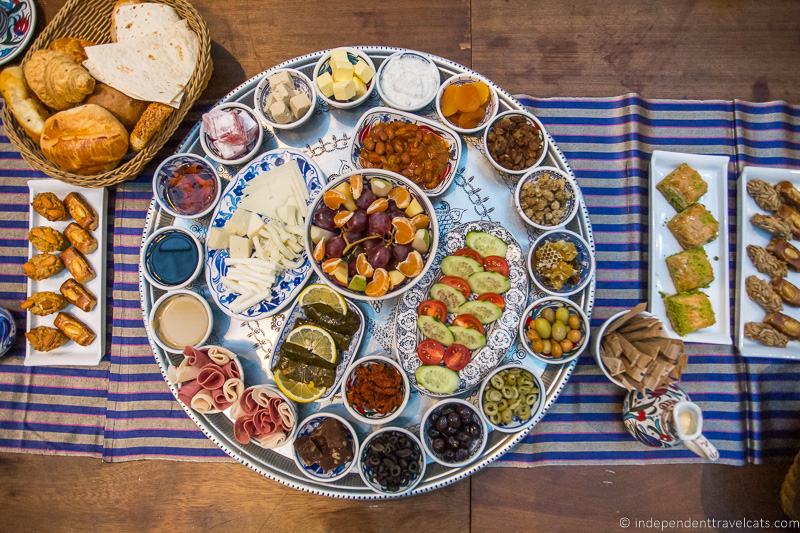
Turkey Itinerary Day 14: Istanbul
Day 14 in brief: Ankara to Istanbul on the YHT high-speed train (about 4.5 hours, the most pleasant of the options), then a final Istanbul afternoon and airport departure. The Asian-side Kadıköy neighborhood is a good choice for the afternoon if you want a different angle on the city.
Today is your final day in Turkey. Depending on your departure flight time and how you’ve enjoyed Istanbul, you can use this day in different ways.
If you have a full day before an evening flight, revisit anything you missed on your first two Istanbul days. Common picks include:
- The Asian side of Istanbul (Kadıköy in particular), which has a more local feel, great food markets, and good cafes.
- A morning Bosphorus ferry ride to the Princes’ Islands (Adalar). The largest, Büyükada, is a popular day trip — no cars allowed, just bicycles and horse-drawn carriages. The ferry costs only a few lira each way with an Istanbulkart.
- A return visit to a favorite Istanbul site you didn’t get enough time at on Days 1-2 (the Grand Bazaar, Topkapi Palace harem section, or the Hagia Sophia upper galleries).
- A Turkish hamam experience at one of Istanbul’s historic baths, if you didn’t already do one.
- A final round of shopping for souvenirs, Turkish delight, spices, or ceramics.
If you have a morning or early afternoon flight, use the time for a relaxed final breakfast and a short last walk through Sultanahmet or along the Bosphorus.
Make sure to allow plenty of time to get to the airport. Istanbul Airport (IST) is about 1.5 to 2 hours from central Istanbul depending on traffic — even longer during rush hour. Sabiha Gökçen (SAW) on the Asian side is similarly distant from the European-side neighborhoods. Build in extra time, and confirm which airport your departure is from.
The Havaist airport bus runs from Taksim and other central locations to Istanbul Airport (IST). Havabus serves Sabiha Gökçen (SAW). Fares vary by route, so check the current price at istairport.com, the Havaist app, or the Havabus site before traveling. Taxis are also available but cost considerably more, especially to IST.
And that’s the end of your two weeks in Turkey.
Map of Our 2 Week Turkey Itinerary
To help you visualize the route, we’ve put together a map of the full 14-day Turkey itinerary. You can view the interactive version on Google Maps and use it for your own planning:
View our 2 Week Turkey Itinerary Map on Google Maps
The map shows all the destinations covered, in order, plus key sights and recommended hotels at each stop. You can save it to your own Google Maps for easy reference during your trip.
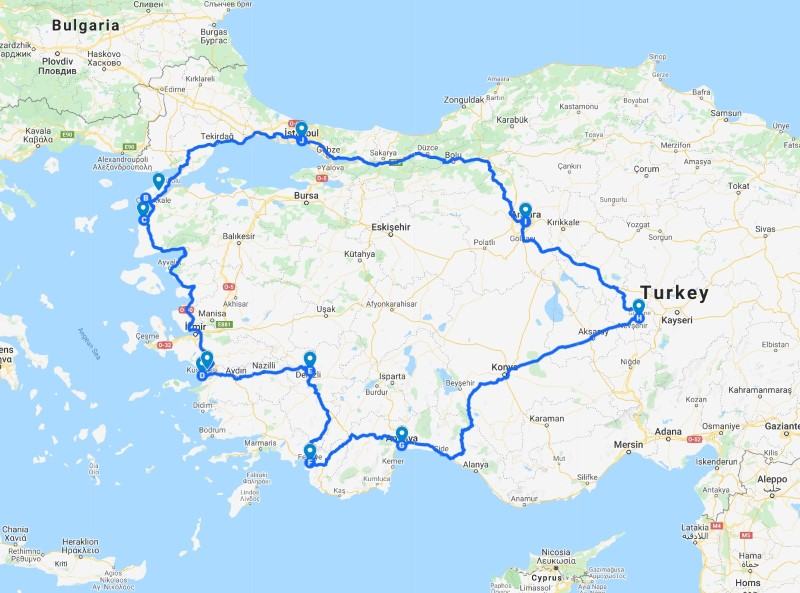
Frequently Asked Questions about Visiting Turkey
Here are answers to some of the questions we get asked most often by readers planning a trip to Turkey.
Is 2 weeks enough time for Turkey?
Two weeks is enough time to see the major highlights of western Turkey at a reasonable pace, including Istanbul, Cappadocia, Ephesus, Pamukkale, the Mediterranean coast, and Ankara. It’s not enough to see eastern Turkey or to do extensive hiking trails like the Lycian Way.
If you have less than two weeks, you can still have a great trip — see our shorter-trip variants section above for 7-day, 10-day, and 12-day suggestions. The simplest cut is dropping Ankara, which saves two days without losing the most photogenic destinations.
How far in advance should I book the Cappadocia hot air balloon?
Book at least a few weeks in advance during peak season (April through October), and longer if you’re traveling in May or October. The most popular operators sell out completely on busy weekends, even in shoulder season.
Also build in a backup morning. The annual cancellation rate averages around 30 to 35%, with August the most reliable month (around 7%) and winter months the riskiest (December around 55%, January up to 70%). Most operators will rebook you for the next available morning at no cost, so two nights in Cappadocia gives you a backup in peak season, and we’d suggest at least three nights if you’re visiting between November and March. We recommend Royal Balloons based on our own experience.
What’s the best way to get from Antalya to Cappadocia?
For most independent travelers, the overnight bus is the best option. It takes 9 to 11 hours, leaves Antalya in the evening, and arrives in Cappadocia early in the morning. You save a day of daylight transit and a night’s hotel cost.
Flying is technically possible but flights connect via Istanbul, so the total journey time including airport transfers ends up being 4 to 6 hours and meaningfully more expensive. Driving takes 7 to 8 hours and is best done with a stop in Konya to break up the journey.
Should I rent a car in Turkey?
That hinges on your itinerary and how comfortable you are driving in unfamiliar conditions. A rental car gives you flexibility and access to off-the-beaten-path destinations, but Turkey has a high accident rate, traffic in cities is intense, and tolls and parking add up.
For a 14-day itinerary that focuses on major cities (Istanbul, Antalya, Cappadocia, Ankara), public transport works well — the bus and high-speed train network covers all the main routes. If you want to explore the Mediterranean coast in depth or hit smaller villages, a car becomes more useful. You can compare rental rates on Discover Cars.
One practical note: do not drive in central Istanbul. The traffic is overwhelming and parking is a nightmare. If you want to drive in Turkey, pick up your rental on the way out of Istanbul or rent at the airport when leaving Istanbul behind.
Do I need a visa to visit Turkey?
That varies by nationality. Turkey has expanded its visa-free entry list over the past few years, and most European nationals can now enter Turkey for tourism without a visa. As of 2026, citizens of the United States, United Kingdom, Canada, Australia, and several other countries still need an e-visa.
The e-visa is applied for online before travel at the official portal, evisa.gov.tr. The fee varies by nationality. We strongly recommend using only the official portal — many third-party sites charge significant markups for the same service. Visa on arrival has been phased out for nationalities that require an e-visa, so you must have your e-visa before boarding your flight.
What’s the difference between Istanbul Airport (IST) and Sabiha Gökçen (SAW)?
Istanbul has two international airports on opposite sides of the city. Istanbul Airport (IST) is the larger main international hub, located on the European side and used by Turkish Airlines and most international carriers. Sabiha Gökçen (SAW) is on the Asian side and is used more by budget airlines like Pegasus and some domestic flights.
When booking flights, double-check which airport you’re flying into and out of. They are far apart, and getting between them takes 1.5 to 2 hours. The Havaist airport bus serves IST; Havabus serves SAW.
Is it safe to visit Turkey?
Turkey is generally considered safe for travelers, with the major destinations on this itinerary being well-established tourist areas. As always, check the latest travel advisories from your home country before planning, particularly regarding the eastern border regions which sometimes have advisories against travel.
The main practical safety issues we’ve experienced are around money — be careful counting cash and confirming change with taxi drivers and street vendors. We had a taxi driver in Istanbul scam us once by claiming we’d given a smaller note than we actually had. Standard travel precautions apply: protect valuables, watch for pickpockets in crowded areas like the Grand Bazaar, and be aware of your surroundings.
Can I visit Turkey during Ramadan?
Yes. Visiting during Ramadan is fine and your sightseeing won’t be significantly disrupted. In tourist areas like Istanbul, Cappadocia, Antalya, and the resort towns, most restaurants and cafes stay open as normal, and international chains and hotels operate as usual.
In more conservative cities like Konya, you may find some restaurants closed during the day or operating on reduced hours. The most pleasant time to be out is the iftar meal at sunset, when families fill the streets to break the fast together — it’s a memorable experience.
Ramadan 2027 falls roughly from February 8 to March 10 (subject to moon sighting). The dates shift about 11 days earlier each year on the Western calendar.
What should I pack for a 2 week trip to Turkey?
What to pack depends on the time of year, but a few essentials apply year-round.
For sightseeing, bring comfortable walking shoes — many sites involve cobblestones, hills, or uneven ground. Women should bring a scarf or travel wrap for covering shoulders and head when visiting mosques. Both men and women should plan to dress modestly when visiting religious sites.
For the climate, summer (June through August) is hot, so bring lightweight, breathable clothing, a sun hat, and sunscreen. Spring and autumn are mild but can have rain, so bring a light rain layer. Winter (November through March) requires warm layers, especially in Cappadocia and Ankara, where it can be quite cold.
Other practical items to bring: a Type C/E travel adapter, a reusable water bottle (we use Klean Kanteen), and a Turkish phrasebook or translation app.
For deeper trip-planning context, the current edition of Lonely Planet Türkiye (17th edition, published December 2024) is the guidebook we’d recommend. It covers all the destinations in this itinerary in depth, with maps, hotel and restaurant picks, and historical context for the archaeological sites.
Final Thoughts & Further Reading
So that’s our suggested 2 week Turkey itinerary. We’ve tried to share enough detail to help you plan your own trip, while leaving room for you to adapt based on your own interests and travel style. With two weeks, you really can see and do a lot in Turkey — and you’ll almost surely leave wanting to come back for more.
For more on planning your trip to Turkey, you might also like:
- Our deeper FTU 2-day Istanbul itinerary, if you want more practical detail on the Istanbul portion of this trip
- The current edition of Lonely Planet Türkiye (17th edition, December 2024), the guidebook we’d recommend for trip planning depth
- Our review of our 12 day Turkey tour with Travel Talk
- Our guide to choosing a travel adapter
- Our Airalo eSIM review for staying connected while traveling
- Our guide to getting online while traveling
- Our guide to using a VPN while traveling
- Our guide to the best travel scarves for women
- Our guide to the best travel wraps and shawls for women
- Our guide to booking apartments online
- Our review of the Venice Simplon Orient Express luxury train
- Our roundup of the top Winston Churchill sites in England
If you’re looking for a guided tour of Turkey similar to this itinerary, see our recommended tours section above or browse Turkey tours on TourRadar.
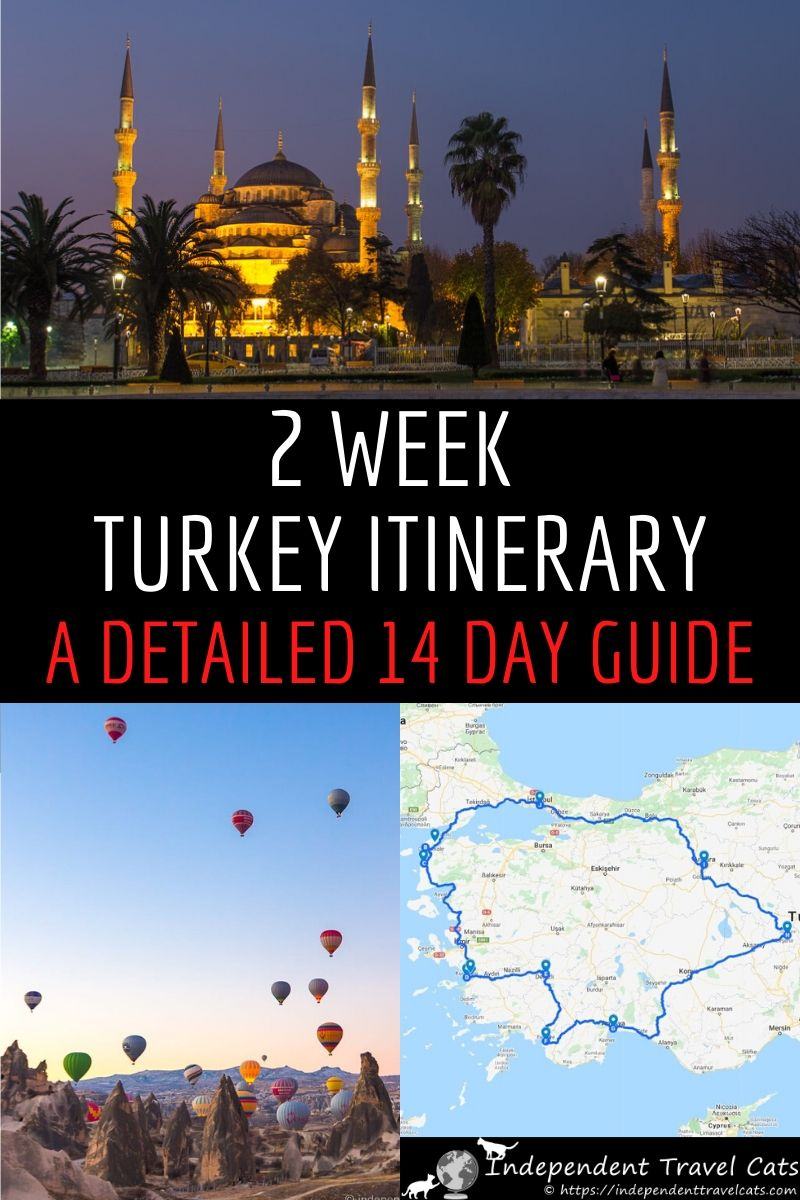
Have you been to Turkey, or are you planning a trip? What would you include on your own 2 week Turkey itinerary, and is there anything we’ve missed that you think other readers should know about? Let us know in the comments below — we love hearing from fellow travelers and reading about your experiences. If you have any questions about planning your own trip to Turkey, we’ll do our best to answer.
Pia Dina Montemayor Robles Post author
Hi, Thanks for a very informative and detailed itinerary. I went to Turkey in 2011 but only explored Istanbul. Now I am planning my 14-day trip, this coming April 2025. The start and end point is in Istanbul. I am a solo female traveler. On a budget as well. I want to maximize also the night bus to move around from one region to another region.
Keeping in mind the availability of the bus, what should be the ideal base for a day trip?
1 Istanbul (B)
2 Istanbul (B)
After Istanbul, where should my base be? Izmir? Kusadasi?
3
4
5
6
7 Antalya (B)
8 Antalya (B)
9 Cappadocia (B)
10 Cappadocia (B)
11 Ankara (B)
12 Ankara (B)
13 Istanbul (B)
14 Istanbul (B)
Thanks in advance!
Jessica & Laurence Norah Post author
Hi Pia,
Happy to help you with your trip planning. Glad you are finding our Turkey itinerary and advice helpful in planning your 2 week trip.
So in terms of night buses from Istanbul, you will need to look at the specific date you want to leave and just make sure there is an available bus ticket for that particular date and destination. Izmir has more transit options and I think there are tourist level night buses almost every night so that you should be able to find one for most nights in April. But there are also regular buses to both Kuşadası and Selçuk, just not quite as regular or as frequent as to Izmir. You can check and book long distance buses from Istanbul online on Busbud.
We often generally recommend Selçuk for those traveling by bus or train and visiting Ephesus archaeological sites and museum as its just a bit easier since everything is closer. It is also pretty easy to take local buses from Selçuk to Kusadasi, Izmir, and other places in the area. But again you could make any of the three cities work.
So any of them will work if there is a bus from Turkey on the evening of the trip. If all three are options, I would pick the one that best fits with what you want to see and do as each one has its own appeal and attractions. Kusadasi is a popular tourist resort town, Selçuk is closest to Epheseus sites, and Izmir is a large city with more connections/services but is further away from tourists sites like Epheseus and Kusadasi. But probably more important may be which has good connections for the day trips you want to make, so make a list of places you want to visit and make sure it is easy enough to get to all the places you want to visit. What do you want to be able to see and what day trips do you want to be able to make during these three days? Any tours you want to take?
Since you are planning to travel around by public transportation and are on a tight budget, I would recommend staying centrally in any of the towns/cities near the main bus or train station so that you can save time/money so you can avoid having to take a taxi or dolmus too often. This will help save you time and money if you can just walk to and from the bus station. There are normally hotels, restaurants, and cafes located within walking distance of stations.
Are you planning to leave on the evening of Day 3 (night buses usually leave between 10pm and 1am) and then won’t need lodging for Day 3? Then you would overnight in Izmir, Kusadasi, or Selcuk on Days 4, 5, and 6? I would check bus tickets for your city to city connections and pre-purchase any important bus tickets so you can know exactly when you will be leaving so you can define when you will be departing/arriving so you know how much time you have in each place and which nights you will need to book accommodation.
Anyway, hope that helps!
Jessica
Dana Par Post author
WOW – what a great write up! Really appreciate it and have now stared planning a trip. Very many thanks
Jessica & Laurence Norah Post author
Hi Dana,
So glad our 2 week Turkey travel itinerary has been helpful in planning your own travels. Just let us know if you have any questions as you plan your trip to Turkey!
Best,
Jessica
Isha Post author
I will be in Turkey on Tuesday. This guide has been an extremely useful resource in planning my 14 day trip. I will be starting from Istanbul to Izmir (stay in kusadasi) – Cappadocia – Antalya (from Antalys day trip to Heirapolis and Permukkale).
Thank you very much
Jessica & Laurence Norah Post author
Hi Isha,
So happy to hear our Turkey itinerary has been helpful in planning your own 14 day trip. Sounds like you hae a great trip planned. Hope you have a wonderful time and just let us know if you have any questions!
Best,
Jessica
Isha Post author
Hi,
thanks again for this blog which was the best resource in planning my trip. I am back. I had an amazing time. The only thing i did not need was a water bottle (which i packed). I also downloaded the vpn.
Istanbul – toured by myself and didnt need a tour guide as most places are accessible by wandering around-4 days
flew to Izmir-kusadasi-ephesus. did a tour with a guide. 2 days
flew to cappadocia did the green and red tours, skipped the balloon. Also did the turkish night dance which was overpriced in my opinion. 4 days
flew to Antalya. did day tour and went to permukkale and hierapolis by road.
Thank you so much for this amazing blog resource.
Jessica & Laurence Norah Post author
Hi Isha,
You’re very welcome and thanks for taking the time to tell us about your travels in Turkey. So glad you had such a great trip to Turkey and that our Turkey itinerary was a helpful resource in planning your trip and thanks for letting us know where you went and how you organized your time. Sounds like you did a mix of independent travel and guided travel, which sounds nice. I am sure it might be helpful to future readers looking to plan a similar trip.
Best,
Jessica
Hawa Post author
Thank you so much for sharing your 14 day itinerary as well as tips! Extremely useful and no doubt that you guys had an amazing time!
My hubby and I are planning to visit Turkey in September. Overall itinerary is 16-17 days. We want to visit the following places but are not sure which way to plan the routing. Can you please advise/assist us based on the places that we want to visit. We also not keen to hire a car and would prefer flying wherever possible. If there are no flights available for certain routes, then we opt to take a bus. The places are:
Istanbul, Izmir, Pamukkale, Cappadocia and Antalya. Please assist us.
Also we were planning to spend 3 full days in Antalya and about 2 and half days in Cappadocia. Is this okay? Or would you suggest us staying longer in Cappadocia then Antalya. Thank you! Kind regards,
Jessica & Laurence Norah Post author
Hi Hawa,
Happy to try to help with your trip. I am going to assume you are flying in and out of Istanbul? In that case, you could do Istanbul – Izmir – Pamukkale – Antalya – Cappadocia – Istanbul or do that in reverse ordering, leaving Istanbul and going to Cappadocia first. It really makes little difference which way you go, just that you on in an order that makes logical sense.
So a trip based on those locations and some of your plans you stated might be:
Istanbul – 3 nights
Izmir – 4 nights
Pamukkale – visit as part of a day trip from Izmir?
Antalya – 4 nights
Cappadocia – 3 nights
Istanbul – 2 nights
Above is 16 nights in total
So it is easy to fly from Istanbul to Izmir. When in Izmir, you can either use local buses, taxis, or join day tours to visit places like Epheseus and Kuşadası. I’d also consider taking a day tour from here to Pamukkale. You can see a number of day tours available from Izmir here on GYG and here on Viator.
For Pamukkale, you can visit by public bus, join a day tour from Izmir (or Antalya), fly into Denizli airport and then take a taxi or bus. I’d probably opt to just join a day tour as you don’t have to worry about getting to the actual sites from a bus station or airport. Most of the tours include stops at both the hot springs and the ancient city of Hierapolis.
Then from Izmir, you can take a flight to Antalya and then taxi to your hotel. Then from Antlaya, you can take a flight to Cappadocia (2 different airprot options). Then from Cappadocia, fly back to Istnabul for a couple of days before your flight howm.
Our suggested itinerary has lots of info on things to do at each of these locations, but feel free to ask if you have further questions.
Anyway hope that helps answer your questions and get you started in planning out your itinerary and starting to book your trip.
Just let us know if you have more questions as you continue to research your trip!
Best,
Jessica
Linda Post author
Hi Jessica and Lawrence,
Your post is so amazing and helpful for me to understand traveling in Turkey! My partner and I are thinking of hiking the Lycien Way. Do you have any recommendation regarding tour group and how to do it? This will be our first time going to Turkey. Thank you!
Linda
Jessica & Laurence Norah Post author
Hi Linda,
So glad that our Turkey itinerary has been helpful to you and your partner. So are you looking to extend a 2 week trip around Turkey by adding in the hike, or are you going to to focus on doing the hike? The full hike is about a month but you can easily do a shorter section of it which can range from 1 day to a couple of weeks.
So if you want to do a general trip around Turkey (similar to the one we wrote about) and hike the Lycien Way as part of a guided tour, I’d probably do a regular guided tour around Turkey first, exploring places like Istanbul, Epheseus, Antalya, Troy, Cappadocia, etc. first. We give lots of suggestions for tour companies that do similar itineraries to the one above as well as those for slightly shorter or longer trips.
Then after that ends (almost all begin and end in Istanbul) add on a second hiking specific tour of the Lycien Way after that you can get a flight down to Dalaman Airport (DLM) or Antalya Airprot. Most of the hiking trips end/begin at the Dalaman Airport (or in nearby Fethiye) or in Antalya. Domestic return flights within Turkey are normally pretty cheap (about $150 to $250 per person). You just need to be sure to book your tours in advance and leave a little leeway in case there are delays or anything, so I’d probably leave a full day at beginning and end (also nice to have a day to relax in between tours).
So as you probably already know the Lycien Way is an approximately 760 km (472 mile) way-marked footpath around the coast of Lycia in southern Turkey, stretching from Fethiye to Antalya. However, the exact length and such is different depending on map and guidebook, and has changed over time. But generally it takes about 30-40 days to walk the full path. It is generally recommended to do it in the Spring by most sources although autumn also can be nice. I can’t give any specific personal advice on hiking it or a tour group as we have never tried hiking any more than a short section.
Now if you are looking for a tour group, I don’t know of any that regularly do the full path from start to finish with English speaking guides (I would check local hiking/trekking companies in Turkey or ask in a Turkey hiking forum) but there are several companies that do group or private 6-10 day hiking highlights tours of the Lycien Way so that you experience some of the main and more scenic and easy to reach sections. But they also arrange your transport, food, luggage, accommodation, etc. Tour companies like Intrepid, Explore, and UTracks all seems to offer them, and the Explore one in particular seems to get a lot of really good reviews online. You can compare various tours here that include the Lycien Way.
If you want to do the Lycian Way, I would recommend getting a copy of the English guidebook on this by Kate Clow (she is the authority on the route as she waymarked and promoted it). Note that the latest version of this guidebook was published in 2022 (it can be hard to find so you may need to order it directly from her website Trekking in Turkey). This guidebook along with free online resources and mapping apps should help inform and guide you whether you choose to do it on your own or with a guide.
Hope the above helps, but let me know if you have more questions as you research and plan your trip to Turkey!
Best,
Jessica
Charles Post author
Istanbul, Turkey is such a captivating destination, love the Hagia Sophia, Blue Mosque, Topkapi Palace, and the Grand Bazaar. This website offers such valuable insights into these attractions, as well as local cuisine and practical travel advice. Had such an enjoyable visit to this enchanting city. Would love to return to follow your whole itinerary but not the time on this trip. Thanks so much and Happy travels!
Jessica & Laurence Norah Post author
Hi Charles,
So glad you had such a wonderful visit to Istanbul and glad you found our Turkey articles helpfull. Hope you get a chance to return to Turkey soon and see more of the country beyond Istanbul – lots of great places to visit!
Best,
Jessica
Georges Chahoud Post author
Thanks a lot for the precious informations two weeks in turkey , what do you suggest me if I would like to visite the princesses islands ( Istanbul) and more excursions tour three weeks .
Jessica & Laurence Norah Post author
Hi Georges,
Glad you are finding our 2-week Turkey itinerary helpful in planning your trip. So with three weeks, I would probably just spend some more time at the cities and stops that are of most interest to you. It can also give you more time to do day trip and excursions from those places such as Istanbul, Antalya, Cappadocia, or Kuşadası. Or if you are planning to join a tour, it will likely allow you to choose a longer tour with more stops.
I think you mean the Princes’ Islands in Turkey, near Istanbul (I am not familiar with any Princesses Islands)? For that, I would probably just do it as a day trip and allocate a morning and afternoon for the visit. We have visited as part of a day trip and the main island is easy to get to by taking a ferry boat. I think it is the equivalent of a couple of dollars for a ticket each way and most people head to Büyükada (Big Island). You can book tickets in advance or just buy once you are there. You can also join as part of a tour, and here are some day tour options that you can book in advance. In addition to your transport, some of the tours also include a guided walking tour, lunch, bike rides, music, and/or fishing.
If you are looking for a 3 week guided tour, it is hard to make a recommendation without knowing more about your budget, age, interests, and who all is traveling together. But a couple of options would be this 19-day tour with TravelTalk or this 18-day tour with Intrepid Travel. But here are several more tour options that are between 18 and 25 days in length. If you decide to do a tour like those that is less than 21 days, then plan a couple of extra nights on your own in Istanbul at the end (where you can visit the Princes Islands for instance).
Hope that helps and just let us know if you have further questions as you plan your trip to Turkey!
Best,
Jessica
Georges Chahoud Post author
Hi Jessica.
Thanks a lot for your reply, I found it very useful. I’m happy to find you and to be one of your followers.
Concerning my voyage to turkey, my budget is about 5000C$, do you think is enough for 21 days, I’m 61 years old and for me it’s a discovering voyage, most probably I gone be alone . Thanks again.
Jessica & Laurence Norah Post author
Hi Georges,
You’re very welcome. Glad the information was useful in planning you vogage to Turkey.
Yes, $5000 CAD (about $3700 USD) is enough for a comfortable trip around Turkey for 3 weeks if you plan it well. Turkey is not that expensive. Flights are the biggest cost, if the $5000 is in addition to your international flight then that is a very nice budget to have, but you’ll need to be more budget focused if your flights will come out of that sum. You’ll have about a $230 CAD budget per day (currently about $170 USD or 4700 Turkish lira).
Just a side note, the Turkish lira (the official currency of Turkey) is very unstable and so most tourist places prefer you to pay in euros (or sometimes GBP or USD). A lot of tourist activities will be priced in euros so good to know the CAD to EUR conversion rates once in Turkey. So while you may want to have a small amount of Turkish lira cash on you for small establishments/markets/gratuities/etc, you can pay with most things with your credit/debit card or in euros.
You can stay in comfortable moderate hotels or guest houses, visit attractions, do some excursions, and eat well within your budget. You can choose to plan the full trip yourself and do your own travel (by car or public transit) or join a tour with a tour guide where that all is taken care of for you with that budget. If doing it on your own, you should be able to book most big things in advance (flights, hotels, car rental, excursions) so you’ll know the cost and be able to stick to your budget and then allow for all the needed extras (food, attraction tickets, public transit, taxis, souvenirs, gratuities, etc.).
If you want to do it on your own, you certainly can, but if you prefer some company and a guide, there are lots of tours within your budget as well. We’ve used Travel Talk in Turkey but they definitely cater to a younger demographic but Intrepid Travel’s Comfort or Premium tours might be nice fit. We’ve used Intrepid Travel in Morocco and the age range was from late 20’s to 70’s on their more Premium category tours.
One thing you might consider is to do a mix where you are part of a tour for some parts of your travels and you are on own for other parts so you get the ease of group travel for the more far flung destinations and can do it on your own in places like Istanbul.
I am not sure when you are planning to visit, but if you are flexible, I would probably recommend avoiding the hottest months in Turkey (particularly July and August) as it can be pretty uncomfortable to sightsee, especially the historical sites and gardens, in the summer heat.
Hope that helps! If you have further questions as you get further into planning your trip, just let us know.
Best,
Jessica
Georges Post author
Hi Jessica, i hopeI do not bother you with my questions, but I find that your instructions are very useful. I have two questions,since I am planning to visit the western part of Turkey. In your opinion, is it better for me to start in Ankara and end with Istanbul, or vice versa, or to start and end in the same city (to avoid distances). Secondly, in your opinion, is it better for me to book hotels In advance, such as a flight ticket, or to leave hotel reservations until I arrive in Turkey to avoid unpleasant surprises (I heard that, as for some hotels, you book a room and are surprised when you arrive that your room does not look at all like what you saw in the picture, and perhaps it is from another hotel. What do you think? Thanks a lot.
Jessica & Laurence Norah Post author
Hi Georges,
Sure, no problem. So I would probably recommend flying in and out of Istanbul as that is normally the cheapest option as Istanbul is the larger international airport. If you are planning to take domestic flights in Turkey, Istanbul is also a good hub for that. But flying in and out of Ankara can also work if prices are better there. So definitely price compare across airports, dates, and routes. We’ve generally flown Turkish Airlines on round-trip tickets into Istanbul. Then I’d just recommend planning your itinerary in a circular fashion around the Western part of Turkey starting and ending in either Istanbul or Ankara.
We do generally recommend booking your accommodation in advance (before you leave for your trip) if you know your dates. Trying to find accommodation on the same day once in a location is not the best idea and can waste a lot of time. It is also easier to stick to a budget if you know your lodging cost beforehand. But it is of course up to you and I would do what best fits your travel style.
But if you want to stay in a comfortable hotel and have that set and know the price in advance, I would just book in advance once you know your dates and itinerary and I would generally recommend booking with a free cancellation option just in case you needed to cancel your trip or change dates. Of course if you have travel insurance, you can normally do a claim there if you couldn’t make your trip due to illness or flight cancellation or something, but having the free cancellation for your hotels just makes that easier.
We normally book online via Booking.com (or Hotels.com) with some kind of cancellation option. We have not had any unpleasant surprises in Turkey but I think if you stick to well-reviewed hotels on an international booking website like Booking or Hotels with plenty of reviews (especially from other Western travelers) and photos, you should be fine. We give some hotel recommendations throughout the itinerary across budgets and that should get you started on your search, at least in those areas. But Turkey has a lot of decent mid-range options in the main tourist cities and towns in the west part of the country that are not very expensive, but I would avoid the very cheap/basic ones and any that have no or few reviews.
Best,
Jessica
gezilecek yerler Post author
Thank you for this great Turkey itinerary. Greetings from Turkey!
Jessica & Laurence Norah Post author
Hi there!
Thanks for taking the time to comment. You are very welcome and glad you found our 2 weeks in Turkey itinerary helpful! If you have any questions, just let us know. And enjoy your travels around Turkey!
Best,
Jessica
Anne Post author
Thank you for so generously sharing this itinerary in such detail! We are planning to spend the entire month of May, 2024 in Turkey. For most of the first week we’ll be staying with friends in Istanbul, and after that we will travel by bus. We would love to follow your itinerary, expanding on it to fill out our month. Which of these options would you recommend as the best ways to spend our extra time:
1. Spending time in the Black Sea region on our way back from Capadocia?
2. Adding a multi day boat tour while we’re in the Mediterranean region?
3. Spending additional days in one or more of the Mediterranean towns along the route?
4. Adding stops along the Mediterranean?
5. Taking the ferry and spending time in Greece?
So many ideas!
Jessica & Laurence Norah Post author
Hi Anne!
That is wonderful that you have a full month here and have friends in Istanbul. So it sounds like you have 3 weeks to cover the rest of the itinerary (excluding Istanbul of course) and that gives you time to add some extra time to all the stops and to add an extra stop or two to the trip. So I would recommend going through the itinerary and seeing which places you want to add time in the existing places, taking into account bus travel times/stops. Then see how much extra time you have leftover and then that can help you decide which of the options might work best.
I would first add an extra day or two to the places along the route that you are most interested in visiting. As the itinerary covers a lot of ground in 2 weeks, you have extra time to add an extra day or two to any of the stops. Even if you don’t want to spend 3 days in the town itself, it nice to have the longer stay without needing to move hotels and you can do day trips (either by public bus or join a bus tour) to neighboring towns and attractions. You already have a lot of time in Istanbul, but you might want to spend extra time for instance in Kusadasi, Fethiye, or Cappadocia. Maybe spend a night in Denizli/Pamukkale to make that day not so long and more leisurely. So I would go through the 2 week itinerary you already have and make it slower first of all.
If interested in cultural sights/cities, you might want to add an overnight stop in Konya – a lot of people stop to see a whirling dervishes performance at the Culture Center but also a number of mosques and museums. If you like more the beach vibes, you might want add more of those such as Bodrum or Marmais.
If you like time on the water, then yes, I would definitely recommend a boat cruise. Laurence did a multi-day gulet trip and enjoyed it a lot. It’s a great way to see some of the islands, swim, etc. Options range from budget group trip to luxury private ones, and from a few hours to 2 weeks in length. You can take boat trips from a number of places such as Kusadasi, Kas, Fethiye, and Bodrum. If you want to do a multi-day trip, you would want to book that in advance before you leave. Boat day tours you can normally arrange the day before or even same day if needed (although still a good idea to book those in advance too).
If you want to see a bit of Greece and plan to do a boat trip, some of the boats also go to Greek islands given that some of them are so close to Turkey. But the ferry could also be an option if you wanted to make a short visit to Greece. To be honest with 3 weeks outside of Istanbul to explore, I’d probably recommend focusing on Turkey and saving Greece for a future trip. But if you don’t think you’ll ever return to the area, it could be worth the extra time.
The Black Sea region is not as popular with international tourists as most of the other places on the itinerary but can definitely be a nice extra place to spend some of your time if you have at least a few extra days to spare in your itinerary. The beaches are not going to be as great as the ones in the south but it has some lush green hilly areas, alpine areas, forests, waterfalls, castles, coastal cities, tea plantations, historic mosques, lovely lakes, etc. So if you are looking for a more off the beaten path area or just a green area this can be a good choice and you could head there after either Ankara or Cappadocia before heading back to Istanbul. But just be sure you have plenty of time to add this and that there are good bus connections to the parts of the region that you would like to visit. Depending on which part of the region you visit, it can take you a day (~12 hours) to get from the region to Istanbul, and also most of a day to get there from Cappadocia (a little less if leave from Ankara) so you’d probably need 5 days free to be able to spend 3 days here so may or may not work with your schedule. The biggest Turkish city in the Black Sea region, Samsun, definitely has regular connections to both Kayseri, Ankara, and Istanbul by bus so you can look at that route to get an idea of connections and timing. You can check them on Busbud and FlixBus.
Anyway, hope that helps a little! Just let us know if you have further questions as you plan your 2024 trip to Turkey.
Best,
Jessica
Radhika Bayanwala Post author
Hello, for a 12 day trip
what part of this trip do I cut down on?
Jessica & Laurence Norah Post author
Hi Radhika,
I think it really depends on what you are most interested in doing/seeing in Turkey. I would maybe look at the itinerary day by day and see which places seem less interesting and take 2-3 days out of the itinerary. So for example if not very interested in the coast, you might cut the 2 nights in Antalya or if not as interested in more city/cultural stuff you could cut the stop in Ankara and go directly back to Istanbul from Cappadocia, which would save you two days. It is really just up to you!
If you have any questions as you plan your trip to Turkey, just let me know!
Best,
Jessica
Ferhana Abader Post author
Hi Jessica,
Thank you so much for this, it really is helpful.
My husband and I want to visit Turkey towards the end of April from South Africa. We will be staying for 2 weeks. We want to go to Istanbul, Cappadocia and Antalya. Do you think it’s a good idea to stay in Istanbul for 2 nights, Cappadocia for 3 nights, Antalya for 3 nights and back to Istanbul for another 6 nights. We not really into history so we won’t be visiting quite a few of the places mentioned here. If 8 days in Istanbul is too much where do you recommend we go to where there’s other things to do besides visit historical sites?
Thank you so much 🌹
Jessica & Laurence Norah Post author
Hi Ferhana,
Glad you have found our Turkey itinerary helpful!
So yes, I think if historical and cultural sites are not that interesting to you, you might find that 8 full days in Istanbul might be too much. That is a pretty long time. Istanbul has a variety of things to do, but the main appeal to many visitors is of course the historical sites, churches/mosques, museums, etc. Of course there are also loads of other things including the markets, shopping, art, boat rides, evening entertainment, food tours, etc. So I think 4-6 days in total would probably allow you to see much of what you wish to see perhaps? But it really depends on what you enjoy doing. I’d maybe make a list of what you really want to do there and see how much is on it. That should help you decide.
If you feel you are spending too much time in Istanbul, the simplest thing would perhaps be to just add a night or two to your time in both Cappadocia and Antalya. This way your time is still divided by just 3 places.
If you like the beach and/or outdoor activities, another idea would be spend more time along the Turkish coast. In addition to Antalya, you might want to spend a few nights in either Fethiye or Bodrum. In the coastal cities, in addition to beaches, shopping, and the local historical attractions, you can do things like hiking, boating, golfing, water parks, and adventure tour activities like sailing, paragliding, rock climbing, or dirt biking. Gulet boat tours are popular and you could even consider an overnight trip where you get to sleep on the boat – they range from budget to luxury experiences.
Anyway, hope that helps give you some ideas! If you have any further questions as you plan your trip to Turkey, just ask.
Best,
Jessica
Ferhana Abader Post author
Thank you so much for your response 🌹
This definitely helps me to make a more informed decision about my itinerary.
Take care
Jessica & Laurence Norah Post author
You’re very welcome! Wishing you a great trip, and just let us know if you have further questions.
Best,
Jessica
Jonathan Abrahams Post author
Thanks so much for this great write-up and itinerary for Turkey. It has definitely helped make my upcoming trip a lot easier to plan.
I’m visiting Turkey in April from the 22nd of April to the 6th of May this year.
I’ll be mostly using public transport since I’m traveling solo.
My current schedule is as follows:
01. Istanbul (I arrive 7pm first day so it wouldn’t really count)
02. Istanbul
03. Istanbul
04. Istanbul
05. Selcuk (catch an early morning flight to Izmir and train to Selcuk – visit Ephesus and whatever else I can fit in)
06. Denizli (catch an early train from Selcuk and visit Pammukkale and whatever else I can fit in)
07. Antalya (take a bus to Antalya from Denizli – This time can be flexible if I want to see a bit more of Denizli)
08. Antalya
09. Antalya (taking an overnight bus from Antalya to Cappadocia – 9 hours)
10. Cappadocia
11. Cappadocia
12. Cappadocia
13. Ankara (take a bus from Cappadocia to Ankara – probably early in the morning)
14. Ankara
15. Ankara (take early afternoon flight from Ankara to Istanbul and catch my early evening flight out of Istanbul back home)
Normally when I travel I like to stay in one location for about 3 days to explore it and the surrounding areas, but I had to fit Selcuk in (for Ephesus) and Denizli (for Pammukkale).
Do you think I’m spreading my time alright or should I perhaps move around a day or two here or there?
Also, have you ever used AirBnB in Turkey and if so, how has it been?
Many thanks
Jonathan
Jessica & Laurence Norah Post author
Hi Jonathan,
I think your proposed Turkey itinerary looks fine and glad to hear that our post made it easier for you to plan your trip and itinerary.
I do think that you will be a bit rushed for the 1 night visits as you say but that really can’t be helped unless you borrow time from elsewhere to stay longer in say Selcuk. Days 5 & 6 are definitely going to be longer/busy days for you. So it just depends if you are OK with this or not. If you wanted more time in those places, I’d suggest removing one of the other longer stops (say Antalya or Ankara).
In terms of how to spend your time, I would just review what you really want to see/do in each place and make sure you have enough time to do that. For example, as yourself what are the three main things you really want to do? How much do you want to see Pammukkale? What do you plan to do in Cappadocia/Ankara? etc. If you find that you are having to skip something you really wanted to see or feel it is too rushed, see if you can remove time elsewhere where maybe there are lower priority places. It is really about your priorities and how you want to organize your time, so really only you can decide if the alloted time and itinerary is a good fit for you or not. It is always good to also go with the mindset that hopefully you will return another time so you don’t feel like you have to see everything this trip.
Traveling by public transit is definitely your cheapest option; however, it does of course have the drawback as taking the longest and you will lose some travel time and have to be sure to check the bus/train schedules to be sure to make the most of your time. The overnight bus is a good way to maximize time (and saves you from paying for a hotel that night).
We have used Airbnb in a lot of places around the world, but not in Turkey. In Turkey, good value lodging is easy to find and often includes things like free breakfast, a front desk, a restaurant, and housekeeping so we have found it more appealing to stay in hotels here. I am sure Airbnb is good in Turkey, and if you use it just make sure to stick to places that have consistent good reviews and will be within walking distance of any needed public transit stops. We tend to only find Airbnb worth it for 3 night or more stays.
Anyway, hope that helps and wishing you a great trip to Turkey. If you have any further questions, just ask!
Best,
Jessica
Jonathan Post author
Thanks for the feedback Jessica.
I’ve only made one change by flying out of Istanbul on my 4th day so I can spend two nights in Selcuk. Other than that I’m happy with my itinerary. Again, I can’t help but say thank you again for this awesome write-up that you’ve done.
Regards
Jonathan
Jessica & Laurence Norah Post author
Hi Jonathan,
That sounds great to have that extra night in Selçuk so that you don’t have to feel rushed there. Ephesus is a large and important site so it is good to have a full morning and afternoon – having a tour guide can be a good idea here to better understand the ruins.
Having 2 nights will also give you time to see other things in that area. Depending on your interests, Kusadasi is a fairly easy minibus or taxi ride away (about 20 minutes), so that would be an option on the day you are not visiting Ephesus.
Wishing you a great first trip to Turkey!
Best,
Jessica
Mona Post author
HI! Loved getting all the ideas from your trip! We’re travelling early March this year with our 9 month old! i wanted to know if they would allow him to be on the hot air ballloon with us in a baby carrier strapped to us since were traveling alone and cant leave him anywhere ! would love to know while i plan! def want to do the air balloon though
Jessica & Laurence Norah Post author
Hi Mona,
Glad you are finding our advice and Turkey itinerary helpful in planning your upcoming trip!
So you can not and should not take a baby in a hot air balloon. It would not be safe to do so as your baby could easily be injured, whether strapped to you or not. Landings can be rough and we’ve seen a number of injuries over the years we’ve been ballooning, luckily most are minor and it is not usual.
There are generally age and/or height requirements for hot air ballooning and these vary around the world and by the operator. Minimum age generally is between 5 and 10 years of age. In Cappadocia, I think the minimum age for most operators is 7 years of age.
So if you want to take a hot air balloon in Turkey, I would choose a hotel in Cappadocia that offers well-reviewed babysitting services. Many hotels in the area do this. For example, the hotel I last stayed at in the region, Kayakapi Caves hotel, offered family rooms, children’s menus, and babysitting services to parents. I would check on these services before booking any hotel.
But if you don’t want to leave your baby, I would choose an alternative activity that you would be able to do safely together. Then you can always return in several years and do a hot air balloon ride together as a family.
Anyway, hope that helps and wishing you a wonderful trip to Turkey!
Best,
Jessica
Ashwani Post author
Very very detailed article. As someone who lives in Turkey, I really appreciate your travel information. it was a good guide.
Jessica & Laurence Norah Post author
Hello Ashwani,
So glad to hear from those in Turkey that they have found the travel information useful and accurate. Thanks for taking the time to comment.
Wishing you happy travels!
Best,
Jessica
Ustun Post author
Very very detailed article. As someone who lives in Turkey, I really appreciate your travel information. it was a good guide. You can also contact me for any help.
Jessica & Laurence Norah Post author
Hi Ustun,
Thanks so much for taking the time to comment and let us know that you enjoyed our Turkey travel guide. Always glad to hear from locals that our travel information is accurate and helpful.
If you have any questions, just ask but I am sure you have your own local contacts!
Best,
Jessica
Preeti Post author
Extremely helpful blog! We planned our itinerary quite similarly to the one mentioned above. Super in-detail and insightful.
Thanks!
Jessica & Laurence Norah Post author
Hi Preeti,
So glad you found our 2 weeks in Turkey guide helpful in planning your itinerary. If you have any questions, just ask!
Wishing you a wonderful trip!
Jessica
Dominic Martin Post author
Hi Jessica & Laurence,
I am glad to have come across your blog. I am planning a 30 day budget trip to Turkey (end Oct to End Nov). We are a couple and will be using Istanbul for arriving and departing in to Turkey. Could you suggest an itinerary for the same? We are open to exploring all options.
Jessica Post author
Hi Dominic,
The first thing to determine is how you plan to get around Turkey. We talk about all the options above.
If traveling on a smaller budget, the cheapest way to get around Turkey is definitely by bus. Buses go to most destinations in Turkey. Since you have a lot of time, you can be flexible and would have the time to work with a bus schedule.
Another good option to consider is a budget-oriented tour for part of your trip. For instance, you could do a week in Istanbul on your own, join a tour for a couple of weeks that will take you to all the tourist highlights (Ephesus, Pamukkale, Troy, Cappadocia, beaches, etc.) and then return you to Istanbul to spend another week on your own. One example of a tour company we have used for budget trips is Travel Talk Tours. Some of the tours average out to about $50 to $100 per person/per day so can be a good value, depending on your budget and if any of the itineraries match the main things you want to see/do. Some include time sailing on a boat for a few days.
It is easy to find inexpensive and good value hotels or hostels in most places in Turkey and food is also not very expensive (in comparison to Western countries anyway). You can book your lodging in advance to make sure you stay within your budget.
It is really hard to say what would be the best itinerary for you as it will depend on what you like to do, what you really want to see, your budget, etc. A person most interested in history and ancient sites may have a very different itinerary and priorities than someone more intersted in beaches and sailing. So here is a suggestion that is basically just adding nights to our itinerary and making day stops into overnight stays:
Istanbul – 5 nights
Gallipoli/Çanakkale – 1 night
izmir – 2 nights
Troy/Şirince – 1 night
Kusadasi – 3 nights
Denizli/Pamukkale – 2 nights
Fethiye – 3 nights
Antalya – 3 nights
Konya – 2 nights
Cappadocia – 4 nights
Ankara – 2 nights
Istanbul – 2 nights
Hopefully, the above gives you an idea of how to get started in booking your trip to Turkey.
Best,
Jessica
Dominic Post author
Thanks for the detailed information Jessica. Will work around this.
Jessica Post author
Hi Dominic,
You’re very welcome and hope this helps. Just let us know if you have further questions as you plan your trip to Turkey!
Best,
Jessica
Jay R Post author
Hey Jessica & Laurence!
Thanks for putting together such a great guide. We are planning to go to Turkey in October for an engagement. We were trying to keep it to 14 days but finding it difficult. Also, we were hoping to squeeze in Mount Nemrut but it does not seem practical.
We are planning to rent a car.
Here is what we are thinking:
Istanbul – 3 nights
Safranbolu – 1 night
Hattusha – few hours
Cappadocia – 4 nights
Antalya – 2 nights
Kas – 1 night
Fethiye – 1 night (Paragliding)
Pamukkale – 1 night
Selçuk – 2 night
Istanbul – 1 night
We really want to try and squeeze in Epheseus but we are already over the 14 day stay we were planning.
Do you have any suggestions based on this proposed itinerary? Would you remove any stop or shorten any days?
Also, for renting cars, the reviews seem all over – do you have any suggestions?
Thanks again to both of you for putting together such a great resource!
Jay
Jessica Post author
Hi Jay,
Glad that our suggested 14 day itinerary was helpful in putting together your own. Happy to try to give advice about your upcoming trip.
My biggest advice especially if trying to decide what to try to fit in and what to cut, is to just make a list of your top must-see places and then order them by how much you and your travel partner(s) want to visit. Then you can cut the places you want to see least and spend more time on the places that are a must-see. With only 14 days you can only see a bit of Turkey as its a huge country with so much to see/do but you can certainly see a number of places in 2 weeks. Hopefully you have the chance to return some day and see those places that don’t make it on this trip 😉
I would definitely not recommend adding to your current itinerary if you are trying to keep it to 14 days unless you remove some of the stops as you currently already have 16 days/nights by what you listed. If you want to bring it down to 14, some suggestions would be to skip Safranbolu/Hattusha, remove one night from Cappadocia (3 nights is probably enough), skip the 1 night in Kas, and/or remove the last night in Istanbul (and just fly home that day). What you remove will of course depend on how much you want to see each place. Removing the 1 night stops is generally a good place to start if needing to pare down an itinerary.
You might also consider dropping off your car at the Izmir airport and flying home from Izmir (via Istanbul) to avoid that long drive back from Selçuk and avoid the need to spend an extra night in Istanbul. Also you could potentially stop in Ephesus that day if you had time as it would be on your way to the airport.
So if you want to include Mount Nemrut, you can do so, but you are going to have to skip some of the other places. That will take you much further over to eastern Turkey and is about a 7 hour or so drive from the most eastern place on your itinerary at the moment. If you want to do that I’d probably end your itinerary as you have it above in Fethiye and fly home from there via Istanbul (skipping Pamukkale, Selçuk, and extra night in Istanbul). That would put you at about 14 days in total if you add a couple days for driving and visiting Mount Nemrut.
I am not sure if your question about rental cars is about where to check rates/companies or safety of driving a rental car in Turkey? We cover some of this above in the article. But in terms of where to look for rates, I’d recommend this comparison website to get a good idea of prices as they compare a lot of brands, both international (Sixt, Hertz, Europcar) as well as more local Turkish companies. Make sure you read all the terms of the rental. In Istanbul, you can pick up a car at the airport or in the city, so if exploring the city first, you might want to compare prices as you can sometimes save by not getting it from the airport.
In terms of driving/safety, the road network in Turkey and road safety are not the best in general, but if you stick to main routes to tourist destinations in western Turkey, it is OK, well-signed, and doable. But the further east you go and the more you go to rural and offbeat places, the less great the road system is. It also depends where you are coming from, your comfort with driving, and the road conditions you are used to in your home country. If safety is a concern, I’d definitely do your own research and read the latest stats/reports to make your own informed decisions.
Alternatives are taking buses or trains (buses go to most/all of the places you list, trains to a few), flights, or guided tours that include transport. Buses for most popular destinations are easy to book online these days (see some links above in article). The issue of course with taking public transit or flights is you’d have to keep to a schedule and you’d probably want to remove the 1 night stops (and maybe do them as guided day trips instead).
Anyway, hope the above helps give you some direction and answers to your questions. If you have further questions as you book your trip, just ask.
Wishing you a safe & fun trip to Turkey!
Best,
Jessica
Ivelisse Garcia Post author
Hi, Jessica am going to Turkey for 15 days , arriving in Istanbul then capadocia, konya, Antalya, Pamukale, but my question is from pamukale what other city I need to stay to see the churches and then returning to Istanbul, please advise( no tour company on our own)
Jessica Post author
Hi Ivelisse,
Happy to try to help. So there are a lot of churches in Turkey, so it depends of course on which ones in particular you want to see.
I am guessing you might be talking about the Seven Holy Churches of Asia (as mentioned in the Bible in the Book of Revelation) as those are popular places for tourists and pilgrims? Those would be the seven churches located in the ancient cities of Ephesus, Smyrna, Pergamos, Thyatira, Sardis, Philadelphia, and Laodicea.
I’d probably recommend splitting your time between Denizli and Izmir to see the 7 churches and Pamukkale (which is near Denizli). So maybe two nights in Denizli and then three nights in Izmir.
If you are looking for a single base to see all 7 churches, I would recommend Izmir. You’d probably need at least 3 days to see them as day trips plus I’d recommend another day to explore Izmir itself. So I would maybe do 4 nights there if trying to see all 7 churches from there.
Then from Izmir, you can then head north to visit Troy, Gallipoli, etc. before returning to Istanbul.
Best,
Jessica
Ivelisse Post author
Thank you so much that helps me so much
Jessica Post author
Hi Ivelisse,
You’re very welcome, happy to help. Yes, if you are wanting to visit all seven churches, the best solution would probably be to split your time between Denizli and Izmir.
Wishing you a wonderful trip to Turkey.
Best,
Jessica
Ana Post author
Hello Jessica and Lawrence! Thank you for such nice detail explanation in what to do in Turkey. I am planning a trip by the end of October 2022 and I’m traveling solo ( I’m a female 54 old and have traveled before by myself but I’m a bit rusty.. haven’t traveled in the last 4 years)I like the options provided, but was wondering if I have 14 days to spend there what would be the best for me? I was thinking about using air to move from one city to another in order to save time and get to know more places. I was thinking arriving to Estambul from USA Florida and get a flight to start in Capadocia so I could finish in Estambul. Do you have any plan for a solo female traveler??
Jessica & Laurence Norah Post author
Hi Ana,
Glad you are finding our 2 week Turkey itinerary helpful in planning your own 14 days in Turkey. We are happy to try to help.
If you are wanting to get between places by plane, then I’d recommend choosing 4 to 5 places to base with nearby airports and from those cities/towns you can explore the city and take day tours to places you want to visit from those places (e.g.,Epheseus, Pamukkale, Troy, etc.). Note that you will of course need to take a taxi, bus, or book a transfer to get from airports to towns.
So I would first recommend making a list of any must-see places and planning based on that. For example Izmir can be a base for places like Ephesus, Pamukkale, Pergamum, Kusadasi, etc. You can visit some places by bus on your own and others are going to be best by day tour.
Then you’ll want to check the nearest major airport to those sites. Some of the places with regular flights are Istanbul, Izmir, Konya, Antalya, the Cappadocia area, Bodrum, and Ankara.
So for example if you have 14 days, you mights do something like: 3 days Cappadocia, 3 days Antalya, 4 days Izmir, 4 days Istanbul. But it of course depends on where you want to go and your travel preferences (e.g., beaches versus museums versus ancient sites).
You might also want to look into tour options if you don’t want to make all the arrangements on your own and don’t mind some travel companions. For example you could join a tour for the first 10 days and then spend the rest of the time on your own in Istanbul. Tours are generally a good value in Turkey and can make life simpler if you don’t have a lot of time to plan.
Hope that helps!
Jessica
Ana Post author
Thank you so much!!! Your ideas have helped a lot!😀
Jessica & Laurence Norah Post author
Hi Ana,
You’re very welcome! If you have any further questions as you start planning and booking your trip, just ask and we’re happy to try to help.
Best,
Jessica
VINCE YIP Post author
Hi Jessica
I, fortunately, stumbled upon your blog. Its super informative and comprehensive – THANKS so much for that.
Just hoping you can help give me some advice, It will be my first trip to Turkey and I will be travelling solo, arriving either Istanbul or Izmir on 25SEP22.
I will be flying into Turkey from Santorini and am thinking of flying straight into IZMIR (although it will take a good 8 hrs including transits in Athens and Istanbul.
I would like to cover Istanbul, Izmir/Selcuk/ Ephesus , Pergamon & Ayvalik, Miletus / Prienne (Kusadasi as base ?), Fethiye, Pamukkale, Antalya, Konya and Cappaodicia – 3 nites at least (for last, then fly back to Istanbul and spend a week in Istanbul). I do not have a time constraint so do not need to rush as such but do not wan to “over-stay” unneccesarily either in areas that do not warrant more time.
My “dilemma” is between Izmir and Cappadocia – what do you propose is the best way to move from one place to another and which cities would you recommend flying between instead of public transport ? Are buses well-served for your destinations – going anti-clockwise from Izmir. I am thinking once i arrive each town, i will look local guided tours as necessary.
Are there tours originating from Izmir to Ephesus and Pergamon where they pick me from my hotel. Any suggestions or insights you can offer with regards to travelling efficiently in time and logistics would be appreciated.
Thanking you in advance.
Best,
Vince YIP
Jessica & Laurence Norah Post author
Hi Vince,
Glad that you found our Turkey itinerary and travel advice helpful in planning your upcoming trip to Turkey.
Yes, I don’t think it really matters if you start in Istanbul or Izmir, as it just depends if you want to spend some time in Istanbul at the beginning or your trip or not. As you note, you will likely fly to Istanbul either way, you just need to decide if you want a connecting flight to Izmir or not.
I would consider skipping Ayvalik as this seaside town is about a 2.5 hour drive north of Izmir and while you can get there by bus pretty easily, it will eat up a lot of time unless there is something here you really want to visit. It is also in the wrong direction based on your travel plans.
So an itinerary might look something like this:
Izmir – 3 days (visit Ephesus/Selcuk from here, perhaps also Pergamon or Ayvalik if going there)
Kusadasi – 3 days (visit Miletus and Priene on day tour from here, visit Pergamon if haven’t done so from Izmir)
Pamukkale – 1 day – (you can either visit by taking bus from Kusadasi to Denizli and stay overnight and just do on own, or just join a guided day tour from Kusadasi)
Fethiye – 2 days
Antalya – 3 days
Konya – 2 days
Cappadocia – 3 days
Istanbul – 7 days
Since you have a lot of time, buses are cheap and pretty easy. You should be able to book regular buses (see section above about transport and buses) to any of the above. You can book online in advance in most cases. The nearest station I think to Pamukkale is Denizli so that one might be better done as a day tour unless you want to stay overnight there. Between Cappadocia and Istanbul, I’d probably recommend flying as it will save you time but you can also take a bus.
The easiest way to book tours is to just do so online in advance once you know your dates of travel and when you want to go. Most tours by both GetYourGuide and Viator offer free cancelation if done so 24 to 48 hours in advance if you needed to change your trip. Just be sure to check the cancellation policy before booking. This way you will know you have a tour booked and will know price in advance.
Tours to Ephesus, both group and private tours, are available from Izmir, Kusadasi, or Selcuk. If you are basing in İzmir you can see tour options here.
Similarly, tours to Pergamon are offered from Izmir, Kusadasi, or Selcuk. Izmir makes the most sense as it is the closest one to the city, but it will depend on tour availability what might be best for you. This is one of the reasons it makes sense to book any tours in advance to help determine how many nights you need in each town or city.
Hope that helps!
Jessica
Vince Yip Post author
Hi Jessica,
Thank you so much for responding with your recommendations-really appreciate your generosity. Your suggestions sound great and sensible. I am overwhelmed by the number of similar tours on offer …but will get there. I was initially thinking of driving but at the same time didn’t want the hassle. I will let you know how I go…in due course.
Thanks again n all the best !!
Vince
Vince Yip Post author
Hi Jessica
Between Izmir, Kusadasi and Selcuk – which town would you suggest as a better base , also which of these 3 would have more to offer apart from being a good base to Ephesus, Pamukkale etc.
Thanks.
Best
VINCE
Jessica & Laurence Norah Post author
Hi Vince,
You’re very welcome for the help.
As for the best town to base of the 3, as I said, you could do the tours to Ephesus, Pergamon, and Pamukkale from any of those three towns/cities. So any would work. However, if you were to choose just one, I’d personally say Kuşadası just as there are a lot of tours on offer from there (probably more than from Izmir) and it also has the seaside location, beaches, resorts, nightlife, tourist services, the castle, and some other sites of historical interest, etc. It is also a popular place from which to do boat tours or buggy tours. So you could definitely spend a day or two enjoying the town in between the tours.
When choosing tours, there are going to be a number of competing options to all the popular places like Ephesus and Pamukkale. So I would just recommend reading the details, see what is included for the price, make sure it is available on your date of travel, and check the cancellation policy. I would also recommend booking ones with good recent reviews from the past year and good cancellation policies. For example from Kusadasi, you can see a number of tour options here from GYG.
If flying in from Izmir and basing in Kusadasi, it is about a 1 to 1.5 hour drive by car, bus, private transfer, or taxi to get to Kusadasi. With luggage, I’d probably just book a private transfer for convenience. But you could also go by bus which takes a little longer but is much cheaper. I think the Havas airport shuttle is currently only about $5 (USD).
If just staying in one and considering 3 tours, and you have a lot of time, I’d probably spend 5 days there. That would give you 3 days out and 2 days to spend exploring and relaxing in the town/city.
Hope that helps!
Jessica
Div Post author
Hi Jessica and lawrence, You have a wonderful blog full of useful information. I stumbled upon it while researching about Turkey. I would like to know if last week of November will be a good time to visit Istanbul and Cappadocia. I am looking for a family trip 3 days in each location. This will be our first time in Turkey and not planning to do too much all at once. I would like to fly hot air balloons and visit the historic sites in Cappadocia and also do the high profile locations in Istanbul as you have listed above. Is Antalya doable in one week time frame? will be traveling from west coast of US and hence want to leave time for jet lag and travel delays. Any recommendations much appreciated.
Jessica & Laurence Norah Post author
Hi Div,
November can be a good time to visit Turkey as the weather is cooler so you don’t need to worry about the hot temperature in the summer and it is not as popular a time to visit so less tourists. But you’ll want to bring along long sleeves and some warmer clothes as it can get chilly, especially in the evenings. I’d be sure to check the predicted weather in both places before your trip so you can pack accordingly.
So if you have 1 week in total for your trip and 6 nights, then splitting it between Istanbul and Cappadocia is a good idea. I wouldn’t really recommend trying to visit anywhere else as it will make for a rushed trip. If you are driving, you might consider a stop in Ankara on the way between them (since it is on the way), but since flying is probably a better option to save time (it is an 8 to 10 hour drive), I’d probably just split your time between Istanbul and Cappadocia. Taking the short flights in between them.
Three nights in Istanbul will give you plenty of time to see many of the highlights as we describe in the article. If you stay in the city center, it is easy to walk to many places. There are also a lot of walking and driving tours you can join for sightseeing.
For your time in Cappadocia, I’d recommend flying to save time (you can get a domestic flight from Istanbul to Cappadocia, and then book a shuttle or taxi to the town where you are staying). If the hop-on hop-off bus is running when you are there then that is a good option to get around as it stops at all the main tourist sites (Göreme is probably the best place to stay if doing bus). Or you can just book a guided tour (group or private) that goes to the places you want to go. And yes, we’d definitely recommend also booking the hot air balloon flight for one morning as that is definitely a highlight for many people. If staying 3 nights, I’d book the balloon flight for your second morning so that if it gets canceled due to weather you’d be able to potentially rebook on your third morning.
Antalya is not close to Istanbul or Cappadocia, so unless you have more than 1 week, I would probably not recommend also trying to go there. But if you have more time, it is a good option if you want to add some beach time to your trip. But you’d probably want 2-3 nights there to really enjoy it.
Hope that helps, and if you have more questions as you plan your Turkey trip, feel free to ask!
Best,
Jessica
Kownain Andrabi Post author
Hi! We have planned our 2 week Turkey trip in the third week of August this year. I have been reading and re-readinh this blog so many times! 🙂 We have planned a few places – Cappadocia, Pamukkale, Konya, Bodum, Selcuk and Antalya. I am just a bit confused as to the sequence of the places. Like which place should we visit first. This itinerary is being really helpful but since we are not going to all the places listed, I am a bit confused
Jessica & Laurence Norah Post author
Hi Kownain,
Glad you are planning a trip to Turkey and that our blog has been helpful!
All of these places you mention are in the itinerary except Bodrum. Selçuk is just the town next to Ephesus (which as we note could be a good overnight stop instead of the suggested Kusadasi. The order you would probably want to visit them based on their geographical locations would be Selçuk, Bodrum, Pamukkale, Antalya, Konya, and then Cappadocia.
Now, it is also going to depend on where you are going to enter into Turkey (if you are coming from abroad). Most international flights land in Istanbul (or possibly Ankara). So if planning to fly in and out of Istanbul, then you can start your trip there.
But if you are not planning to actually visit Istanbul and do sightseeing there, you might consider taking a regional flight onward to Izmir to start your trip there and fly out of one of the airports in Cappadocia. This will allow you to skip several hours of driving or buses to get to the starting point of your trip from Istanbul.
Hope that helps, and I would definitely recommend that you start planning and booking your travel now (e.g., flights, hotels, tours, car rentals) as your trip is only a couple of months away.
Just let us know if you have further questions as you plan your trip!
Best,
Jessica
Kownain Andrabi Post author
Thank you so much ch Jessica. Yes I forgot to mention that we are landing in Istanbul and leaving back from there as well. So the beginning and end of our trip will be Istanbul. We have already booked to and fro flights but we might have to book some domestic ones. I am trying to finalize the itinerary by this weekend. I might have more questions to follow😅
Jessica & Laurence Norah Post author
Hi Kownain,
You’re very welcome!
Yes, so your itinerary would likely be Istanbul, Selçuk, Bodrum, Pamukkale, Antalya, Konya, Cappadocia, and then Istanbul. I would check to see what makes sense in terms of price and time on how to get to Selçuk and from Cappadocia. You have the options of flying, renting a car to drive, or taking a bus.
Your other option of course if you don’t want to plan and book all your transport, accommodation, and activities is to book a private tour that starts and ends in Istanbul such as this one.
Yes, happy to answer any further questions you might have. Wishing you a great trip to Turkey.
Best,
Jessica
Kownain Andrabi Post author
Hi Jessica!
I am here again 🙂
I made the itinerary and had to skip Pamukkale and Konya because they just didn’t fit. Also we are traveling with our 2-yr old for the first time so we don’t want to rush through places. Following is our itinerary (as of now). Can you please see and check if there’s anything we can change/improve.
Day 1,2: Istanbul
Leave for Cappadocia on Day 3 by air
Day 3,4: Cappadocia
Leave for Antalya on day 5 by air
Day 5,6: Antalya
Leave for Fethiye early on Day 7 by car
Day 7,8: Fethiye
Leave for Bodrum on day 9 in bus/car
Day 9,10: Bodrum
Leave for Selcuk on day 11 in car/bus
Days 11,12: Selcuk/Ephesus
Leave for Istanbul on day 12 via air
Day 12,13: Istanbul
Leave for home on day 14
We want to spend one more day in Istanbul, but not sure how to do that.
Waiting for your insight
Thank you so much
We have booked the main flights to and from home but not any other ones. We really want to finalize the plan in a couple of days so that we can book the hotels and domestic flights
Jessica & Laurence Norah Post author
Hi Kownain,
Glad you have an itinerary drafted now for your Turkey trip. It looks OK to me and makes sense in terms of the order. Skipping Pamukkale and Konya is probably a good idea given traveling with a 2-year-old. But as you say, it may be a bit rushed with a young child, as you’ll only have 2 nights at any location with a lot of travel time getting from place to place.
So if you are wanting to simplify it a bit, I would probably take out one of the three coastal stops. I guess it depends on what you speciically want to do in Antalya, Fethiye, and Bodrum, but if it is mainly beach and water related, then I’d recommend cutting out at least one (if not two of them). If you have 4-5 nights in the same place it would make for a much more relaxing time, especially with a 2 year old. It might also mean you won’t need to rent a car and you could have the extra day in Istanbul.
Antalya is a great family destination and has good flight connections. A lot of the hotels and resorts have a kids pool, children’s activities, beach access, and offer babysitting services. Antalya has lots of beaches, historical sites, family theme parks, water activities, day tours you can take, etc. So unless you have things that you really want to see/do at Fethiye or Bodrum, I’d consider spending more time there and taking them out of the itinerary. Or you could alternatively just split your time between Antalya and Fethiye and skip Bodrum.
Another idea to save time and reduce stops is to group together all your time in Istanbul at the beginning of your trip and spend the first full 4 or 5 days there at once, rather than splitting it into 2 separate shorter stays. This would mean less moving and changing hotels, and less time going back and forth from the aiport. So for example, at the end you could book a flight from İzmir back home (likely will connect via Istanbul airport) rather than going back into Istanbul itself.
P.S. You are probably already aware of this, but many popular activities and tours have minimum age limits. So for example, hot air ballooning in Cappadocia is not possible with a 2 year old due to safety regulations. So just be sure when planning activities, that you check the age limits.
Anyway, hope that helps and gives you some ideas.
Best,
Jessica
Kownain Andrabi Post author
Hi Jessica,
Your suggestions and advices have been really helpful. We are leaving in 5 days so everything is pretty much booked. We skipped Cappadocia, Pamukkale and Konya and are doing Istanbul, Izmir, Bodrum, Antalya and back to Istanbul. As I had mentioned earlier, going to Cappadocia with our toddler doesn’t make much sense and Pamukkale and Konya were too hectic.
I just want some final suggestions. In Istanbul we have 3 full days in the beginning and another 3 full days at the end. I was wondering how to split the Istanbul itinerary effectively. We want to visit as many places in the city as we can (including the cruise) since there is plenty of time but not sure how about the order. About Izmir, we are planning to do one half day in Ephesus and then visit the town of Izmir and for the next day. In Bodrum, we will mainly be relaxing and then we have two full days know Antalya. How do you suggest we go about our itineraries for each of these cities effectively without getting over-exhausted?
Really looking forward to your valuable suggestions.
P.s: Also I am all nerves because this will be our first vacation as a family and don’t know what to expect from the little one😥
Jessica & Laurence Norah Post author
Hi Kownain,
So glad to hear that you have decided on your itinerary and have a lot of your trip booked now. I think splitting your time between just 4 cities makes sense if traveling mostly by plane and traveling with a toddler.
Yes, given the age restrictions I mentioned, Cappadocia may not be the best place to visit now with a 2-year-old and so taking it out gives you more time in the other places.
We give suggestions for about 3 days worth of things to do in Istanbul and since you have 5 to 6 full days, I’d consider just doing them slowly over time. With a toddler, you are not going to want to try to squeeze stuff in all day, so since you have the time, you can go more slowly and be more flexible. For instance you might plan 3 hours of sightseeing after breakfast, come back to have a big break in the afternoons and then go out for a few more hours later in the day. I am not sure the order makes much difference although you’ll want to check opening dates/hours but most of the major attractions are open most days.
Izmir, I think splitting time between Ephesus and visiting the city is good. For Antalya, if you have two days, you might spend one day walking around the old city, perhaps a cable car / gondola ride for the view, and maybe a tour out to Aspendos (Roman amphitheater). Then the second day just relaxing, whether that be one of the water parks, beach, or pool. You could also consider a boat ride. But this does depend a bit on where you are staying in Antalya as the resorts are a bit spread out and many also have their own activities on offer.
I think the best thing to do to not become over-exhausted is to just plan ahead and make sure you have time for breaks in your trip each day. I would also check the weather and see how hot it will be on your trip. If it is going to be really hot on some parts of your trip, it is best to avoid being outside (especially in unshaded places) during the hottest parts of the day (usually from about noon to 5pm). This is particularly important obviously with a baby. So if doing say a tour to an ancient ruined city or amphitheater or an outdoor walking tour, these might be best done in the mornings. Then taking a break in the afternoon in your hotel or some other air-conditioned or shaded area. And then coming out again in the late afternoon or early evening.
Hope that helps, and wishing you a wonderful trip to Turkey with your family!
Best,
Jessica
Mr. Prakash Chandra Devkota Post author
What an incredible itinerary. we are planning a road trip in Turkey of this nature. Thank you very much for sharing this information.
Jessica & Laurence Norah Post author
Hi Mr. Devkota,
Glad our Turkey itinerary and travel information is helping in planning your own road trip in Turkey. If you have any questions as you plan your trip, just ask.
Wishing you safe and fun travels!
Best,
Jessica
Sid Post author
Thank you so much for this post. We are planning a 12 days trip to Turkey in Beginning the 4th of July week (aware it will be pretty hot). The places we plan to cover are Istanbul, Cappadocia, Antalya, Fethiye/Oludeniz and Pamukkale.
We were not sure which way would work best. Whether we do the circular country tour left to right (beginning with Pamukkale) or right to left (beginning with Cappadocia) from Istanbul.
Request you to please share your thoughts on the same
Jessica & Laurence Norah Post author
Hi Sid,
Glad you enjoyed our post! So it sounds like you are planning to visit most of the places we list in our 2 week Turkey itinerary on your 12 day visit. The direction you do the trip really makes no real difference as you are essentially doing a circular trip. You just want to make sure that things are in logical order based on location as you go around. So you can follow the order as we list it or you can just reverse it.
Now, it does depend of course on how you plan to get around Turkey. As it may be easier to go one direction or the other depending on available flights, bus schedules, etc. Or if you are joining a tour or hiring a driver, they will of course have a set route. But if you are driving, then you’ll rent your car in Istanbul and return it in Istanbul so it wouldn’t make much difference. The only thing you may want to check on is accommodation availability as that could sway the direction.
If all is equal, I’d personally recommend leaving Cappadocia for last. Just as the scenery there is really unique and stunning, and if doing a hot balloon flight that is something special to look forward to doing towards the end of your trip.
And yes, expect it to be hot. You will want to be prepared for the heat so just be sure to pack accordingly, protect yourself from the sun, and always have plenty of water with you. But as long as you know the temperatures and weather and are prepared, you should be OK.
If you are planning to visit in early July, I’d highly recommend booking the main parts of your trip soon, particularly any international flights, rental cars, tours, and accommodation. You will be visiting at the height of the High Season for tourism to Turkey so good to make advance bookings, especially if working with a set trip budget.
Hope that helps and just let us know if you have any further questions as you plan your trip to Turkey!
Best,
Jessica
Sid Post author
Thank you so much Jessica!!
ALEX THOMPSON Post author
Nice article on Turkey, it helped us a lot to explore. I am an entrepreneur by profession and a traveler by heart. Your article made our stay exciting.
Very attractive information.
Jessica & Laurence Norah Post author
Hi Alex,
Thanks so much and glad you had such a wonderful trip to Turkey and that our article could help provide some helpful information.
Wishing you safe & exciting future travels!
Best,
Jessica
Sandra Post author
Thank you for all your useful information. Our Turkey trip was great.
We didn’t end up staying at a big resort in Antalya but drove one hour from Antalya to Milyos Hobbit Hotel. This hotel was situated on a mountain with great views and nice staff.
We will go plan a new trip to Turkey at soon, there is so much to see!
Best regards Sandra
Jessica & Laurence Norah Post author
Hi Sandra!
So happy that you found our 2 week Turkey itinerary helpful, and that you had such a wonderful trip to Turkey!
Glad you enjoyed your time in the mountains. I think a lot of people enjoy the time along the coast, but certainly, some might prefer the mountains for a more peaceful time. For those reading this, the hotel she stayed in is about an 1 hour and 20 minute drive from Antalya and the coast. So a great location for getting away in the mountains but not so great if you want to be on or near the coastal area. Can be good for car drivers but not so convenient to reach by public transit.
So glad that you are considering another trip to Turkey soon. There is so much else to see in the country, particularly in eastern Turkey!
Wishing you safe & wonderful future travels!
Jessica
Jack Hall and Sam Montgomery Post author
Great and informative article on visiting Turkey for two weeks or so. We went for 18 days in 2016 in the spring. Everything was organized by toursturkey which we found online. Their agent Tujan did a wonderful, detailed job. Our itinerary was almost identical to yours, but did not include Ankara. It did include the 4 day gullet cruise out of Fethiye, which we would not have missed. All hotels and guided tours were included ( we specified top grade hotels, not luxury) and breakfasts included at the hotels. Some other meals at sites outside cities. A great trip.
Jessica & Laurence Norah Post author
Hi Jack & Sam,
So glad you enjoyed our article about traveling to Turkey! And happy to hear that you have been to Turkey back in 2016 and went to many of the places we recommend. We definitely tried to give people a sense of what they could see with 2 weeks and tried to include a variety of the most popular places in Turkey.
Yes, I think that if people have the extra time, spending some time on a gulet is really nice and my husband spent several days on one as well once as part of a tour and really enjoyed it. Most people just do a day cruise (which is a nice way to spend a day), but you can definitely see a lot more of the coast/islands if you do a multi-day cruise and stay aboard the boat. But if you only have 2 weeks, it definitely takes away some of the time that could be spent doing other things so it is something people would need to weigh the pros and cons of doing. We are lucky to have been to Turkey a few times but most people just visit once so will need to prioritize what they want to see given the big distances in the country.
Thanks again for sharing your thoughts on your own visit to Turkey. Perhaps you will have a chance to return to see more of the country and also explore the capital city 😉
Best,
Jessica
Saleem A Bikanerwala Post author
Extremely informative. Thank you so much. Can you kindly point me to folks who do package tours. We are interested in a 14 day tour and want to know how much it would cost. We are 16 in total.
Jessica & Laurence Norah Post author
Hi Saleem,
Yes, just scroll down to the “Tours of Turkey” section of our article and we list a number of tour providers and specific tours, including one that is 14 days in length. That should get you started, but there are a number of options out there. It will depend on your budget and where you want to go.
In places like Istanbul, you can also book day tours easily as there are a lot of options. But you would want a longer guided tour to explore the rest of Turkey.
Best,
Jessica
LYNETTE SANTIAGO Post author
Hello! Thank you so much for the valuable information.
I am planning on going to Turkey in June (after school is out, I am a teacher.). I live in Doha and this will be my first adventure. My husband and I want to do the road trip, starting at Istanbul and finishing the trip there as well.
Your information is so important to me. Are hostels easy to find? Do you suggest I get a sim card for the phone, so that I can use Waze and research things easily? Should I rent a car at the airport or is it ok to get a rental outside of the airport?
Thank you in advance for sharing all of your knowledge! 🙂
Best,
Lynette
Jessica & Laurence Norah Post author
Hi Lynette,
So glad to hear that our 14 day Turkey itinerary has been helpful to you in planning your summer road trip in Turkey with your husband!
Yes, if you are flying into and out of Istanbul, then I’d follow the itinerary as is since it starts and ends in Istanbul. If you have less than 14 days, however, you’ll likely need to cut out some of the stops and rework the route a bit.
So hostels are easy to find in the larger cities for sure and many of the popular tourist towns. However, in smaller towns and cities, there may only be one hostel so options may be limited. But if you are on a budget, I’d also recommend checking out guesthouses, B&Bs, and budget hotels in Turkey as many offer a really good value, especially for a couple traveling together. Many of the guesthouses are not too much more expensive than a private hostel room.
If you are trying to stick to a budget for your accommodation, I’d recommend booking in advance so you know the price in advance and know where you will be staying. We list a number of hostels, guesthouses, and hotels for each place in the itinerary so you can book online in advance once you know your dates.
For the rental car, you can either rent from the airport or from Istanbul as there are rental car offices in the city as well. If you don’t need a car in Istanbul (we never use one there), you can save money by waiting to pick up your rental after you have already spent time exploring Istanbul. I’d just be sure to book your car in advance once you know your dates and where you plan to pick it up.
Yes, if your mobile phone works on the same frequency as used in Turkey and it is unlocked, you should be able to just use a local Sim card. You should be able to purchase these in many places in Istanbul or at the airport (or you can order one online before your trip). Just be sure to check the Sim card data rates. For more information about this, you can read this post about options for getting online when traveling.
Hope that helps, and just let me know if you have further questions as you plan your road trip. Wishing you a safe and fun trip to Turkey!
Best,
Jessica
Sylvia Dsilva Post author
Hi Jessica & Laurence,
I’m really glad to have come across your post and its helps me plan my trip to Turkey. My boyfriend and I are going to be travelling in June’21 and I would like to know if I can start my journey from Cappadocia onwards and follow the same itinerary backwards and arrive to Istanbul.
Thank you for all the answers in advance,
Sylvia
Jessica & Laurence Norah Post author
Hi Sylvia!
First, I am happy to hear that our Turkey itinerary has been helpful to you and your boyfriend in planning your summer trip to Turkey.
I would like to just note, as you are probably already aware, that Turkey is currently in a strict lockdown due to a surge of coronavirus cases over the past few months so almost all businesses are closed and travel is very restricted. The current strict restrictions will last at least until May 17th but some restrictions are likely to remain for the near future. So I would keep watching that situation to make sure that you are able to travel in June and that the things you want to visit will be open and it is safe to travel to those areas. I would make sure that any travel plans and bookings are able to be changed or canceled or that you have good travel insurance that would cover you in the event that you were not able to travel to Turkey in June.
Now, in terms of where to start your Turkey itinerary, you can start it anywhere along the route as it is a circular route. I would probably base it on where you are entering the country. Most foreign travelers will arrive into either Istanbul or Ankara, which makes them the best places to start the trip. It might also depend on how you plan to get around the country (e.g., car, train, bus, guided tour, etc.) as routes and dates may affect your itinerary.
But yes, you can, of course, start in Cappadocia. So you can go from Cappadocia to Antalya to Fethiye, and so on, going backwards through the itinerary. Just note if you start in Cappadocia and end in Istanbul, you will have to decide what to do with the days in Ankara – you can either skip Ankara or head there from Istanbul, perhaps by train as there is a good connection between the 2 cities, and spend the 2 days there before heading back for your time in Istanbul. Then you can depart from Istanbul.
Hope that helps, and just let me know if you have any further questions.
Best,
Jessica
Shek Ahamed Shadhik Post author
Such an amazing Itinerary. Me and my lady are planning on such a road trip experience. Is it ideal for a couple where only I will be driving the car the whole time? Also, do I have an option of airport pick up and drop at Ankara for car rentals?
Jessica & Laurence Norah Post author
Hi Shek,
Glad you found our Turkey itinerary helpful in planning your future road trip around Turkey. Yes, I think it is fine for someone driving but you also have the option of course to do public transit or take a guided tour instead. It just really depends on what you prefer and how much you want to spend behind the wheel driving as some of the distances are pretty great.
Yes, if you are arriving to Turkey through Ankara airport, you can rent your car there as there are several rental car agencies located at the airport as well as in the city center.
If starting in Ankara, I would just adjust the itinerary to start in Ankara and you can start there and then move to Istanbul and follow the itinerary until you are back in Ankara.
You don’t really need the car to explore Ankara (or Istanbul) and especially in Istanbul, I wouldn’t really recommend one. So you might want to explore Ankara and Istanbul on foot and using public transport (the 2 cities are well linked by train), and then pick up a car in Istanbul if you want to save some money on a rental car and not have to worry about parking/driving in the larger cities.
Hope that helps, and just let me know if you have any other questions as you plan your trip.
Wishing you happy and safe travels,
Jessica
Blaž Dobravec Post author
Dear Jessica & Laurence,
Me and my girlfriend are traveling to Turkey in the middle of April, we were also thinking of doing a similar route as you guys did.
I have a question about the current situation about the overnight busses and the domestic planes, since there is a curfew. Are there any other restrictions?
thank you for all the answers in advance,
Blaž Dobravec
Jessica & Laurence Norah Post author
Hello Blaž,
Glad that our Turkey itinerary has been helpful in planning your upcoming trip to Turkey. If you have a similar amount of time, this can be a good route to try to see some of the highlights.
Unfortunately, Turkey is seeing an increase of coronavirus cases right now and many believe that there will likely be travel restrictions throughout the Spring and perhaps the summer months as well. Many governments, including ours here in the UK, are urging people to not travel there and to cancel any non-essential travel plans there for now.
So yes, I think not only will there be restrictions regarding transport in Turkey as you are seeing, but you are likely to see a lot of travel attractions closed or with travel restrictions. A lot of bars and restaurants are currently allowed to operate with reduced capacity (I think many that are open are at 50%).
I would check the latest news and also check to see what your home country has to say about travel to Turkey. Depending on your thoughts on this information, you might want to consider rebooking your trip for a later time when things are more stable there and you are going to be more able to travel freely and visit more places. There has been a lot of speculation about another short lockdown in Turkey by multiple news outlets recently given the spiking cases which could occur during your trip.
Sorry for the bad news, but I hope it helps and encourages you to check out the latest news and restrictions in Turkey and make an informed decision regarding your travel plans. If you do still plan to go in April, I would make sure that everything you book is able to be canceled and/or you have travel insurance that would cover disruptions due to Covid-19.
Let me know if you have any further questions about planning a trip to Turkey!
Best,
Jessica
Josh Clement-Sutcliffe Post author
We love Turkey and feel like you should go for at least two weeks, partly because its such a large country but also because there is so much to do! Istanbul is magnificent, I loved exploring Topkapi palace and learning about the Ottoman history
Jessica & Laurence Norah Post author
Hi Josh,
Yes, we agree! 2 weeks is a great introduction trip to Turkey to explore Istanbul and see some of the highlights of the western part of the country. If you wanted to cover the highlights of the entire country, we’d recommend adding an additional 2 weeks to your trip.
Glad you enjoyed your time in Istanbul!
Best,
Jessica
Marc Forrest Post author
Hi Jessica & Laurence,
This is a very impressive and detailed itinerary for Turkey – very helpful indeed! My wife and I are dreaming about a tour to Turkey and we now have a good draft of what to see and do! However, one place we may want to add is a stop in Konya to see some of the spiritual places and things. Have you been ? Would this be easy to add to this itinerary? Are there tours that go there or how might be the best method?
Thanks for any help and keep up the good work. Hopefully we will all be traveling again soon once we beat COVID-19!
Keep safe!
Marc
Jessica & Laurence Norah Post author
Hi Marc,
We have not visited Konya yet, but it is one of the places we’d love to see on a future visit.
If you are planning to follow our suggested Turkey itinerary, then you could stop at Konya between Antalya and Cappadocia. I would recommend adding a night in Konya to your trip so you have plenty of time to visit some of the highlights there. Or you could do a day trip from Ankara as you should be able to easily hire a guide and do a guided day tour to Konya from Ankara.
If you are driving or taking the bus between Antalya and Cappadoccia, you will drive right past Konya so it makes a convenient place to stop. It is about a 4 to 4.5 hour drive from Antalya or about 6 hours by public bus.
Once you get to Konya, there are guided tours you can join such as this one of the city highlights and this one focused on Sufism.
In terms of guided tours of Turkey that include Konya, not many of the English ones stop at Konya. However, it is a regular stop for Turkish people and people interested in Sufism and archaeological sites like Çatalhöyük. So if you want a tour that stops in Konya in English, you will likely need to book a private tour or you can just add on a private day tour from Anakara. There is this private tour that is for 12 days and includes Konya.
If you want to join a guided tour and it doesn’t include Konya, you can fly from Istanbul to Konya pretty easily and spend a couple of days there to explore Konya on your own (or join day tours around the city from there) before or after your tour. I’d probably recommend a local guide or getting a good guidebook to the sites for exploring Konya to get the most of the visit (as with many places in Turkey).
Hope that information helps, and wishing you a wonderful trip to Turkey once travel opens back up and is safe again!
Best,
Jessica