
It can be difficult to find the perfect pair of shoes for travel, so we’ve put together a comprehensive guide to the best travel shoes for women in 2026. We recommend shoes suitable for all budgets, travel styles, and trips so you can find the perfect shoes for your travels.
We believe that shoes are one of the most important investments you can make for your trip. A good choice in travel shoes can help you to do all the things you have planned on your trip in comfort, whereas a poor choice in footwear can mean pain, blisters, and misery.
You want shoes that are comfortable for all-day wear, aren’t too bulky or heavy to pack, and are durable enough to withstand the rigors of travel. You also want shoes that fit your travel style, and ideally, a versatile pair of shoes that can be worn for both daytime sightseeing and classy evenings out.
Based on our many years of traveling, and many pairs of shoes worn through, we’ve put together this list of the best travel shoes for women. Whether you are looking for a travel sneaker or a pair of snow boots, this article should help you find a pair of travel shoes that are perfect for you and your travels.
First, we share the shoes I personally have actually worn for years across our trips together. Next, we cover the factors to consider when choosing travel shoes. Then we walk through specific categories of shoes for different travel situations, including dedicated picks for hiking, snow, sandals, and dress shoes. Finally, we share some shoe accessories you may need, tips for packing and traveling with your shoes, and answers to the most common questions readers ask us.
So let’s get started, on with the travel shoes!
Table of Contents:
What Jess Has Actually Worn for Years
Before the categories and the comparisons, I want to start with the shoes I personally own and travel with right now, because this is the question I get asked most often in the comments: not “what’s the best women’s travel shoe in the abstract,” but “what do you actually wear?”
I am not a shoe reviewer who tries on a new pair every season. I am a long-haul traveler who buys a pair that works, wears them until they fall apart, and then buys the same pair again, or the closest current equivalent. So the picks below are the shoes that have been in my actual rotation across UK city walking, European cobblestones, Iceland in winter, Scotland in every season, summer travel in warmer destinations, and one trip up Mount Kilimanjaro. If I were packing one bag for one trip tomorrow, these are the shoes I would reach for.
I should be clear that “I have worn these for years” is not the same thing as “these are objectively the best on every metric.” A lab tester at RunRepeat can measure stack heights and energy return in ways I cannot. What I can tell you is which pairs I have worn through, which ones I replaced like-for-like, and which ones moved from daily rotation into the back of the closet.
1. Allbirds Tree Runners, my current everyday travel shoe
For most of our travel right now, my default sneaker is the Allbirds Tree Runner. I own several pairs. The Tree Runner has a knit upper made from eucalyptus tree fibres, a sugarcane-derived midsole, and a wool-covered castor-bean-oil insole that pulls out for cleaning or for fitting an orthotic. They are machine-washable if you remove the laces and insoles first, which is a small thing that turns out to matter a lot over a long trip.
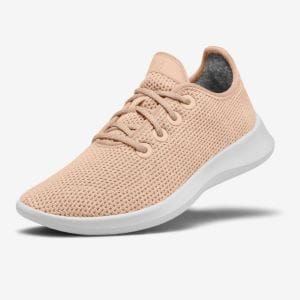
I reach for them for hot-weather travel in particular. The knit upper breathes well, they dry quickly if they get wet from a sudden rain shower, and they pack flat. They are not waterproof and they are not built for hiking, but for warm-weather city travel where I am on my feet eight hours a day, they are the pair I trust most.
One caveat: they are a low-support, low-cushioning shoe by design. If you have significant arch issues, plantar fasciitis, or you need a more structured insole, they may not work for you out of the box. I add my own thin orthotic insert and they are fine for me, but I would not push them as a foot-issues shoe.
Check the latest prices here.
2. Vessi Classic Chelsea, my wet-weather pick
For wet-weather destinations, my current go-to is the Vessi Classic Chelsea. Vessi makes shoes with a proprietary waterproof knit upper, which means you get the breathability of a knit shoe with the rain protection of a rubber boot. The Classic Chelsea is the Chelsea-boot silhouette in that material: a slip-on with elastic side panels and a heel pull tab.
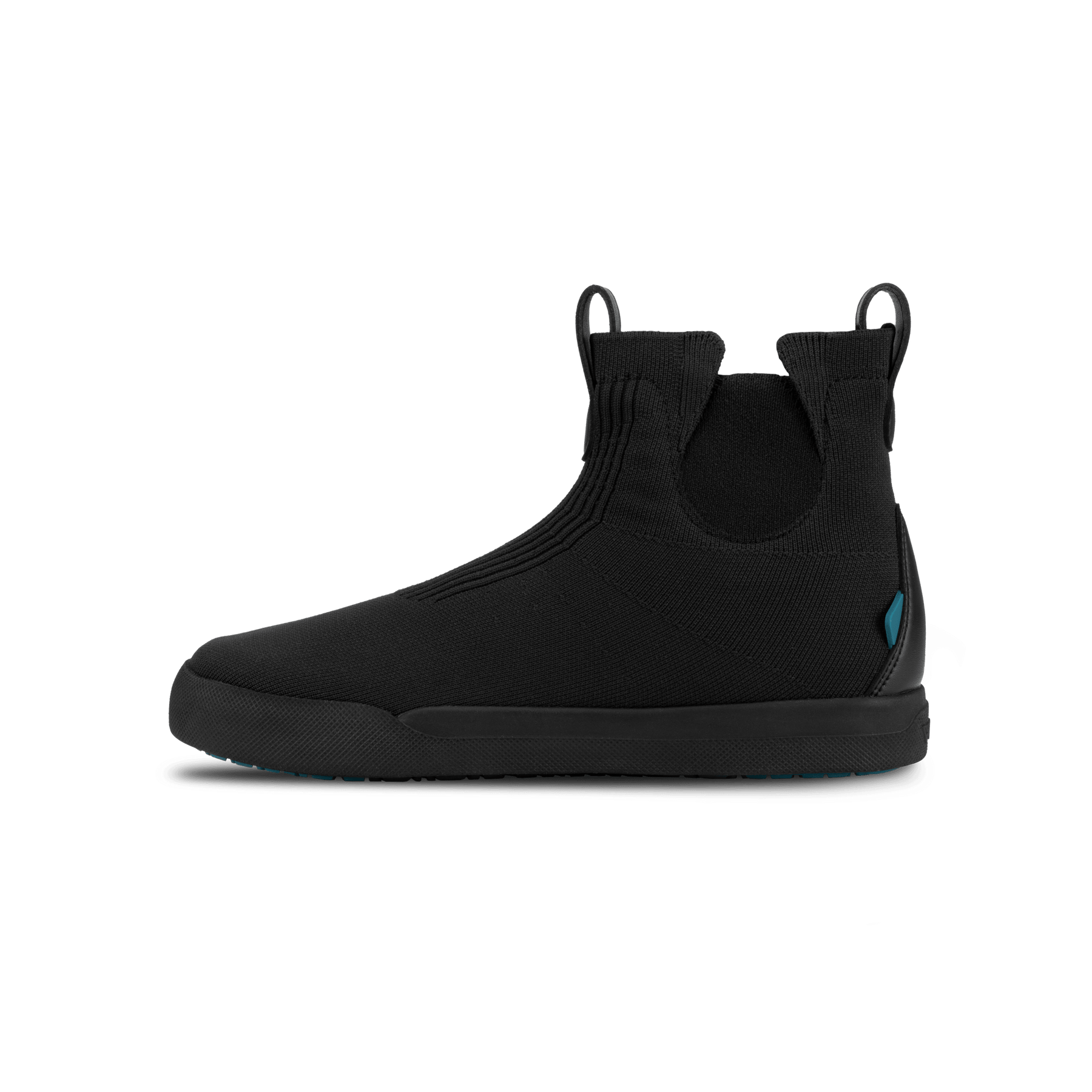
The reason this pair lives in my rotation rather than getting tried and shelved is the slip-on factor. Most waterproof boots, including the Sorel and TNF pairs I own, are lace-up. When you are clearing airport security, hopping in and out of trains, or peeling boots off in a hotel room after a long wet day, the lace-up tax adds up. The Vessi Chelsea takes seconds off both ends.
They are not a winter snow boot. The Classic Chelsea is unlined and is more of a three-season city boot than a deep-cold piece of kit. For Helsinki in February I reach for my Shellistas instead, but for a wet European autumn trip where you might also need to look put-together at dinner, they do both jobs.
Check the latest prices here.
3. Scarpa Kailash Plus GTX, my current hiking boot
For hiking I now wear the Scarpa Kailash Plus GTX. This is a leather and fabric mid-rise boot with a Gore-Tex membrane for waterproofing, a Vibram outsole, and the kind of stiffer construction that supports a moderate load on longer day hikes. I moved up to the Kailash from the Merrell Moab range, which I wore for years on the hikes that defined what counts as a “real” boot for me, including Mount Kilimanjaro, Iceland, and the Scottish Highlands.
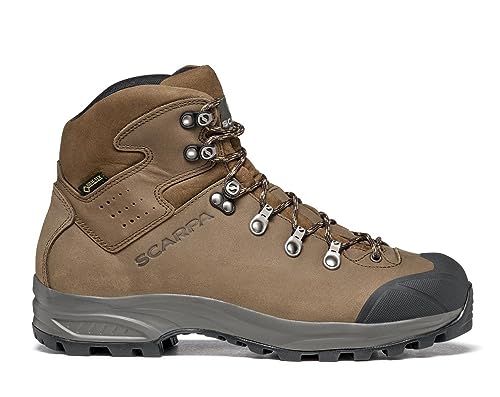
The Kailash sits a bit further up the support and stiffness scale than the Moab. For a flat European long-distance walk or a National Park day hike, the Moab is more than enough boot and is also a lot easier on the wallet. For longer multi-day routes, rougher off-trail ground, or carrying a heavier daypack, I personally prefer the extra structure of the Kailash. I am the kind of hiker who would rather have too much boot than too little.
Whichever you choose, fit matters more than the badge on the side. I have to go up a half size in hiking boots to allow for thicker wool socks and the foot swelling that happens after a few hours on a trail, and I would always recommend trying boots on in person with the socks you actually plan to hike in.
Check price on Amazon here.
4. Allbirds Wool Runner Mizzles, now the Wool Runner NZ Waterproof
My cool-weather Allbirds are the original Wool Runner Mizzles, which I have owned and worn through several British winters and Scottish autumns. They have a merino wool upper, natural rubber soles with a grippier tread than the Tree Runner, and the same removable insole construction as the rest of the Allbirds line.
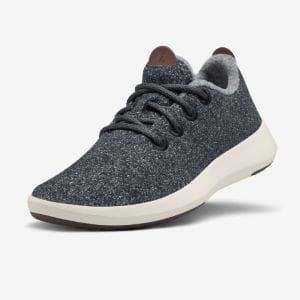
A note on the product name. Allbirds has replaced the Mizzles with a new model called the Wool Runner NZ Waterproof, which is the upgrade the Mizzles always needed: a proper waterproof membrane rather than the water-repellent coating the originals had.
My pair is the older Mizzle, and they have served me well for the kind of light rain you get in the UK in October. If you are buying now, the NZ Waterproof is the version I would point you to, especially if you are heading somewhere you actually expect rain rather than just damp air.
I wear these as my European autumn-and-winter city shoe when I am not in a boot. Laurence and I both have a pair, which is one of the few overlaps in our travel wardrobes.
Check the latest prices on the current model here.
5. The North Face Shellista, my snow boot
For winter travel where I will be standing around in actual snow, my pair is The North Face Shellista IV Shorty. I have worn this generation of the Shellista for several years across the winter wonderlands of Finland and Iceland, and closer to home in the Scottish Highlands. They are a mid-height waterproof boot with a faux-fur lining, a rugged outsole that grips on packed snow, and an insulated upper that has kept my feet warm in real cold weather without being so bulky that they are awkward in a hotel room.
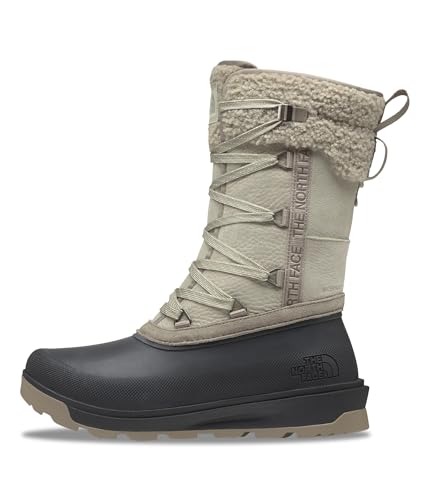
If you are buying now, The North Face has moved the Shellista line forward a generation. The current flagship is the Shellista V Mid Waterproof and there is a shorter cut called the Shellista V Shorty. My IV pair is what I would call clearance-rack territory at this point. The shape and the basic construction are continuous across generations, so the V is a sensible like-for-like replacement when my pair finally gives out. If you want the lower cut for easier packing, the V Shorty is the closer match to what I own.
Check price on Amazon here.
One more pair worth flagging: my Rockport Cobb Hill Petras
There is one pair I have to mention here even though it is not strictly in my current daily rotation: the Rockport Cobb Hill Petra Mary Janes. I have worn Petra mary janes as my primary travel shoe for over 9 years. They are in my closet, they are still the most comfortable formal-leaning travel shoe I have ever owned, and I will keep wearing them. These days, the Tree Runners have taken over most of the airport-to-museum slots, and the Petras come out when I want a shoe that looks a bit more put-together. I cover them in detail in the Versatile section below.
Pack-One-Pair Picks by Trip Shape
If you want to skip the deep dive and just be told what to buy for the trip you are about to take, here is how I would pack a single pair, or sometimes two, for the most common shapes our readers ask about. These are not “the best women’s travel shoe overall” picks. They are “if you are going there, doing that, take this” picks.
A 10-day European city trip (Paris, Rome, Lisbon, Madrid in mild weather)
One versatile sneaker. My pick is the Allbirds Tree Runner if you trend warm-weather, or the Rockport Cobb Hill Petra mary janes if you want a shoe that looks slightly more dressed for restaurants. If you have any history of arch pain, lean toward the Petras, or another pair with a structured insole, rather than the Tree Runners.
A European trip with light hiking (Scottish lochs, Italian Lakes, the Camino de Santiago)
Two pairs: a low-rise hiking shoe like the Merrell Moab 3 for trail days, and a Tree Runner or a Vessi Classic Chelsea for city and evening days. Don’t try to do both jobs with one shoe unless your hiking is flat and short.
A hiking-led trip (Iceland Ring Road in summer, Highlands long walks, multi-day routes)
A proper mid-rise hiking boot, broken in at home before you go. My current pick is the Scarpa Kailash Plus GTX, but the Merrell Moab 3 Mid Waterproof is a perfectly good lower-budget option for most readers. Pair with a thinner shoe for off-trail days. Don’t make the boot do double duty as a restaurant shoe.
A summer city trip in a heatwave (Seville in July, Athens, Mediterranean cruise stops)
A breathable knit sneaker plus a supportive sandal. The Tree Runner is my warm-weather sneaker; the Ecco Yucatan Outdoors Sandal does both city walking and the occasional light scramble. Flip-flops are not enough for full days of walking on hot pavement.
A winter city trip in Northern Europe (Helsinki, Tallinn, Reykjavík, Edinburgh in February)
A waterproof, insulated mid boot for the cold days, and a slip-on indoor-friendly option for hotels and indoor museums. The Shellista V Mid Waterproof is my cold-weather pick. For the warmer Reykjavík end of this list, the Sorel Joan Explorer III or the Vessi Classic Chelsea cover most of what you need without the bulk of a deep-winter boot.
Things to Consider when buying Travel Shoes for Women
There are a lot of things to consider when shopping for a good pair of shoes for traveling. Looking online and shopping in stores can be overwhelming with all the options out there. Here are the factors that have mattered most in my own decisions.
Comfort
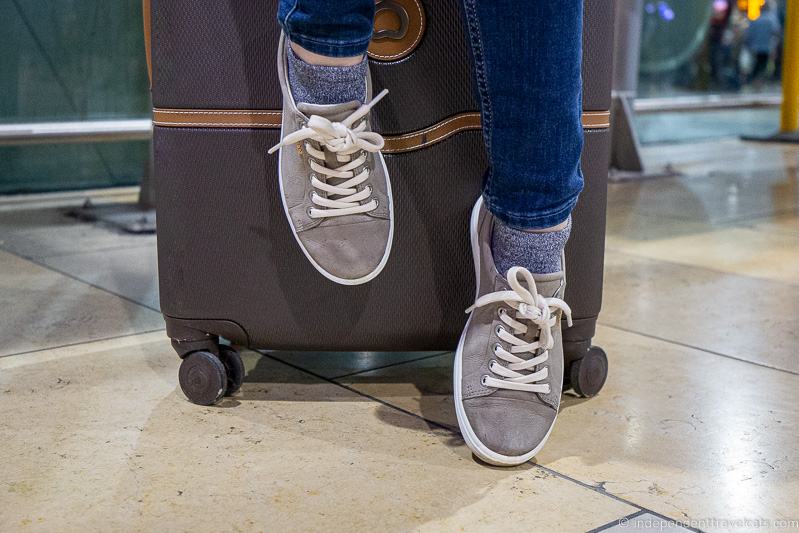
We would argue that comfort is the most important thing to consider when choosing shoes to pack for your next trip. Whether your next adventure is going to involve hours of city walking, long hikes up mountains, or navigating slippery boat decks, you want something comfortable on your feet.
You may have found the most attractive shoes you’ve ever laid eyes on, but if they are not comfortable, they are not worth the pain they will inevitably cause you during your trip. Shoes that pinch, rub, and don’t fit right will likely lead to blisters, sores, and a lot of discomfort.
If you are wearing a comfortable pair of shoes, you’ll probably barely think twice about your footwear. An ill-fitting or uncomfortable pair of shoes is going to remind you of their presence all the time.
Know your feet and what kind of support you need in a shoe to be comfortable. For example, this might mean a cushioned insole, arch support, an instep strap, or a wide toe box. Know what you need to be comfortable and don’t compromise on important features.
You also want something practical. Recently we were in Paris and watched this woman in high heels try to pick her way across a cobbled street; she wobbled by in front of our taxi and had to keep her arm around her husband’s arm to keep from falling forward. We imagine she packed the shoes in hopes of looking sophisticated but instead managed to look uncomfortable and clumsy. I strongly recommend putting comfort and practicality first when choosing travel shoes.
A big trip is also probably not a good time to try a new style of shoes or break in a new pair of shoes. Be sure to take a pair of shoes you’ve tested at home before packing them in your suitcase. Many types of shoes, particularly hiking shoes and stiffer shoes, require some breaking in first, so be sure to do that at home rather than take the risk of rubbing and blisters on your trip.
Also, be sure to test out the shoes in the same way that you plan to wear them on your trip, with or without socks, with insoles, with whatever clothing you’ll typically pair them with, to make sure they are comfortable and fit well. Some shoes can work well with or without socks, whereas other shoes may not be comfortable without them.
Versatility
Versatility matters a lot for travel shoes. Ideally, you want a pair of shoes that will fill a variety of roles so you can minimize how many pairs you need to pack. A pair of shoes that can work for city walking, short easy hikes, and a casual evening out may allow you to take a single pair on a shorter trip. The shoes you would pack for a Havasu Falls hike are going to be very different to those you would pack for spending three days in Paris.
Having shoes that will go with all, or most, of your travel clothing is also important. Think about what you plan to wear on your trip and where you plan to go. Can you wear the shoes with pants, shorts, dresses, leggings, or skirts? Will they work for casual daytime as well as more dressy nighttime situations?
We also recommend sticking to more neutral colors, like black, tan, navy, gray, or brown, as this helps ensure that your travel shoes will go with whatever clothes you wear each day. You can also probably find a red or purple pair of shoes that will work too, depending on your style.
If you choose a fairly versatile pair of travel shoes, you should be able to also make good use of the shoes at home. So if you are choosing between a couple of pairs, you might also consider how much you’d wear each of them when not traveling. Would you wear them at the workplace, to go out to dinner, shopping, or for a walk in the park?
Weight and Packability
One thing to consider when choosing shoes for travel is how much space they will take up in your luggage and how much they weigh.
This is going to be particularly important if you are flying, as you’ll need to meet airline luggage requirements regarding the size dimensions and weight of your bags. Some trains, buses, cruises, and tour companies may also have luggage requirements.
The size and squashability of your shoes is going to help dictate how much you can fit into your luggage. It is fairly easy to fit in a pair of flexible flip-flops, but it is not so easy to squash a pair of hiking boots into an already full bag.
With airlines steadily cracking down on weight allowances, less really is more in your travel-shoe packing. The lighter the shoes, the more pairs you can bring, or alternatively, the more space you will have for clothes, accessories, electronics, and souvenirs.
Even if you meet the airline requirements, you also want to be able to carry your own luggage. A suitcase or backpack that is too heavy can make for an uncomfortable journey. While most suitcases have wheels these days, chances are you’ll still need to carry it up flights of stairs, lift it into overhead storage, hoist it onto public transit, and drag it over cobbled streets.
It can become a little more challenging during the winter months or on trips that require special footwear such as snow boots or hiking boots, which tend to be heavier. You should still keep weight in mind as a factor when selecting the best footwear for your trip.
Budget
If you are looking for new travel shoes, one factor in most people’s decisions is the price of the shoes. It is good to set a budget for your shoes.
If you have a smaller budget, it might be tempting to look for a cheap pair of shoes, but we recommend that you seriously consider balancing cost with quality and comfort.
If you’ve ever taken an uncomfortable pair of shoes on a trip, you’ll know that your choice of travel shoes really can make or break your holiday. Sometimes you have to make a bit of an investment to ensure that your sightseeing goes as smoothly as it possibly can.
That said, you don’t want to sacrifice your grocery budget to buy a great pair of travel shoes, so we’ve tried to include shoes across a range of budgets in this list. Do bear in mind that shoes can be a real investment, and a good well-made pair can last for many years.
You can often find great in-store and online discounts on shoes, especially on last season’s styles and end-of-season sales. Try looking for sandals in autumn or for snow boots in spring. We always check the discount racks when looking for shoes and have found some good bargains this way.
You can also check for gently used shoes at secondhand and vintage shops, as well as online marketplaces like eBay, Gumtree, and Vinted. Just be sure that you get a pair in good condition and that they fit you well.
Don’t forget about shoes you may already own. You may find that you already have a pair of suitable shoes in your closet. Be sure to check them over and test them out before your trip to ensure they still fit, are comfortable, and are in good shape.
Durability
Another factor to consider is the quality and durability of a pair of shoes. Consider the quality and durability of the material and sewing. Look for grip, reinforcement around the toes, flexibility in the soles, and weatherproof features. A good pair of shoes from a well-known manufacturer should last for many years.
We are often tempted to purchase the apparent better deal. For example, a few years ago I purchased a cheaper version of a pair of shoes I wanted, made of a lower-quality material. The shoes looked and fit great, but the strap broke after just 2 months of use, making them unwearable. Lesson learned.
Of course, if your budget means you can’t afford the best quality shoes, that’s fine. I used to buy fairly inexpensive shoes for travel when I was a student and just knew that I would have to replace them every couple of years as they wore out.
One type of shoe I would strongly recommend not skimping on is hiking shoes and hiking boots, particularly if you plan to do a lot of hiking on your trip. Trust us, you don’t want to be halfway through a hike suffering with wet feet or blisters because you cut costs on your hiking shoes.
Some shoe manufacturers and stores also offer warranties or money-back guarantees for their shoes if you don’t enjoy them or there are any manufacturer defects. This is always a good sign, and the longer that warranty, the better.
Foot Condition Considerations
This section is the one I most wish I had had access to twenty years ago. I spent my teens and twenties wearing unsupportive shoes, primarily flip-flops for about five years, and making bad shoe choices that prioritized budget and style over comfort and fit. In my mid-twenties, I began getting foot pain and was eventually told I had plantar fasciitis. I am now a firm believer in taking care of one’s feet and choosing supportive shoes, and a lot of what I write here comes from working through my own foot issues rather than reading about other people’s.
A quick scale check: according to the Cleveland Clinic, around 1 in 10 people will develop plantar fasciitis at some point in their life, with more than 2 million people in the US treated for it each year. If you have it, you are not in some unusual minority of travelers. You are in a group large enough that any good travel-shoe guide should answer the question.
Plantar fasciitis and arch pain
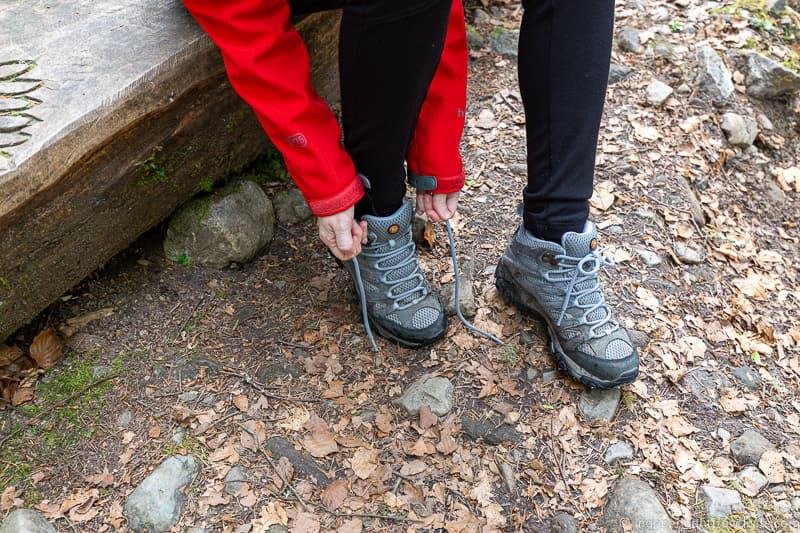
What helped me most was learning to recognize early which shoes were going to make things worse. The shoes that aggravate my arch are unsupportive flats, thin flip-flops, and dress shoes with no insole structure. The shoes that have kept me hiking and walking eight-hour city days are the Rockport Cobb Hill Petra mary janes, supportive sneakers with removable insoles where I can add my own Soul Insole mini orthotic inserts, and proper hiking boots like the Merrell Moab and Scarpa Kailash. I cover the orthotic insert that has worked for me in the Accessories section below.
If your plantar fasciitis is severe, I would say two things. First, talk to a podiatrist before you book a long walking trip; a custom insole or a structured shoe recommendation from someone who has seen your feet is worth more than any roundup article. Second, look for shoes that will accommodate a custom orthotic; many shoes have a removable factory insole that allows you to slot in a proper insert without changing the fit of the shoe.
Wider feet
For wider feet, I would point you first at Birkenstock, Naot, and Ecco. All three have wider-than-average lasts as standard, and Birkenstock in particular comes in narrow and regular widths so you can dial the fit in. The Mary Jane silhouette in general tends to accommodate a wider forefoot better than a sleek pump or a narrow runner, which is one of the reasons it became my own daily shoe.
I would be cautious about narrow European brands and about most fashion-led sneakers, which often run narrow as standard. If you cannot try a shoe on in person, look for reviews specifically from wide-footed readers in the question-and-answer section on the retailer page rather than the general star rating.
Smaller sizes (UK 3 and below, US 5 and below)
A note for readers with smaller feet, which has come up several times in our comments. The Rockport Cobb Hill Petra is stocked at US 5 minimum (roughly UK 4) at retailers like Nordstrom and Amazon, which means it does not run small enough for everyone. If you need smaller, the Clarks range (including the Hope Henley line) starts at UK 3, and several Vionic styles run down to US 5 as well. Brands worth checking specifically if you are a US 4 or 4.5 include some ranges from Naot, Vionic, and the smaller end of Birkenstock’s stockists.
Orthopaedic-friendly brands
Some brands of shoes are particularly designed for those with foot problems or for accommodating orthotic devices. Brands with good reputations for quality footwear for those with foot issues include Aetrex, Vionic, Birkenstock, Clarks, Orthofeet, Chaco, Therafit, and Drew. Vionic shoes in particular carry the seal of acceptance by the American Podiatric Medical Association, which is one of the few third-party signals in the orthopaedic-friendly space that I find meaningful.
If you have a more serious foot issue and are not sure about the best way to care for your feet, I would consult a podiatrist about what they recommend.
Sustainability and Country of Origin
A lot of people care about where their shoes are made, how they are made, what they are made of, and the environmental impact of this process. This information can often be difficult to find, but more and more brands are making it easier.
Allbirds has built its brand around sustainability practices and trying to be transparent about its manufacturing practices and the carbon footprint of its shoes. The Tree Runner, for instance, uses a sugarcane-derived midsole and a eucalyptus-fibre upper, and the company publishes a per-product carbon-footprint figure on each shoe page. Vessi makes similar disclosure efforts for its waterproof knit footwear.
Buying locally-made shoes can be difficult, depending on where you live, as many brands manufacture their shoes in either Asia or eastern Europe. Buying locally-made shoes if you live in a high-income country can also be a stretch for those on a smaller budget, since such shoes tend to cost more than those produced in lower-income countries.
If you live in the USA, there are a number of shoe brands that manufacture their shoes, or at least some models, in the USA, including Danner, Red Wing, Opie Way, New Balance (Made in US line), and Okabashi.
If you live in the UK, a few of the shoe brands that are produced in England include Crown Northhampton, New Balance (Made in UK line), and Doc Martens (Made in England line).
For hiking and athletic shoes, we like the Made in USA search feature on the REI website to help find shoes manufactured in the United States.
Vegan Friendly
For those looking for vegan-friendly shoes, many shoe brands offer shoes that do not use any animal products or by-products, and several brands produce only vegan shoes.
Popular vegan-friendly shoe brands include Ahimsa, Will’s Vegan Shoes, Matt & Nat, Okabashi, Bourgeious Boheme, Native Shoes, Blowfish, and Beyond Skin.
More mainstream brands that carry vegan shoe lines include Tom’s, Birkenstock, Reef, Merrell, Dr. Martens, Teva, and Adidas. Many of these brands have designed vegan-friendly versions of some of their most popular shoes, and we try to note when vegan versions of a shoe are available throughout this post.
If you are looking for something 100% vegan, be sure to check on what is used for the glue and soles of the shoes, as some shoes that appear vegan may still contain animal by-products.
If you use REI to shop for shoes, it is easy to find vegan-friendly shoes there as you can sort by whether they are vegan or not. At last check, REI had over 220 vegan-friendly shoe listings for women.
Categories You Can Probably Skip
Before we go through the product categories themselves, a quick note on which categories most women don’t actually need to pack for, even when a 26-product roundup might imply otherwise.
Sports shoes as a distinct category
Older versions of this article carried a separate section for sports shoes (running trainers, cross-trainers, athletic shoes). In practice, almost everyone who packs a running shoe for travel is using it as their general walking sneaker, and a good travel walking sneaker like the Allbirds Tree Runner or the Ecco Soft 7 will do that job. If you actually train hard while traveling and want a dedicated running shoe, you already know what shoe you want and you don’t need a travel roundup to recommend one. We have folded the rest of the category into the Walking Sneakers section below.
Airplane slipper socks
The same logic applies to airplane slippers and “barefoot foldable” shoes. If you want something to slip on for an overnight flight, a pair of compression socks or your normal sneakers without the laces tightened does the job. A second pair of shoe-shaped slippers in your carry-on takes up space, gets dirty quickly, and is rarely worth the trade-off. We have cut the category.
Water shoes (unless you are specifically doing watersports)
You probably don’t need a dedicated water shoe unless you are specifically planning watersports activities like snorkeling, white-water rafting, or canyoning. For most beach and pool needs, a sandal is enough. If you actually need a water shoe, the Keen Newport H2 is a proper hybrid sports sandal that doubles as a wet-environment shoe; it is the one product from our old Water Shoes lineup I would still recommend buying. Everything else in that section was a slip-on barefoot rubber piece that any travel-shoe roundup could safely skip.
Best Versatile Travel Shoes for Women
The best travel shoe for you is very likely going to be a different shoe than for another traveler. It is going to depend a lot on your preferences, style of travel, your feet, and other factors.
Personally, I have found that a mary jane style shoe has been the best versatile travel shoe for me, and I have worn mary janes for over 9 years. They are suitable for a variety of travel situations and go well with a variety of travel clothing options.
Of course, the perfect travel shoes for one destination may not work well for another. The perfect shoes for a trip to NYC are not likely to be the same ones for a tropical beach destination or a camping holiday.
Below we cover the shoes that work as good all-rounders across many travel situations, have strong ratings for comfort and durability, and pair well with the kinds of clothing most travelers actually bring. Most of these shoes also appear again under the specific sections of the post focused on sneakers, sandals, snow boots, and dress shoes.
Note that shoes are not ranked in any particular order within this post; the numbers are just used to make the post easier to scan.
1. Rockport Cobb Hill Petra Mary Jane Flats
These mary jane shoes from Rockport are made of leather uppers with synthetic soles and a cushioned insole. The strap is attached by Velcro, making it easy to remove and slip them on. They come in several colors.
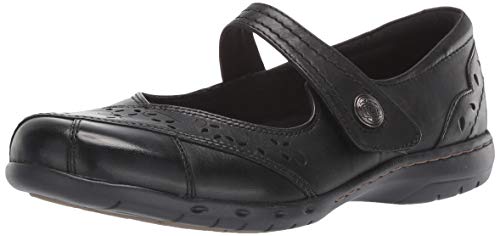
These were my everyday traveling shoes for over 9 years, and they are still in my closet. They are comfortable and versatile for traveling, and they can be worn with pants, skirts, dresses, and leggings. They are also one of the few shoes I own where I can comfortably slot in my mini orthotic insoles without changing the fit.
These days, the Tree Runners have taken over most of the slots in my daily travel rotation, particularly for hot-weather destinations. The Petras still come out for the trips where I want a shoe that looks more put-together at dinner, and I would still buy this pair again tomorrow. For wider feet, the Mary Jane silhouette is accommodating; for plantar fasciitis, the structured insole has done more for my arch over the years than any other shoe I have tried.
One sizing note for readers with smaller feet: the Petra is stocked at US 5 minimum (roughly UK 4). If you need smaller than that, the Clarks Hope Henley line starts at UK 3.
I previously wore Skechers Bikers Step-Up Mary Janes for several years, and the Rockport shoes are a definite step up in quality. If you are looking for budget-friendly mary janes under $50, the Skechers Bikers, Active, and Sport ranges are a reasonable place to start.
Check price on Amazon here.
2. Ecco Soft 7 Sneakers
The Ecco Soft 7 sneakers have a contemporary look and a slightly upscale feel for a sneaker, thanks to their soft leather upper. They have removable insoles and are well-rated for both comfort and durability. They come in a wide range of colors.

I have a pair of these myself. The one issue I had was finding my correct size, since they run a bit narrow and have quirky sizing. Once I had the right size, I was very happy with them.
If you are looking for a stylish pair of sneakers that can work well across a variety of travel outfits and tolerate the occasional restaurant evening better than a knit sneaker, this is one to consider.
Check price on Amazon here.
3. Sorel Evie II Chelsea Boots
These no-fuss leather Chelsea boots are lightweight, easy to slip on, and have a cushioned insole. They are also waterproof, with a leather upper, soft canvas lining, and a rubber bottom for good traction.
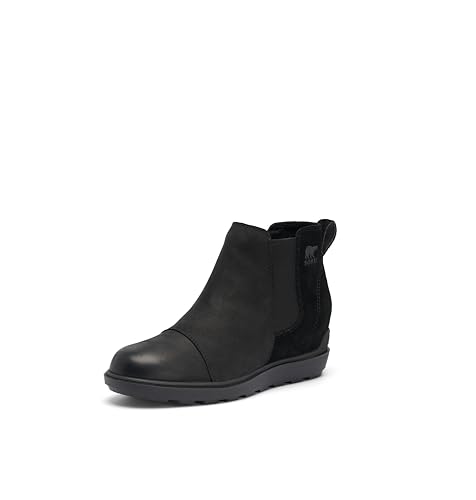
These boots are stylish, comfortable, and functional, and versatile enough to go with a lot of clothing options. The waterproofing also makes them work year-round in places that get rain (most places we travel).
Check price on Amazon here and REI here.
4. Ecco Yucatan Outdoors Sandals
The Ecco Yucatan is a versatile sports sandal with a nubuck leather upper, three adjustable straps for a customizable fit, a comfortable footbed, and a sole with good traction for uneven outdoor terrain. Available in many colors and designs.

If you need a pair of sandals that can handle lots of walking plus some light adventuring and hiking, this is the pair we have come back to most often. The Yucatan is an ECCO classic with millions of pairs sold over the years, and the construction quality matches the price.
Check price on Amazon here.
Best Travel Walking Shoes and Sneakers for Women
If you are looking for a comfortable shoe for travel, many people choose sneakers or trainers. Most sneakers were designed for all-day wear, so they make sense for full-day sightseeing.
When choosing a sneaker for travel, look for ones that have a lightweight design, support your arch and heel, have a cushioned insole, and have a sole with good traction to prevent slips. We also recommend sneakers with laces, as this allows you to get a better fit than slip-on or velcro styles, but slip-ons can be useful for airports where shoes come on and off often.
It is also worth thinking about what color and style will go well with your travel clothing. A sneaker may not be best-suited for the opera or a fancy restaurant, but with the right colors they can be styled to work with many outfits.
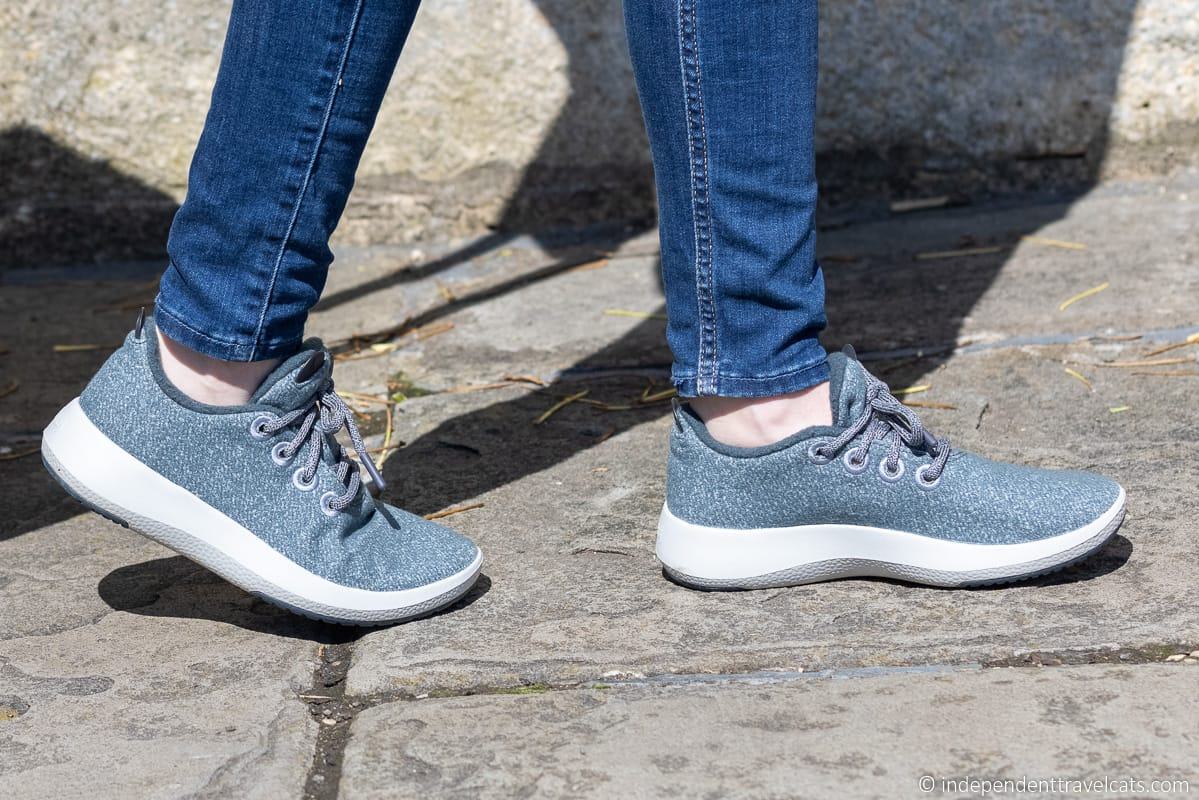
1. Allbirds Tree Runners
The Allbirds Tree Runner is currently my most-worn travel shoe, as I discussed in the lead section above. The lightweight and breathable knit upper is made from eucalyptus tree fibres, and the midsole and sole are made from a foam material derived from sugarcane. The wool-covered castor bean oil insoles are removable. The shoes come in several colors.
They are lightweight and easy to clean (you can machine wash them if you remove the laces and insoles). Allbirds also says these shoes are made with renewable materials and are carbon-neutral. The caveat I mentioned above applies here too: they are a low-structure shoe, so if you need significant arch support out of the box, look elsewhere or plan to add an orthotic.
Check the latest prices here.
2. Allbirds Wool Runner NZ Waterproof
The Allbirds Wool Runner NZ Waterproof is the current version of the shoe many readers will know as the Mizzles. Where the Mizzles had a water-repellent coating, the NZ Waterproof has an actual waterproof membrane, which is the upgrade the line always needed. The merino wool upper is still there, the natural rubber sole has the same grippier tread, and the insole is removable.
This is the pair I wear in the UK in autumn and winter when I don’t want a full boot. The wool keeps your feet warm without being sweaty, and the new waterproof membrane handles a typical British drizzle without complaint. They are well suited to the often cool and damp UK weather.
Check the latest prices here.
3. Ecco Soft 7 Sneakers
These contemporary Ecco Soft 7 sneakers have a soft leather upper, long laces, comfortable insoles, and synthetic soles. Available in lots of colors to suit any travel style.
The soft leather uppers and contemporary design make these sneakers a good pick for travel where you want a shoe that looks intentional rather than athletic. They offer comfort, durability, and a slightly upscale feel.
Check price on Amazon here.
4. On Cloud 6
The On Cloud 6 is the current generation of On Running’s flagship lightweight travel sneaker. It has the brand’s signature CloudTec midsole (the segmented cushioning pods you’ll recognize from the outsole), a breathable engineered mesh upper, and a speed-lacing system that lets you slip the shoe on and off without untying.
I have not personally worn the Cloud 6. I have included it here because it has become the universally-recommended travel sneaker across the SERPs we trust (RunRepeat, We3Travel, and many readers who have written in over the past two years), and because in 2023 our reader Joan wrote into the comments specifically to say she kept meeting fellow travelers who recommended the Swiss On sneakers. If you are looking for a lab-data-backed travel sneaker with strong cushioning, and you don’t mind that I haven’t put miles on it myself, this is the pair you’ll find most often recommended. Try them on in person if you can; On shoes are reported to run narrow.
Check price on Amazon here.
5. TOMS Cabrillo Sneakers
The TOMS Cabrillo sneakers have a canvas upper, removable antimicrobial-treated cotton twill footbed, and rubber sole. These lightweight, stylish sneakers are well suited to packing into a carry-on bag.

A nice extra with TOMS is that for each pair you buy, they donate a pair of shoes to children in need through their One for One program. For more lightweight travel-friendly shoes by TOMS, check out their TRVL Lite collection.
Check price on Amazon here.
6. Superga Women’s Cotu Classic Sneaker
The Cotu Classic is the classic sneaker produced by Italian shoe brand Superga. It has a 100% cotton canvas upper and a vulcanized rubber sole. The brand is famous for its white tennis shoes, but you can now get these popular sneakers in over a dozen different colors.

These classic European sneakers are a good pick for travelers who want a shoe that reads as a European city shoe rather than an athletic shoe. They are not the most supportive option on this list, so if you have foot issues I would point you elsewhere, but for a short city trip they are hard to beat on style for the price.
Check price on Amazon here.
7. Vionic Hattie Sneaker
The Vionic Hattie sneakers have a soft canvas upper, a podiatrist-designed removable supportive EVA footbed, and rubber sole. The twill detail around the shoes gives them a little something extra.

These shoes are designed to be comfortable even for those with foot problems and are built to hug your arches. They have received a Seal of Acceptance from the American Podiatric Medical Association, which is a meaningful third-party endorsement for plantar-fasciitis-prone feet specifically.
Check price on Amazon here.
Best Travel Boots for Women
If you are more of a boots person, we have you covered. Finding a comfortable boot for all-day wear can be more challenging than finding a comfortable sneaker or mary jane, since boots tend to be heavier, stiffer, and less forgiving of fit issues.
When looking for travel-friendly boots, we recommend looking for a boot with a low heel, a cushioned and supportive footbed, and good traction. If flying, also consider one that isn’t too difficult to take on and off (for airport security) and one that doesn’t take up too much space when packed.
Note that many boots are designated as waterproof, but if you expect to be in heavy rain or snow, I’d still use a waterproofing spray or wax on them first.
1. Sorel Evie II Chelsea Boots
The Sorel Evie II Chelsea boots are stylish, comfortable, and functional. They are easy to slip on and have a soft canvas lining and cushioned insole. The rubber bottom provides good traction and they are waterproof.
These boots are a good pick for a no-fuss but fashionable pair of ankle boots that handles city travel and the occasional rainy day equally well.
Check price on Amazon here and REI here.
2. Blondo Villa Waterproof Bootie
These attractive waterproof booties feature a low stacked heel and a classic silhouette. They come in soft suede or leather and have a rubber sole for better traction, with a side zipper for easy entry and exit.
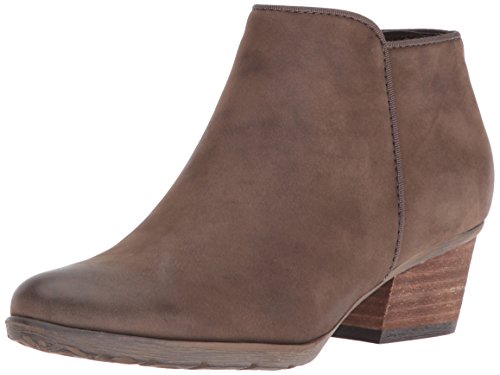
The Blondo Villa Booties come in several colors and will go with a lot of clothing options, from casual to dressy. Note that these have minimal arch support and cushioning, so if you have foot issues, these may not be the best pair for you (or you may want to add an insole).
Check price on Amazon here.
3. Rockport Cobb Hill Caroline Waterproof Boot
If you like your boots to be a bit more motorcycle-boot inspired, the Rockport Cobb Hill Caroline boots may be your style. They are made of seam-sealed waterproof leather with a cushioned EVA footbed, microfiber lining, a short heel, and rubber soles. They feature a decorative buckle strap but have a full-length side zipper for easy removal.
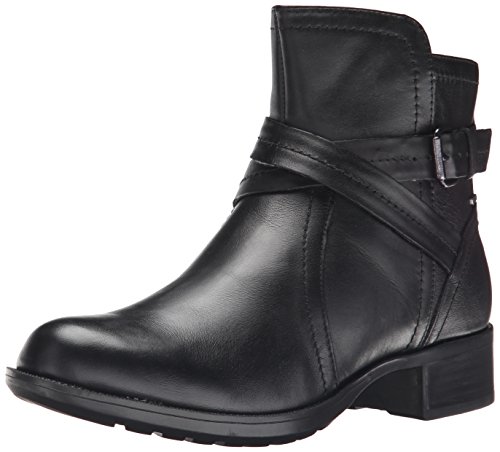
I don’t own these particular boots, but I have several other shoes from the Cobb Hill collection and have found them consistently comfortable and supportive. If you are looking for a refined motorcycle-inspired boot with good support, these are worth considering.
Check price on Amazon here.
4. Clarks Clarkdale Arlo Boot
The Clarks Clarkdale Arlo Boot is an ankle boot with a suede upper, low stacked heel, full soft leather lining, removable Ortholite insole, and rubber sole. Elasticated side panels and a heel loop tab make them easy to take on and off. They are available in several colors.

Clarks is well known for making shoes like this that are comfortable, practical, and stylish, and the Clarkdale Arlo is one of their stronger contemporary boot designs. If you like this style, the rest of the Clarks boot range is worth a browse.
Check price on Amazon here.
5. Vionic Women’s Upright Jessie Ankle Boot
These Vionic ankle boots feature a suede upper, removable EVA footbed, 2.4″ stacked heel, and rubber sole, with a full-length side zipper.

If you are looking for boots with a bit of a heel, the Vionic Upright Jessie is worth considering, as it features a podiatrist-designed footbed and the American Podiatric Medical Association Seal of Acceptance. This is one of the few heeled boots I would recommend specifically for plantar-fasciitis-prone feet.
Check price on Amazon here.
Best Travel Sandals for Women
If you’re traveling to a hot-weather destination, you might consider packing a pair of travel sandals to keep your feet cool. While some sandals are best worn only on the beach, there are some that can also offer support for sightseeing and even light hiking.
We recommend a range of sandal options, whether your plans involve hiking, city sightseeing, or relaxing on the beach.
If you plan to do a lot of walking, look for a pair of sandals with a wide soft front strap, cushioned and supportive footbed, and back strap to keep your ankle in place. Most flip-flops are not enough for full days of city walking on hot pavement, no matter how comfortable they feel for a few hours at a beach.
1. Ecco Yucatan Outdoors Sandals
The Ecco Yucatan sandals are a hybrid between a classic sandal and a hiking shoe. They offer a nubuck leather upper, three adjustable straps, ankle support, a comfortable footbed, and rubber soles for solid traction. Available in many colors and designs.

If you are looking for sandals that will handle sightseeing as well as hiking and other outdoor activities, this is the pair I would recommend most often. They provide much of the stability and support of a hiking shoe while still letting your feet enjoy some air.
Check price on Amazon here.
2. Teva Tirra Athletic Sandal
Another good athletic sandal to consider is the Teva Tirra. It has three adjustable straps made of quick-dry nylon and polyester webbing, an EVA midsole, cushioned heel, and a rubber bottom for good traction.

The Tirra is a sporty sandal that still looks reasonably feminine for city wear. The synthetic straps dry quickly after stream crossings or sudden rain, which makes it a better fit than the Ecco Yucatan for wetter trips. Available in several colors.
Check price on Amazon here and REI here.
3. Naot Kayla Sandal
If you are looking for a sandal with a bit of a wedge, the Naot Kayla is one to consider. It has suede or leather straps, a 1.25″ wedge heel, a suede-covered cork and latex anatomical footbed, and a synthetic sole. The instep and back heel straps help support your foot and keep it in place. Available in many colors.

The Naot Kayla is the rare sandal that is comfortable enough to wear all day and looks intentional enough for dinner. Naot tends to run wider as standard, which makes it a reasonable starting point for readers with wider feet.
Check price on Amazon here.
4. Birkenstock Gizeh Thong Sandals
The Birkenstock Gizeh sandals are a travel classic, worn by travelers for decades. They have either a leather or synthetic upper (vegan versions available), a thong-style front with adjustable buckle, a suede-lined anatomically shaped cork-latex footbed, and an EVA sole.
The well-known Birkenstock cork footbed is designed to mold to the shape of your foot after a little wear, giving you customized support across your arch and the rest of your foot. Like most Birkenstocks, the Gizeh takes a little time to break in, so wear them at home for a few weeks before packing them.

They are made in Germany from natural, renewable, and non-toxic materials. The vegan versions of the Gizeh are available here and here.
The one thing I don’t love about the Gizeh is the lack of a back strap. If you are looking for more ankle support, the Birkenstock Kairo sandal is similar but has an adjustable heel strap.
Check price on Amazon here and REI here.
5. Birkenstock Arizona
The Birkenstock Arizona is the two-strap buckled-sandal silhouette that sits alongside the Gizeh in Birkenstock’s core lineup. Same cork-latex footbed, same molded arch support, same break-in window; the difference is two wider straps across the top of the foot rather than the Gizeh’s central thong, which makes the Arizona more forgiving for feet that don’t get along with thong sandals.
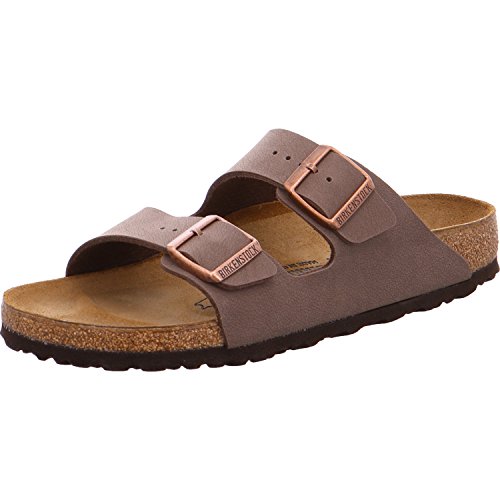
I don’t personally own the Arizona; I own the Gizeh. I am including the Arizona on this list because it is what readers ask for by name and because the two-strap silhouette is the better starting point for travelers who want the Birkenstock footbed without committing to a thong. If you have ever found that thong sandals rub between your toes after a few hours, the Arizona is the Birkenstock for you.
Check price on Amazon here.
Best Travel Hiking Boots for Women
There are three main categories of hiking boots. The first is regular low-rise hiking shoes, which are great for less strenuous trail hiking and for those who plan to stick to maintained trails. Some of the athletic sandals and shoes we mentioned earlier in the post could also be used for light hiking.
The second category is mid- to high-rise day hiking boots, which work well for low- to moderate-grade hikes and day hikes. We focus our recommendations mostly on day hiking boots, since these should fit the needs of most hikers.
The third category is backpacking boots, which offer more support and durability than day hiking boots and are designed for multi-day hikes, heavier loads, and off-trail walking. They are generally heavier and stiffer than day hiking boots.
For cold-weather hiking, there are also winter hiking boots designed with extra insulation. Many are designed to fit into crampons for hiking in snowy and icy conditions.
Any good hiking shoe needs to feel comfortable and fit snugly when laced up, although not be too tight or pinch anywhere. You want a little extra room for your toes, since you don’t want them rubbing the front of the shoes when walking or hiking downhill.
Most people, myself included, need to go up at least a half size for hiking shoes (compared to normal athletic or running shoes) to accommodate thicker hiking socks, normal foot swelling, and toe space. When trying on a new pair of hiking boots, test them with a proper pair of hiking socks and any orthotic devices you use, since these can change the fit.
If you have never purchased hiking boots before, especially if you are buying them for longer-distance hiking, I would recommend going to a store, having your foot measured, and getting recommendations from a store that specializes in sports and outdoor shoes.
A good pair of hiking socks is almost as important as the shoe itself, since poor-quality socks can lead to rubbing, discomfort, and blisters. You’ll want quick-drying moisture-wicking hiking socks, and we recommend wool, quick-drying synthetics, or wool blends. We cover sock options later in the article.
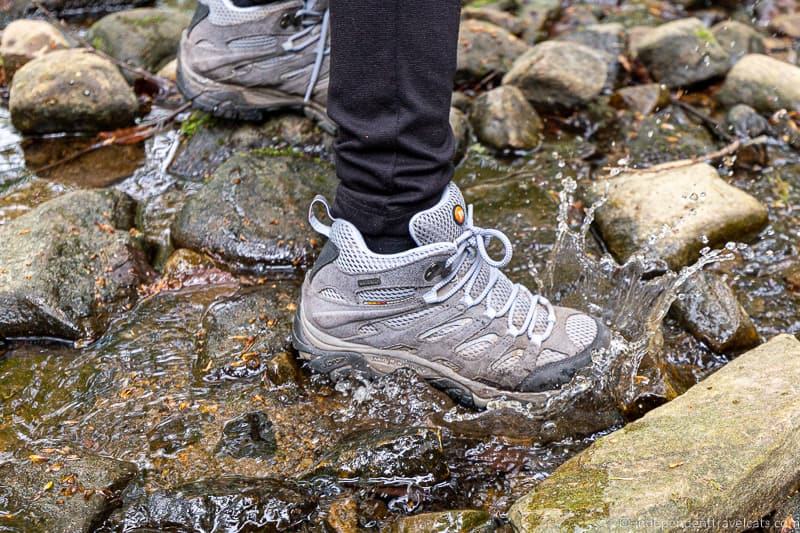
1. Scarpa Kailash Plus GTX
The Scarpa Kailash Plus GTX is my current personal hiking boot, as I covered in the lead section. It is a leather and fabric mid-rise boot with a Gore-Tex membrane for waterproofing, a Vibram outsole, and the kind of stiffer construction that supports moderate loads on longer day hikes.
I personally find it sits at the right point on the support-versus-weight curve for the multi-day hikes I do in Iceland and the Scottish Highlands. The break-in took a couple of weekend walks before they felt fully comfortable; this is a stiffer boot than the Moab, and the trade-off is more structure for longer days. For a lighter, more flexible hiking shoe at a lower price, the Merrell Moab 3 below is the better pick.
Check price on Amazon here.
2. Merrell Moab 3
The Merrell Moab line is what I wore for years before I moved up to the Scarpa, and I would still recommend it as the default hiking shoe for anyone new to hiking or anyone whose hiking is shorter-distance and on maintained trails. The Moab 3 is the current generation; it has a suede and mesh upper, cushioned insole, nylon arch shank, and a Vibram outsole. They are ventilated and breathe well in warm weather.

I personally hiked in the previous-generation Moab 2 across California, Iceland, Scotland, and Mount Kilimanjaro before moving up to the Scarpa. The Moab line has been consistent enough across generations that I would expect the current Moab 3 to do everything the Moab 2 did for me. It is a forgiving boot to break in, the price is reasonable, and the support is adequate for most readers’ day-hiking needs.
Check price on Amazon here and REI here.
3. Merrell Moab 3 Mid Waterproof Hiking Boot
The Merrell Moab 3 Mid is the boot version of the Moab 3 shoe above. It has a suede and mesh upper, a cushioned removable insole, a rubber toe cap for protection, and a Vibram sole. It is waterproof and provides better ankle support than the low-rise Moab 3.

The Moab Mid is surprisingly light, considering how well-constructed and durable it is. The waterproof membrane is the main reason most readers will choose the Mid over the low-rise version. If you don’t care about the waterproofing and are planning to hike in hotter temperatures, look at the ventilated version of this hiking boot instead.
Check price on Amazon here and REI here.
A Note on Water Shoes
This article used to carry a dedicated water-shoes category with four picks. After thinking about it for this update, I cut most of it. Most travelers don’t actually need a dedicated water shoe. For beach and pool use, a sandal is enough; for boat days, your sneakers without socks are usually fine.
If you are doing specific watersports activities, snorkeling, canyoning, rocky river hikes, or white-water rafting, then a real water shoe earns its place. The one product from the old lineup that I would still actively recommend is the Keen Newport H2 Water Sandal, which is a proper hybrid sports sandal: molded EVA midsole, toe guard, secure lacing, and durable enough to handle longer hikes that get wet. It is also easy to clean and machine-washable.
If you are looking at the rubber slip-on aqua shoes that fill the category on most retail sites, my advice is to skip them and pack one good sandal that doubles as a beach shoe.
Best Travel Snow Boots for Women
If you are heading to a cold-weather destination where you’ll be spending time in actual snow, you’ll want to bring a warm pair of snow boots.
Snow boots are designed to keep your feet warm and protect them from the harsh conditions of snow and ice, as well as rain and sleet.
There is often a distinction between winter boots and snow boots, with snow boots generally being more durable and weather-resistant. Winter boots may be fine for a cold-weather destination where you don’t plan to spend a lot of time doing activities in snow or ice; snow boots are the safer pick when there will be real snow underfoot.
You want snow boots that are water-resistant or waterproof, provide good ankle support, and have thick rugged soles with good traction. Faux fur collars at the top help keep snow from falling in. Lace-up styles give a closer fit.
Note that many waterproof winter and snow boots are only waterproof up to a certain level on the boot. If you really need full waterproofing (rain, walking in deeper water), check reviews and product specs carefully. You may also want to add waterproofing wax or spray.
Snow boots are generally made a bit larger to accommodate fleece linings and thick winter socks, but they should still hug your feet. You want room to wiggle your toes, but not so much that the boot feels loose when walking. We recommend pairing snow boots with a thick pair of ski socks or winter hiking socks.
Most of the boots on our list are designed for general wear in the snow. For more adventurous winter activities, consider a proper winter hiking boot rather than a snow boot.
If you are going skiing or snowboarding, you need ski boots or snowboarding boots for those activities specifically. Many people rent ski and snowboarding boots unless they are regular skiers. If you are planning a ski trip, you might want to check our ski trip packing list and Laurence’s guide to the best travel shoes for men for shared shopping context. For Iceland specifically, our Iceland winter packing list goes into more detail on cold-weather footwear and layering.
If you are going to be walking around in more extreme cold temperatures, look for boots with matching temperature ratings.
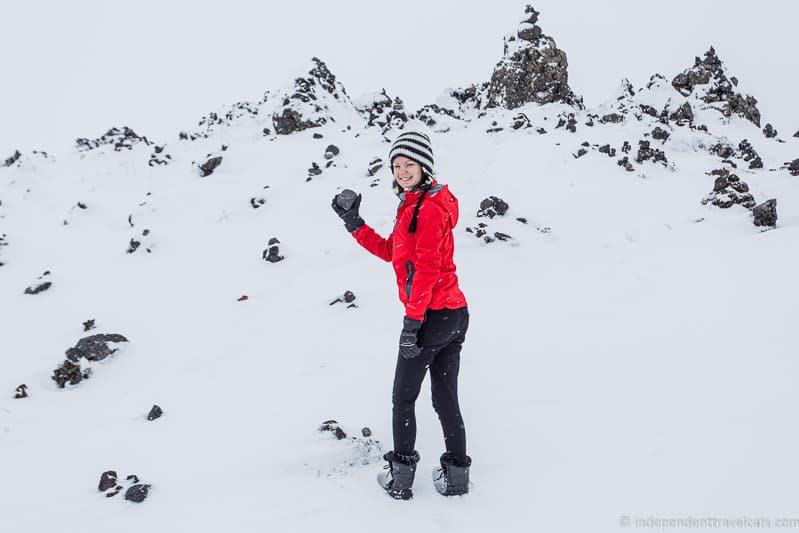
1. The North Face Women’s Shellista V Mid Waterproof
I have worn snow boots from The North Face for several years across the winter wonderlands of Finland and Iceland and closer to home in the Scottish Highlands, as I covered in the lead section. My pair is the older Shellista IV Shorty: lace-up, waterproof, with a faux-fur lining, and rubber outsoles with good traction.
The current TNF Shellista line has moved on from my pair. The flagship is the Shellista V Mid Waterproof on Amazon (TNF’s own site lists the same boot as the VI Mid, since the names lag between retailers). It is the current redesign, with HEATSEEKER Eco Pro insulation and a full-grain leather upper. If you want a lower-cut option that more closely matches what I own, the Shellista V Shorty is the closer match. Both are sold under the same Amazon listing link below in recent stock; check the variant when you click.
Check price on Amazon here.
2. Columbia Ice Maiden II Insulated Snow Boot
The Columbia Ice Maiden II is one of the most popular women’s snow boots on the market. It has a leather and textile upper, faux fur detail at the top, lace-up ties for a snug fit, a cushioned midsole with arch support, 200g insulation, and an advanced-traction rubber sole. Available in several colors.

The Ice Maiden is the taller, more snow-focused boot on this list. If I were looking for a taller snow boot that handled deeper drifts than my Shellistas, this would be my pick.
Check price on Amazon here and REI here.
3. Sorel Joan Explorer III Winter Boot
If you are looking for a pair of lightweight winter boots that fit like a sneaker, the Sorel Joan Explorer III is worth considering. It has a full suede lace-up upper, 100g of insulation, a faux fur collar, microfleece lining and EVA footbed, and a chunky rubber outsole with rubber pods for extra traction.

It is a comfortable and lightweight winter boot for milder cold-weather trips: Reykjavík in autumn, an Alpine city stay, the early end of a Scottish winter. For deeper cold or proper snow days, the Columbia Ice Maiden or the Shellista V Mid is a safer choice. If you like Sorel boots but need something warmer and more weatherproof, the Sorel Joan of Arctic is the heavier-duty sibling.
Check price on Amazon here and REI here.
Best Travel Dress Shoes for Women
We don’t really recommend dress shoes or heels as the best shoes for travel, but they are sometimes a necessity. You may be traveling for business, have formal nights on a cruise, or need them for a nice dinner or evening event like a concert or opera. Some women also simply prefer heels.
The big issue is finding dress shoes that look good, feel good, and travel well. A 2009 review in the Journal of the American Podiatric Medical Association (Cowley et al., 2009) synthesised the literature on how heel height affects gait and posture across the foot, ankle, knee, hip, and spine, and a 2016 systematic review in BMJ Open (Barnish & Barnish, 2016) found high-heeled shoes were associated with hallux valgus (bunions), musculoskeletal pain, and injury. The research is what it is; the practical takeaway is to keep heel time short on travel and choose your dress shoes carefully.
If you only need a pair to wear for a few hours, you probably have a pair at home that will work. For space-saving, a pair of slingback heels takes up minimal space and is easy to toss into a bag.
If you need to wear them for longer, such as a full conference day, get a really well-fitting and comfortable pair. Consider adding insoles or heel cushions if you need extra support. Also, look for shoes with a bit of traction (many dress shoes have very smooth soles) or add anti-slip pads to them to help prevent slips.
If you want height, look for a relatively low heel. I would stick to something under 3 inches (7.6 cm), ideally 2 inches or less. If you want to add height, chunky heels, kitten heels, wedges, clogs, and platform shoes are better for your feet and more stable than high stilettos.
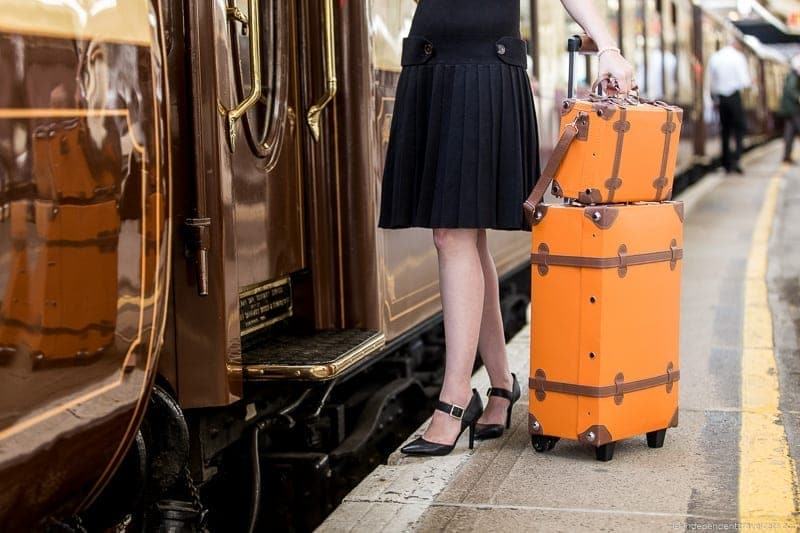
1. Rockport Cobb Hill Salma Dress Pump
If you want to wear pumps but need more support than a typical dress shoe offers, the Rockport Cobb Hill Salma is the pair I would recommend first. The Salma is a cross between a dress pump and a mary jane style shoe: solid leather upper, wide instep strap that attaches with Velcro, comfortable insole with arch support, 2-inch heel, and rubber sole.

They are surprisingly lightweight given their size. They are a heeled version of the Rockport Cobb Hill mary jane shoes I wore as my primary travel shoe for over 9 years, and the construction quality is consistent across the Cobb Hill line.
Check price on Amazon here.
2. Clarks Linvale Loop Pumps
If you’re searching for something a little more sleek and elegant for an event or a dinner date, the Clarks Linvale slingback dress shoes have a classic style while staying comfortable. They have a smooth leather upper, 2.75-inch stacked heel, pointed toe, Ortholite cushioned footbed, non-slip outsole, and adjustable buckle closure.

I like slingback shoes for travel because they take up less room in luggage and are easy to pack. They will not provide as much support or cushioning as the Rockport Salma, so they are better suited to evenings out rather than full conference days on your feet.
Check price on Amazon here.
3. Vionic Josie Kitten Heels
Another good pair of heels to consider for those who need a support insole are the Vionic Josie kitten heels. They have a leather upper, podiatrist-designed contoured footbed, 1.93-inch kitten heel, and rubber outsole.

These kitten heels are designed to be comfortable even for those with foot problems and are built to support and hug your arches. They have received the Seal of Acceptance from the American Podiatric Medical Association. For a low-heeled dress shoe specifically aimed at plantar-fasciitis-prone feet, this is the pair I would recommend first.
Check price on Amazon here.
Tips for Packing Your Travel Shoes
Hopefully, you now have a good idea of which shoes you want to take. The next step is packing your footwear efficiently and making sure your shoes are protected in your luggage. Here are our tips for packing your shoes for travel.
How Many Shoes Should I Pack for Travel?
I would try to choose only two pairs of shoes to take on your trip if you can: one on your feet and one in your luggage. Shoes are heavy and take up a lot of space, so the fewer pairs you need to pack, the better.
If you have a versatile travel shoe, you can probably get away with wearing one pair throughout the trip. This saves space and means you don’t actually have to pack any shoes; you just need the ones on your feet.
There are a few reasons you may want to consider packing an extra pair, though.
First, if you are going away for more than a couple of days, you may want a backup pair in case of a broken strap, damaged sole, or drenched sneakers. I was on a trip in Scotland a few years ago when the instep strap on a pair of mary janes snapped in half, making them unwearable. Luckily I also had a pair of hiking boots with me, which I wore for the rest of the trip.
Second, lots of walking, activities, and sightseeing can lead to unforeseen rubbing, blisters, and foot pain. Having another pair of shoes in your bag, even if it is a pair of supportive sandals, gives you an option to give your foot a break.
Finally, if you are going on a longer trip of a few weeks or more, it is good for your foot health to wear different footwear over time. This can lead to fewer foot issues and less foot fatigue. You may want to pack a second pair and rotate them over your trip.
We recommend picking a versatile and comfortable travel shoe that goes from daytime to evening and works with most of the clothing you plan to pack. Then choose a second pair for any other travel needs (sandals for the beach, hiking shoes for trails, dress shoes for evening events, or a water shoe for snorkeling).
Try not to pack shoes that serve duplicate purposes. You don’t necessarily need flip-flops on your beach holiday if you are already bringing comfortable walking sandals; the sandals can usually do both jobs.
No matter where your travels are taking you, we can’t imagine many trips where you would need to take more than 3 pairs of shoes.
Preparing Shoes for Travel
Here are a few tips for preparing your shoes before your trip:
- If you are traveling with a new pair of shoes, make sure they are comfortable and broken in before you leave. You don’t want to find out they don’t fit well on your big trip.
- If shoes are going in your luggage, wipe them off so they won’t get dirt on any of your clothing or gear in your bag. Consider wrapping them in paper or plastic, or placing them in waterproof shoe packing bags.
- Inspect them to make sure there is nothing wrong with them. Replace fraying shoelaces, unsupportive insoles, or worn-down heel tips.
- If you are going somewhere where you’ll likely be wearing your shoes in rain, snow, or tropical settings, coat them with a water-resistant or waterproofing wax or spray. Use a product designed to treat your particular shoe’s material. Two brands we personally use are Nikwax and Scotchgard.
How to Pack Shoes for Travel to Maximize Space
Once you have your travel shoes selected, you want to pack them in a way that takes up the least amount of space in your luggage.
Here are some tips for maximizing space when packing shoes:
- Wear the shoes that take up the most space on days when you’re traveling between destinations. If you are bringing a pair of hiking boots and a pair of mary janes, wear the hiking boots to save space in your suitcase or backpack.
- Stuff your shoes with your socks, underwear, hosiery, or other small soft items. This saves space and helps the shoes retain their shape while packed.
- If you are packing flexible, foldable, or stackable shoes such as flip-flops, slingback heels, or foldable flats, place them together in a way that creates the least empty space.
- Place shoes at the very bottom of your luggage. It can also help to place them along the edges of your case with the soles touching one of the sides.
- Pack soft items in and around them to use the uneven gaps created in between and around the shoes.
How to Protect Shoes in your Luggage
Shoes can get damaged when jumbled around in your luggage, especially in checked luggage, which can get rough treatment from airline baggage handlers. We’ve had shoes scuffed, squashed, and a heel broken during our travels.
To protect shoes in your luggage, we recommend stuffing them, where applicable, so they retain their shape. We also recommend packing them tightly with soft items so they are snug in your bag without anything heavy or pointed near them.
We then recommend wrapping them in paper or a plastic wrap before placing them in your bag. Take extra care to wrap any thin heels to prevent them from breaking.
Consider using shoe bags to help protect your shoes, especially if you are concerned that they may get dirty or wet during your travels. We recommend these waterproof bags, which come in sets of two, four, or 10.
Wrapping or using shoe bags also protects your clothing from getting dirty or torn from your shoes. Shoe zippers, buckles, and pointy heels can rip clothing, and dirty shoes can leave stains.
Choosing the Best Women’s Travel Shoe Accessories
In addition to the shoes themselves, you may want to pack some other things: socks, orthotic insoles, heel cushions, or moleskin. Here are some footwear-related items to consider packing for your trip.
High Quality Socks
We’ve all suffered from blisters and disintegrating socks at some point. The truth is, a great pair of shoes won’t get you far without a good pair of socks inside them.
We recommend making sure you bring along some good socks, or bring shoes you know work without them. A trip is not the place to wear your threadbare socks with holes.
Be sure to bring socks that work with all the shoes you are bringing. Hiking boots and snow boots may need different socks than your sneakers. If you know there is an area of your foot or ankle that is prone to rubbing or blisters, or a spot that needs extra protection, make sure your sock covers it.
We normally pack enough socks for about a week of travel. If you are gone longer, you can always do laundry as you travel; socks are easy to wash in a hotel sink.
Regular Socks
Socks are generally made of cotton, wool, synthetic materials, or blends. The best socks for travel are usually those made of wool, synthetic materials, or blends, since these wick moisture away better and dry faster than cotton.
Good-quality cotton socks can still work, but I would not wear them on days when your feet may sweat, you are going to be very active, or there is a chance your feet could get wet. Cotton doesn’t do well with dampness and can increase the chance of blisters.
Look for socks that are made of breathable materials, fit well, and feel thick enough to protect your feet. Other features to consider, depending on your needs, are quick-drying construction, cushioning, compression, and anti-microbial properties.
If you are not sure what kind of sock to wear, examples of socks that work for both general sightseeing and running or sports include these Rockay Accelerate anti-blister socks, these Balega no-show socks, or these Farm to Feet crew socks.

These socks are built to prevent blisters and to provide comfort, breathability, durability, and odor control.
Hiking Socks
If you are planning to hike, pack proper hiking socks. Good hiking socks should be warm, durable, antibacterial, breathable, quick-drying, and have a bit of stretch for a good fit. Many also have reinforced toes and heels for durability.
Generally, merino wool (often blended with some synthetic materials for durability) is considered the best material for hiking socks. Merino wool is soft, warm, and good at managing both moisture and temperature, and we usually buy merino wool blend hiking socks. Synthetic socks can work too, and most are polyester blends.
Hiking socks are often labeled lightweight, mediumweight, or heavyweight, which tells you how thick and warm the sock will be. For hot-weather hiking you’ll want lightweight or mediumweight; for frigid places, heavyweight. A good pair of mediumweight hiking socks works in most conditions, so they are a good default if you are not sure where you’ll be wearing them.
Some brands we recommend for hiking socks are Darn Tough, Ballston, Wigwam, SmartWool, and Farm to Feet. To get you started, look at these from Darn Tough, this pair from Wigwam, and this summer hiking pair from SmartWool.
If you are looking for American-made socks, you have lots of options. Check out the hiking socks made by Farm to Feet (made in North Carolina from 100% American materials), Ballston (made in USA since 1918, with raw materials sourced worldwide), Wigwam (made in Wisconsin since 1905, with some raw materials sourced worldwide), and Darn Tough (made in Vermont, with raw materials sourced worldwide).

For those who don’t or can’t wear wool, or are looking for a vegan alternative, look at these polyester Darn Tough hiking socks, these Thorlos padded crew socks, and these EcoSox bamboo socks. Wool-alternative socks don’t tend to be as durable as wool socks.
If you are really blister-prone, consider sock liners. They are worn inside a pair of hiking socks to help prevent blisters by reducing friction against your skin. On longer hikes we wear sock liners by Wigwam.
Compression Socks
Many people, especially those with circulation issues, like to wear compression socks or stockings on longer flights. Compression socks are designed to compress the ankle and lower leg, which increases venous blood flow and reduces pressure. This helps circulation, can reduce the risk of deep vein thrombosis, and reduces blood pooling in the feet.
People who may particularly benefit from compression socks on long flights include those with edema, diabetes, deep vein thrombosis (DVT), varicose veins, and women who are pregnant. Even in healthy travelers, they can help reduce feet swelling and aching in the legs.
Compression socks are generally made of nylon and come in a range of compression gradients, indicating how much pressure they apply. Those with medical issues should consult a healthcare professional for advice. Those without medical issues should look for the lower to moderate gradients.
Most compression socks and stockings are knee-high, but you can also get ankle, calf, or thigh-length versions. We recommend knee-high compression socks, as they have been shown to be most effective.

A few brands that make good-quality compression socks are Dr. Scholl’s, Sockwell, Zensah, and Travelsox. Some options include this knee-high pair by Sockwell, these ones by Dr. Scholl’s, and these ones by TravelSox.
Extra Shoe Cushioning
If your shoes don’t have enough cushioning, they can cause rubbing, pressure, blisters, and pain. Some shoes may also be a tad too big, especially in the heel. This is particularly true for heels and dress shoes. Luckily, it is pretty easy to add cushioning or padding to one’s shoes.
The two main places people need extra cushioning are the heel and the metatarsal area (forefoot, the ball of the foot). You can buy inserts for both, typically made of gel with a sticky adhesive backing that adheres to the inside of your shoe.
For heel cushioning, we recommend these gel heel cushions and these heel inserts. For cushioning in the forefoot, look at these metatarsal pads.

When traveling, you want to bring your most comfortable shoes. If you have a pair that needs inserts, be sure they are comfortable once you’ve added them, before packing.
Orthotic Insoles
Orthotic insoles are shoe inserts used for a variety of purposes: treatment for a condition like plantar fasciitis, arch support, joint pain relief, orthopedic correction, leg-length discrepancy, or general comfort.
Some people may have a custom insole prescribed by their podiatrist, but most people buy shoe inserts off the shelf. Whether you need an insole, and which type will be most suitable, depends on your foot, your needs, and your shoes.
If you think you need an insole, purchase and fit it into your shoes before your trip. If you are buying a new pair of shoes, make sure there is room for an insole before you buy them. Many shoes have a removable factory insole, which makes it easy to fit in a custom orthotic.
Insoles can fit the entire length of your shoe, like these ones, or may only fit into one part of your shoe, like this one. They can be made of medical-grade gel, plastic, silicone, or foam.
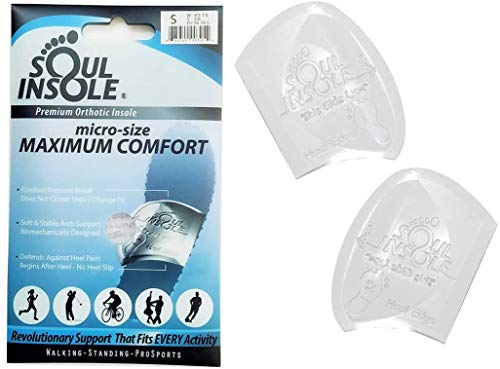
I don’t have any major medical or foot issues, but as I mentioned earlier, I started developing arch pain several years ago, likely due to plantar fasciitis, exacerbated by wearing flip-flops and other non-supportive shoes too much.
What has worked for me is Soul Insole mini orthotic inserts, which I place in my shoes under my arch. They have helped reduce pressure from my forefoot and heel and redistribute the pressure across my entire foot. I get no arch pain when I wear these.
A bonus for me is that they are washable and reusable, so one pair lasts a long time. The medical-grade gel is antibacterial, odorless, soft, and flexible. If you are having arch pain, they may be worth a look.
Non-slip Pads
When choosing shoes for travel, you want decent traction and grip. Some women’s shoes, particularly heels, dress shoes, and fashion boots, do not have good traction on smooth surfaces.
You don’t want to pack shoes that have really smooth bottoms. This increases your risk of tripping and falling, and you don’t want to end up spending your holiday in a hospital.
There is an easy fix: add anti-slip pads to your shoes, such as these ones. They stick to the bottom of your shoes. Fully clean your shoe’s outsole before applying for the best results.

If you are packing shoes with non-slip pads, you may want to pack a couple of extras in your bag in case they peel off during your trip.
Blister Prevention and Protection
Generally, a good-quality pair of socks, well-fitting shoes, and good foot care will be enough to prevent blisters, but sometimes in situations like long-distance hiking or sports, you may need a little extra protection. Some people have more sensitive skin and are more prone to blisters.
Here are some options to help prevent blisters.
Anti-Blister Balm
If you need a little extra help to prevent rubbing, consider something like Foot Glide. It is a balm designed for your foot that you apply before putting on your socks or shoes; it is designed to reduce friction and rubbing.

It comes in a deodorant-stick form, is made of plant-derived ingredients, and is vegan-friendly. It also has vitamins A and C to help soften your feet.
We haven’t personally used this product, but we are longtime fans of their popular Body Glide balm, which is a similar product designed to prevent chafing and rubbing across the body.
Sock Liners
One way to reduce friction and prevent blisters is to wear two pairs of socks. This is often done by hikers to prevent blisters on long-distance hikes.
Sock liners are worn inside a pair of hiking socks to reduce friction against your skin. As mentioned earlier, on long hikes Laurence and I often wear sock liners by Wigwam, which have worked well for us. You may also want to check out sock liners by Fox River.

Sock liners are probably not necessary for most people with regular shoes, since wearing too much sock can make your shoes fit too tightly and cause discomfort. A sock liner is more commonly worn when hiking, climbing, or doing similar high-distance activities.
Moleskin
Hopefully you have fully broken in your shoes and have a well-fitting pair packed. Sometimes even the best shoes can rub your feet if you are walking further than usual or doing things you don’t normally do at home.
Bring along some Moleskin or bandages just in case. Some bandages are made specifically for toe blisters (like these) or heel blisters (like these).

We recommend taking a roll of moleskin that can be cut to size and placed on your feet as soon as you notice rubbing. Use it preventatively when you can, starting as soon as you notice your shoe rubbing, to prevent blisters from forming.

Frequently Asked Questions
Over the years, the same handful of questions come up in our comments and inbox more often than any others. Here are the ones I have found most worth answering in detail.
How many pairs of shoes should I pack for travel?
For most trips, two pairs of shoes is the right answer: one versatile pair on your feet and one pair in your luggage that covers a use case the first pair can’t handle (sandals for the beach, hiking boots for trails, dress shoes for an evening event).
If your travel is single-purpose (a city-only trip with no formal evenings, for example), one pair of versatile sneakers like the Allbirds Tree Runner is usually enough. For longer trips of a few weeks or more, rotating two pairs is better for your feet than wearing the same pair every day.
I would push back gently on packing three or more pairs unless the trip really requires it (a trip that combines hiking with formal evenings, for example). Three pairs is heavy, takes up real luggage space, and most travelers don’t actually wear the third pair.
What shoes are best for European city walking and cobblestones?
For European cities specifically, the things that matter most are arch support and grip. Cobblestones reward shoes with a stable, slightly cushioned footbed and a sole with real traction; they punish smooth-soled fashion shoes and unsupportive flats.
My own picks for Europe are the Rockport Cobb Hill Petra mary janes (my primary travel shoe for 9 years across European cities including Paris), the Allbirds Tree Runners (for warm-weather European trips), and the Allbirds Wool Runner NZ Waterproof for European autumn and winter. For wet trips, the Vessi Classic Chelsea handles real rain better than any of the above.
Specifically avoid: stiletto heels (impossible on cobbles), unsupportive flip-flops (no arch support for full-day walking), and brand-new shoes you haven’t broken in (cobblestones magnify any fit issue).
Are sneakers okay for nicer restaurants in Europe?
At most European mid-range restaurants, a clean leather-look sneaker like the Ecco Soft 7 is fine. At a fine-dining restaurant with a stated dress code, sneakers will look out of place; if you are booked at a Michelin-starred restaurant, plan to pack a dress shoe.
The practical middle ground for most travelers: pack one versatile sneaker that doesn’t read as athletic (Ecco Soft 7, Superga Cotu Classic, or a leather pair) and one pair of low-heeled dress shoes for evenings out. Trainers, especially bright-colored running shoes, are fine for casual restaurants and bistros but read as too casual at smarter venues.
What shoes work best for plantar fasciitis or arch pain?
The shoes I would recommend first for plantar-fasciitis-prone feet are the Rockport Cobb Hill Petra mary janes (structured insole, accommodating fit), Vionic shoes generally (designed around a podiatrist-developed footbed), and supportive sneakers like the Ecco Soft 7 paired with a custom orthotic.
What has worked best for me personally is the combination of a structured shoe and a thin orthotic insert. The Soul Insole mini orthotic inserts are my go-to: they sit under the arch, are washable and reusable, and slot into most shoes without changing the fit. If your plantar fasciitis is severe, talk to a podiatrist before booking a long walking trip; a custom insole prescribed for your feet specifically will outperform anything off the shelf.
What I would avoid: completely unsupportive flats, thin flip-flops worn all day, and dress shoes with no insole structure. These are the categories that flare my own arch most consistently.
Are On Cloud sneakers good for travel?
On Cloud sneakers, particularly the Cloud 6, are universally recommended across the lab-test SERPs and by many of our readers. The CloudTec midsole is well-cushioned, the speed-lacing system makes them easy to slip on at airports, and the engineered mesh upper is breathable.
I have not personally worn the Cloud 6, so I am not putting them at the top of my own rotation in this article. The thing I would flag from reader feedback is that On shoes are reported to run narrow; try them on in person if you can, especially if you have wider feet. If you are looking for a lab-data-backed, cushioning-first travel sneaker and the narrow fit works for you, On Cloud is a defensible pick.
Can I wear waterproof sneakers for water activities?
Waterproof sneakers (Vessi, Allbirds NZ Waterproof) are designed to keep your feet dry in rain, puddles, and damp environments. They are not designed to be submerged in water and they do not drain well once water gets in over the top of the upper.
For actual water activities, snorkeling, white-water rafting, beach use, you want a proper water shoe like the Keen Newport H2, or you want a pair of sandals you don’t mind getting wet. Trying to use a “waterproof” sneaker as a water shoe usually ends with soggy socks and a heavy boot for the rest of the day.
Are Birkenstocks comfortable enough for all-day walking?
Yes, once they are broken in, and with the caveat that “comfortable” depends on your arch. The Birkenstock cork-latex footbed molds to your foot over a few weeks of wear, and once it has molded, the Gizeh and Arizona are comfortable for full days of city walking in warm weather. The Arizona’s two straps tend to be more forgiving than the Gizeh’s thong for travelers who haven’t worn thong sandals before.
What I would not recommend: packing brand-new Birkenstocks straight into your suitcase for a 10-day European trip. The break-in period is real, and the first few wears can cause rubbing across the strap area until the footbed softens.
What shoes work for women with smaller or wider feet?
For smaller feet (US 5 and below, UK 3 to 4), the brands worth checking first are Clarks (the Hope Henley line starts at UK 3), Vionic (several styles down to US 5), and the lower end of Naot’s range. Note that the Rockport Cobb Hill Petra is stocked at US 5 minimum (roughly UK 4) at retailers like Nordstrom and Amazon, so it doesn’t work for everyone.
For wider feet, the brands with the most accommodating widths as standard are Birkenstock (offered in narrow and regular widths), Naot, and Ecco. The Mary Jane silhouette in general accommodates a wider forefoot better than a sleek pump or a narrow runner. I would be cautious about narrow European brands and most fashion-led sneakers, which often run narrow as standard.
So that is our guide to travel shoes and our list of recommended shoes for traveling. What do you think of the list? If you are also looking for shoe recommendations for men, check out Laurence’s guide to the best travel shoes for men. He also has a guide to the best travel suit for men.
Have questions about choosing shoes for travel? Just leave us your question in the Comments section below, and we’re happy to try to help.
Did we miss your favorite pair of travel shoes? If so, let us know. Feel free to share any tips or advice you have for us and future readers about choosing the best shoes for travel.
Janine Post author
Another great shoe for travel is Bend Low by Birkenstock. It has the traditional Birkenstock footbed, provides excellent arch support and looks really cute. I love mine!
Jessica & Laurence Norah Post author
Hi Janine,
Thanks for the recommendation – I have been looking into getting a pair of Birkenstocks lately so will have to check those ones out the next time I am in a store!
Best,
Jessica
Joan Post author
I haven’t tried them yet and don’t see them on your list, but I keep meeting travelers who recommend the Swiss ON sneaker, esp. the Cloud version. They swear by them as the most comfortable walking shoe ever & say they’re totally worth the investment.
Jessica & Laurence Norah Post author
Hi Joan,
I am not familiar with the On Running sneakers or had them recommended to us by other travelers. But thanks for pointing them out and we did a little research. They are shoes designed primarily for running, the company is headquartered in Switzerland although shoes are mostly made in Vietnam. Most shoes are made of polyester. Although they are running shoes, they do say they can be good for walking and general everyday wear. They are not machine washable. One plus of these shoes is that most of the styles are wind and water resistant. If you do try them, let us know what you think of them.
But honestly, unless you already own these shoes or want shoes which you can also run in, I think you would probably be better off choosing shoes made for everyday wear and fitted more like regular sneakers or trainers that are comfortable. But the most important thing is to find a shoe that is comfortable and supportive for you and you’ve worn at home first so you know how it will perform on your trip.
Best,
Jessica
JT Post author
Thanks, Jessica. I’m actually not a big sneaker fan & usually stick to your beloved Mary Janes.
Margaret Lewis Post author
I was interested in the first mentioned Mary Janes. What a pity they only start at UK size 4. Some of us have smaller feet!
I need a UK 3 or 3.5, European 36.
I always pack shoes according to your packing tips. That works well.
Jessica & Laurence Norah Post author
Hi Margaret,
Yes, it is too bad about the Rockport Petra Mary Janes, yes Rockport shoes start at a 4 or 4.5 UK or a 5 US size. I like that they do come in multiple width options.
One that is kind of similar (although I do not personally own) that you could check out is the Clarks Hope Henley mary janes in black leather. They do start at a size 3 UK and also have half sizes. Skechers online also has a variety of mary janes in size 3 as well that might be another option.
I hope you are able to find a pair that works in your size!
Best,
Jessica
shyam Post author
Great guide for travel shoes. This is very helpful information.
Jessica & Laurence Norah Post author
Glad it was helpful Shyam, just let us know if you have any questions.
Wishing you happy & safe travels,
Jessica
Sammy Dickson Post author
Nicely Written! As I was reading I thought of asking about blister prevention but found that in the end written quite comprehensively.
Jessica & Laurence Norah Post author
Hi Sammy,
Glad you enjoyed our guide to selecting shoes for travel! Yes, blister prevention is definitely important especially if you will be walking a lot more than usual as many people do when they travel. You may also be wearing shoes you don’t typically wear at home or work.
The best thing you can do to prevent a blister is to make sure you wear shoes that fit well and you have broken in before your trip. Other things that will help are keeping feet dry and wearing socks. If you are particularly prone, you might try foot balm, wearing a second pair of socks, and/or putting moleskin onto the areas most prone to blisters to prevent them.
But if you do start to develop a blister while traveling, stopping and covering it as soon as you can with moleskin or a Band-Aid will generally keep it from getting worse. So keeping something in your purse or day bag can be very useful.
Happy travels,
Jessica
Suzanne F Post author
Thank you so much for sharing! I am (Lord willing) planning a 2 week trip to England and Scotland next summer for a class reunion and look forward to getting back to my ancestral roots in Scotland and doing some exploring of the Highlands. I am most excited to go back.
I read in one of your descriptions for snow boots that you live close to the Scottish Highlands and I was wondering what shoes you wear on a daily basis. Our weather out here (Washington state) is very similar to the Manchester/Edinburgh area so I’m familiar with all the rain. I’m just curious what shoes you may recommend for transitioning from hiking in the Highlands to exploring Edinburgh/Inverness and going to pubs and such in the evening hours.
Thanks again for helping me with my research into all the best travel items. I’d really like to travel light this time.
Jessica & Laurence Norah Post author
Hi Suzanne,
That sounds like an exciting trip! Yes, for summer in Scotland and England, you’re likely to have some rainy days and if hiking, I would be prepared for some muddy paths and to perhaps walk across some low streams and such. It just really depends on the trail of course.
I would recommend taking two pairs of travel shoes, so one on your feet and one in your suitcase. One pair of shoes for hiking and exploring the Highlands and then one for your city time. For hiking and being outdoors, I would take a pair of shoes that are comfortable, durable, and are waterproof (or water resistant). I have a pair of Merrell Moab 2 Mid boots that I have been using to hike in for years. I have found them great for hiking. For just walking or gentle hikes, I also own a pair of the ventilator low-rise version of this same shoe (also discussed in the article above). But I’d probably recommend the mid-rise version with waterproofing and ankle support as it is much more functional if you plan to go hiking and do other outdoor activities.
For a city shoe, it really just depends what you like to wear and I’d base it on what you’d normally wear at home when going into the city to shop, go out to eat, visit museums, etc. I often wear black Mary Jane shoes for city travel as they transition well from morning to night and work with most outfits. However, they are not the best shoe for rain as they leave the top of your feet exposed, and I just deal with that. So a nice sneaker or a boot might be a better option for many. You can add a waterproofing to most shoes to make them more water-resistant. I would just choose a shoe that you feel comfortable in wearing all day, that works with your clothing, and would be OK on wet streets.
I am guessing that since you live in a rainy place, you might already have ideal footwear or know what to look for and hopefully this helps. Would love to hear what shoes you decide on and wishing you a wonderful trip to the UK!
Best,
Jessica
Russell Mortensen Post author
I really like that you touched on getting shoes that are very sturdy and comfortable instead of something flashy and not practical. My spouse and I are going on a long vacation this summer and she needs new shoes. It would be great if we could just get her older shoes repaired because they were perfect for travel.
Jessica & Laurence Norah Post author
Hi Russell,
Yes, you can definitely take her older shoes to a cobbler for repairs if you have one locally. If you buy new travel shoes, buying higher quality shoes is always a good idea as they are much easier to repair and can last a lot longer. Good for the wallet and for the environment 😉
Best,
Jessica
FGR Post author
I usually pack 3 pairs of shoes for travelling. One is waterproof in case it rains. One is quite light and flexible for any activities. The last is a common flip-flop. I really appreciate this article since I love travelling and just want a simple pack as possible. Now I can know how to pack my shoes to avoid scuffing and squashing. Really helpful, thank you!
Jessica & Laurence Norah Post author
Hi FGR,
Glad you found it helpful!
Yes, you could probably get down to packing 2 shoes if you want to reduce the number of shoes you pack. You could just choose a waterproof version of the light and flexible shoes you pack for general activities instead of a separate pair of waterproof shoes. Or you may be able to waterproof your existing shoes. Our experience is that if going to a place where it is likely to rain, it is always good to have a versatile pair of shoes that can stand up well in the rain 😉
Happy travels,
Jessica
Marcia Post author
Wow this is really helpful, appreciate this list and tips for shoes for travel. Thoughts on a waterproof sneaker that could be worn for water-based activities?
Jessica & Laurence Norah Post author
Hi Marcia,
Sneakers are rarely going to be waterproof although you can add waterproofing to them. A shoe like these Merrel Moab hiking shoes are low-rise like a sneaker, waterproof, and might work but aren’t really designed to be fully submerged in water. Most sneakers, waterproof or not, are going to get soggy if you really get them wet and can take a long time to dry.
If you think your shoes may actually be submerged in water or in water a lot, I’d recommend looking at shoes designed to get wet and be in water rather than waterproof or water resistant shoes. So this might be a nice looking sports sandal that is designed to be OK in water and dries quickly (e.g., check out models by Keen, Ecco, & Teva). Or look for a sneaker or walking shoe like the Tropicfeel sneakers which are not waterproof but are designed to double as a aqua shoe. They allow the water to drain quickly and the material dries quickly.
Or if you are want to wear a true traditional sneaker, I’d bring those along with an inexpensive pair of water shoes. They don’t take up too much extra room in your luggage and will keep your sneakers from getting wet.
Anyway, hope that helps and happy travels!
Jessica
Sarah Post author
Thanks for sharing a huge range of women’s shoes that are good for travel. I am looking for sneakers for a trip, mostly walking in a city and wondering what you thought? Want something comfty to wear but also stylish..but don’t need anything for formal situations or anything.
Jessica & Laurence Norah Post author
Hi Sarah,
There are a lot of sneakers out there that could work for travel so depends a lot on your style, foot support needed, and what you like. But some to check out are the Ecco Soft 7 sneakers (leather/suede uppers, lots of colors), the Tom’s Cabrillo sneakers, or the Superga Cotu Classic sneaker (canvas upper, classic European sneaker, many colors).
Best,
Jessica
Emma Post author
Thanks for this very informative women shoes review. It is very helpful to choose the right one for many different situations.
Jessica & Laurence Norah Post author
Hi Emma, Thanks for taking the time to comment and let us know if was helpful! If you want my opinion on any particular type of shoe, just let me know! Best, Jessica
Emily Walker Post author
Hey, This is such great information on finding the right kind of shoes for traveling or well any other purposes really. Just wanted to say thank you as been searching for some help on finding travel shoes for loong time
Jessica & Laurence Norah Post author
Hi Emily,
Glad this information was helpful! Feel free to come back and let us know what shoes worked best for you for your travels!
Best,
Jessica
Judy Henderson Post author
Wow! It’s a really amazing list for Travelers. Love your Best Travel Shoes for Women blog. Thanks a lot.
Jessica & Laurence Norah Post author
Hi Judy, Glad you found it helpful, and if you have or find some great travel shoes, feel free to share! Best, Jessica
Seana Turner Post author
This is a fabulous post! I have all kinds of trouble with shoes because I wear a US 5, preferably narrow. I was delighted to click through and see that so many of your suggestions are available in a 5 (even if only in one or two colors). When I go traveling, comfort is always #1. I had a terrible experience once where I only took one pair of shoes. They were clogs with terrible support, and I damaged my foot walking in them. I literally walked around in a sock because my foot hurt so much. And the thing about feet is, it takes a long time for them to heal, so you don’t want to mess it up! We live in Moleskin, so thanks for adding that in!!
Jessica & Laurence Norah Post author
Hi Seana!
The reason that many of these shoes are available in size 5 is influenced by the fact that I normally wear between a size 5 and a size 6 shoe, so I am obviously more knowledgeable about brands I can actually wear 😉 And yes, it can definitely be difficult to find good shoes for those with smaller and larger sizes. It definitely limits one’s options.
That clog experience sounds like no fun! I hobbled around Paris once for several days because of unsupportive shoes – they didn’t rub my feet but the lack of support + excessive walking led to arch pain and me limping for several days.
Can’t go wrong with throwing some Moleskin or foot band-aids in your suitcase 😉
~Jessica
Mariana Post author
Big fan of the Superga Cotu Classic sneakers, wear them often here in Madrid as well as when on holiday!
Jessica & Laurence Norah Post author
Hi Mariana, Thanks for taking the time to comment. Love to hear travel shoe recommendations from other female travelers! Best, Jessica
Trisha Reynolds Post author
Love your travel blog, and that you noted some vegan shoe options here. I decided to go vegan about 6 months ago and am slowly trying to replace shoes and belts as they wear out with vegan options. This is very helpful and I have been particularly having a tough time with a pair of hiking shoes and am going to put those Merrell Ventilator shoes on my Xmas wishlist!
Jessica & Laurence Norah Post author
Hi Trisha,
Yes, I have really loved my Merrell Moab 2 shoes, I have both the Ventilator ones and the waterproof mid-high hiking boots. I haven’t tried the vegan versions but they seem to have good reviews!
Jessica